1 hour ago
1
1 hour ago
1

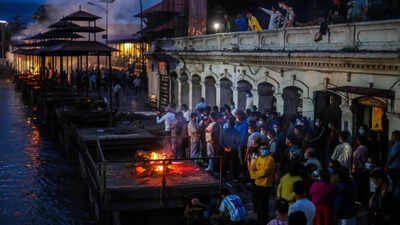
People gather next to funeral pyres during cremation rituals using effigies as missing bodies remain unfound, on the premises of Pashupatinath Temple in Kathmandu, Nepal
TRISHULI BAZAAR (NUWAKOT): Families in flood-ravaged Nuwakot and Rasuwa who could not find missing relatives — or their bodies — began performing symbolic cremations with human-shaped effigies made from kusha, a sacred grass used in Hindu rituals.After days of searching hospitals, morgues, riverbanks and recovery lists, relatives lit the effigies on pyres at cremation sites so they could begin mourning.In Nuwakot, families gathered along Trishuli river for the rites as priests shaped bundles of kusha to represent the missing person, placed them on wooden pyres and guided relatives through the same rituals normally performed over a body.Families from Rasuwa, one of the worst-hit districts, also began holding such funerals or travelling to cremation grounds after repeated searches failed to locate their kin.Rozel Shrestha, 12, performed the rites for his father, Krishna Shrestha, 37, who disappeared in Rasuwa.Krishna’s brother Jeevan Shrestha said the family had searched widely before accepting that they might never recover his body.“We searched everywhere, went to morgues across the country, but could not find his body,” he said. “The family eventually decided we had to perform our traditional rituals to liberate his soul.”
Relatives of Raj Kumar Shrestha, 30, performed his last rites with a kusha effigy after searching for six days. The family had received a photograph of a body resembling him and travelled to Simtar in Nuwakot, but the body had already been moved.They could not trace it afterwards. Nirajan Poudel of Bidur municipality performed rites for five relatives — his parents, uncle, aunt and cousin — after none could be found.Similar scenes later unfolded at Pashupati Aryaghat in Kathmandu, where more than 100 kusha effigies were cremated in a single day. Tapindra Prasad Timalsina was among those who performed last rites there for Sabin, 21. A priest prepared the effigy and relatives poured water over it before Timalsina lit the pyre. “It weighs heavily on my heart,” he said.Devmani Bhattarai, a professor at Nepal Sanskrit University, said Hindu scriptures permit families to perform last rites with an effigy when a body cannot be recovered and there is clear evidence that a relative was swept away or if an entire settlement was destroyed. “If the body has not been found, there is no time to wait,” he told TOI on phone.