58 minutes ago
2
58 minutes ago
2

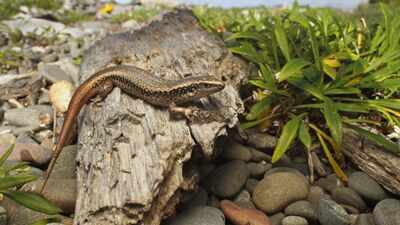
Northern spotted skink (Oligosoma kokowai) in Napier. Image credit: Nick Harker/ New Zealand Herpetological Society
New Zealand has created a 676-square-metre pest-proof sanctuary in Napier for the northern spotted skink, a rare native reptile whose Hawke’s Bay population is considered critically endangered.
The purpose-built enclosure was completed in late 2025, and on 18 April 2026, four skinks were released into their new home. The move is intended to protect the remaining population while creating a safer place where the species can survive and potentially breed. The sanctuary also forms part of a wider effort to protect the skinks as major stormwater improvements are carried out nearby. The New Zealand Herpetological Society reported these details.
How the new 676-square-metre sanctuary protects the skinks
The sanctuary was built on a foreshore reserve that had previously been mown grass, so its habitat had to be created rather than simply protected. The New Zealand Herpetological Society says the site now includes deep rock piles, large logs, driftwood and plants that can provide food and shelter.Napier City Council describes the enclosure as a 26-metre by 26-metre space on Marine Parade. Its 2-metre-high fence uses fine mesh to keep out predators, including mice, rats and cats.
A cap at the top of the fence makes it harder for climbing or jumping animals to get inside.The council says the enclosure also includes basking areas, rock and wood piles, vegetation and small edible fruits for the skinks. Entry is restricted to approved personnel so the habitat can be maintained and monitored.The design was developed with herpetologists and conservation specialists, according to Napier City Council.
The National Aquarium of New Zealand, Hawke’s Bay Regional Council, Biodiversity Hawke’s Bay, mana whenua, community groups and local schools have also been involved.
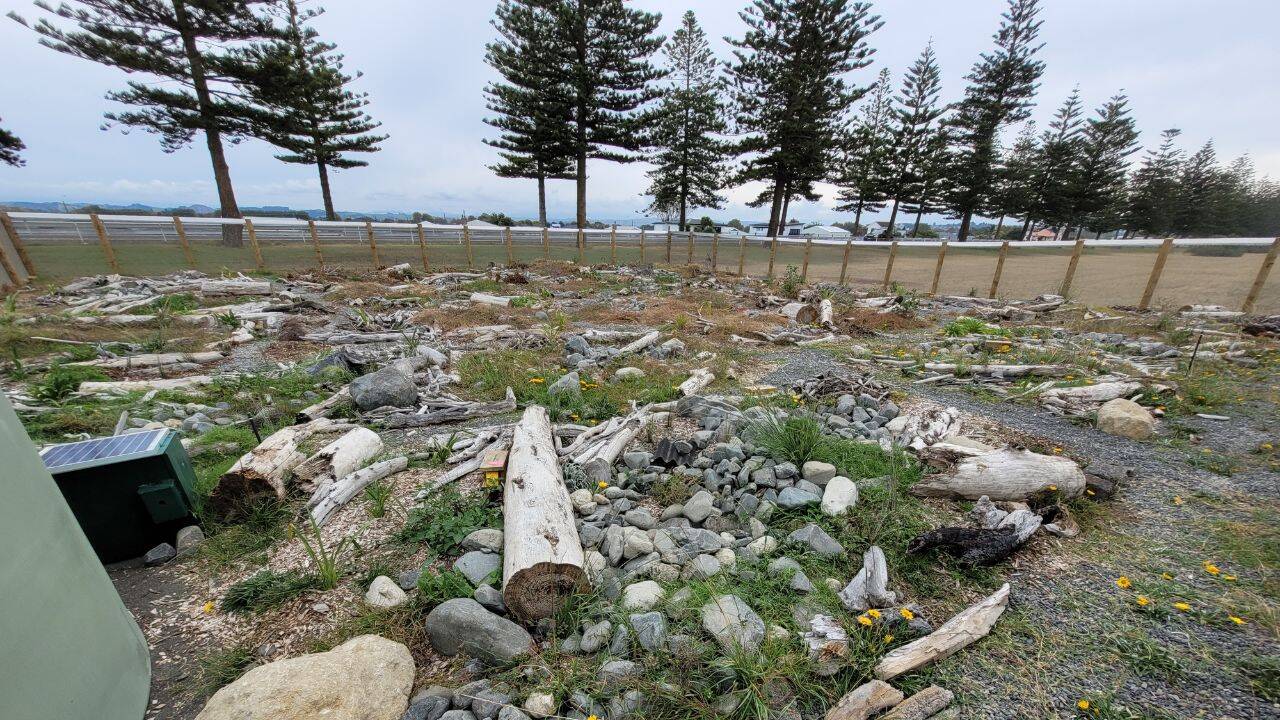
Napier spotted skink sanctuary habitat. Image credit: Nick Harker/New Zealand Herpetological Society
Survival challenges for the northern spotted skinks
The northern spotted skink, scientifically known as Oligosoma kokowai, has become extremely rare across New Zealand. According to the New Zealand Herpetological Society, the species is regionally critically endangered in Hawke’s Bay and survives at only one location in Napier.
The local animals are also genetically distinct from northern spotted skinks found further south, making this population particularly important.The species once lived across parts of the upper South Island and lower North Island. The New Zealand Herpetological Society says habitat destruction and introduced predators such as rats, mice and cats have pushed the skinks towards extinction in the North Island.
Today, they survive on 3 pest-free islands in the Wellington region and in 3 small mainland populations.Napier’s skinks have faced their own long decline. They once lived among coastal plants such as Muehlenbeckia, but much of that habitat was cleared and replaced with mown lawn during the 1960s and 1970s. The population was thought to have disappeared until a small group was rediscovered in 2006.
Importance of first 4 releases for the skink population
The first release took place on 18 April 2026, when two males and two females were placed inside the sanctuary.
The New Zealand Herpetological Society reported that each skink had been photographed before release because its individual markings can be used to identify it later.That means future surveys can show whether the original four animals remain in the enclosure and whether any young are born there. The skinks will continue to be monitored for survival and breeding.The release is only an early step. The New Zealand Herpetological Society says the sanctuary could eventually hold up to 300 northern spotted skinks, but reaching anything close to that number is expected to take many years because so few animals remain and the species breeds slowly.The conservation group also hopes that more northern spotted skinks can be found and moved into the sanctuary. Bringing in additional animals could increase the genetic diversity of the small population.
How stormwater work shaped the relocation of skinks
The sanctuary was created alongside a major stormwater project between Maraenui and Te Awa. Napier City Council says the enclosure was built as mitigation because the infrastructure upgrades would affect skink habitat.RNZ’s Local Democracy Reporting, in its January 2026 report, said the skinks were being moved to make way for a $37.4 million stormwater infrastructure project. The work includes a new pump station, a coastal outfall on Marine Parade and upgrades to watercourses, with construction planned to improve Napier’s flood resilience.The council considered the enclosure a way to allow the infrastructure work to continue while providing permanent protection for the skinks.
RNZ reported that the project site was considered the most cost-effective location for the stormwater outfall.The sanctuary therefore serves two purposes at once. It provides a protected home for an endangered local reptile while allowing important infrastructure work to proceed.
What comes next for the rare skinks
The immediate priority is to keep the new enclosure free of predators and closely follow what happens to the 4 founding skinks. The New Zealand Herpetological Society says ongoing surveillance will be needed to ensure the sanctuary remains pest-free.For a population that may once have numbered fewer than 25 animals, the release represents a significant conservation step. The organisation said surveys in the early 2020s indicated that the Napier population was at high risk of extinction without intervention.