1 hour ago
3
1 hour ago
3

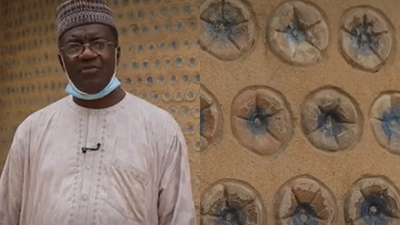
Nigerian engineer Yahaya Ahmed built his first model house with 14,800 sand-filled plastic bottle (Image Credit: BBC)
What if thousands of discarded plastic bottles could become part of a house instead of ending up in gutters or landfills? In Kaduna, Nigerian engineer Yahaya Ahmed has spent more than a decade exploring that possibility.
His first model house used 14,800 plastic bottles filled with sand, an experiment that eventually grew into a broader construction initiative. In an interview with PUNCH, Ahmed, director of the Developmental Association of Renewable Energies, explained how he learned the technique, built the first model and went on to construct as many as 15 houses. Among the projects he described were a three-bedroom house in Ibadan and a five-bedroom duplex in Abuja.
He also discussed the method’s claimed benefits, including lower construction costs, insulation and the potential to put discarded plastic bottles to practical use.
From waste to walls
Ahmed learned the construction technique in Germany from the person he said invented it. He later worked with non-governmental organisations to bring the method to Nigeria, where they organised training before beginning to collect plastic bottles from places such as gutters and farms.
The first model was built around 2012 or 2013. At the time, collecting bottles was relatively easy because large numbers were simply discarded. Ahmed and his team worked with unemployed young people who were encouraged to gather the bottles, turning the collection process into a source of temporary work.
The project gradually attracted attention, leading to training programmes and construction projects in different parts of Nigeria.
How the houses are built
The process starts with collecting plastic bottles and filling them with sand. The number required depends on the size and type of structure being constructed. According to Ahmed, the bottles are filled manually, making this the most difficult and time-consuming stage of the process. The sand-filled bottles are then incorporated into the walls, while a mixture of laterite and sharp sand is used during construction.
The method still uses conventional construction elements where necessary. Ahmed explained that cement can be used for the foundation, depending on the soil, and later for plastering. Doors, windows and interior fittings are also added after the main structure has been completed.
Fifteen houses built
What began as a single demonstration project eventually expanded into a series of structures. Ahmed said his organisation has constructed up to 15 houses, with projects in Kaduna, Kano, Port Harcourt and other locations.
One of the larger examples is a complete three-bedroom house in Ibadan, which is now used as an office and living space. In Abuja, the team constructed a five-bedroom duplex, showing that the technique is not limited to small, single-storey buildings.The idea has also attracted interest outside Nigeria. Ahmed described an invitation from a traditional ruler in Ghana who had seen the projects on YouTube. His team subsequently spent about four and a half months training 15 people in a village near Kumasi.
Turning bottles into buildings
The technique is closely linked to Ahmed’s interest in reducing plastic waste. He pointed to discarded bottles that can clog drainage systems and contribute to flooding, particularly because plastic does not easily decay. Rather than processing the bottles into another product, the construction method keeps them in the building itself. Ahmed describes this as upcycling, because the bottles become part of a long-term structure.
He also said the method can make use of suitable sand or clay excavated from a building’s foundation. Instead of discarding the material, it can be sieved and used to fill the bottles.
Claimed benefits
Cost is one of the major advantages Ahmed associates with the method. He said bottle construction can cost at least half as much as conventional sand- or clay-based construction, depending partly on the availability and cost of the bottles and other materials.
He also highlighted the insulating properties of the sand-filled walls, noting that the buildings can remain cooler during Nigeria’s hot seasons and warmer during colder periods, potentially reducing the need for air conditioning.
Ahmed further claimed that the structures can remain intact for 200 to 250 years and described them as bullet-resistant, according to the interview with PUNCH.
Challenges remain
Despite the projects, the approach faces several obstacles.
Ahmed identified limited government support, difficulties obtaining construction permits, funding shortages and a lack of public awareness as some of the biggest challenges. The availability of plastic bottles has also changed. As recycling has become more common, bottles that were once freely collected are increasingly gathered and sold by scavengers.
Ahmed said they can still be purchased, although this has changed how his team obtains its supplies. For now, sand-filled plastic bottles remain an alternative construction approach rather than a mainstream replacement for conventional building materials. But what started with a single model house has developed into a much larger experiment, with up to 15 houses and other structures built across Nigeria, and the possibility of turning one of the country's most persistent waste materials into part of its built environment.