4 months ago
32
4 months ago
32


 Getty Images
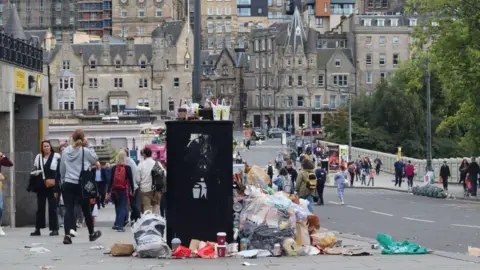
Councillors in Edinburgh are set to approve a council tax increase on Thursday
Council tax increases well above the rate of inflation are set to be confirmed by almost one third of local authorities across Scotland.
Households in Aberdeenshire - where £9m in cuts have been identified - found out on Thursday they will face a double-digit increase in council tax for the second year in a row.
Edinburgh and Fife councils have proposed 5% increases, Dumfries and Galloway is contemplating a 7.5% rise and 5.6% and Clackmannanshire has suggested a 5.6% hike.
Councillors in Renfrewshire also agreed an increase in council tax on Thursday morning of 7.5% to help fund investments and meet rising costs.
Local authorities claim higher local taxes are necessary to fill budget gaps running into millions of pounds.
East Ayrshire, North Lanarkshire and Stirling councils will also meet on Thursday to set their budgets for the next financial year.
Proposed figures could still change as councillors in each local authority will be asked to vote on the increases, which will take effect from 1 April.
In Glasgow, the largest local authority by population, the SNP and Greens agreed a 5.9% rise in council tax, expected to be among the lowest in Scotland.
Four Scottish councils have now agreed increases three times more than the rate of inflation.
Councillors said the 9.7% increase was needed to help protect local services and to fund investment in roads, social care support and leisure facilities.
Comhairle nan Eilean Siar had originally proposed increasing bills by 9.5%, but the local authority's policy and resources committee backed a lower figure of 8.5%, which was confirmed on Tuesday.
North Ayrshire Council joined the Scottish Borders and Western Isles with an 8.5% increase after the SNP administration's proposed 12% council tax rise was defeated.
Shetland, West Lothian and East Lothian councils all voted for increases between 7% and 8%.
East Renfrewshire Council has also announced its budget for the coming year, with council tax going up by 6%, while South Lanarkshire Council confirmed a 6.5% hike.
Second year of big council tax rises
Aberdeenshire Council officials said that without an increase in income, the council was facing a shortfall of more than £17.5m in funding.
They have proposed cuts to services including reduced school cleaning and grounds maintenance, stopping road line painting on residential streets and ceasing sheltered housing support contributions.
The approved 10% rise in Moray and Aberdeenshire are expected to be the biggest in Scotland.
Prior to last year, council tax rates had been frozen or capped for much of the past 20 years.
Local authorities claimed higher local taxes were necessary despite a generous Scottish government settlement because of many earlier years of restricted funding.
The Scottish government has made no attempt this year to implement a freeze or limit increases.
However, ministers said they hoped large rises could be avoided.
Where do councils spend money?
Local authorities are responsible for providing education, social care, public transport, and culture and leisure.
Funding from the Scottish government makes up the bulk of council finances.
Council tax makes up a relatively small proportion of each council's budget but it is the area where the council has the most control.
For instance, council tax accounted for 18% of Glasgow City Council's budget for the 2025-26 financial year.
While there was a council tax freeze for many years, revenue from the tax has still risen in real terms because of new homes being built.
Over the past decade, the general trend has also been for a real terms rise in the Scottish government grant.
But councils have argued they are now providing more services in areas such as early years provision, free school meals and adult social care - and claim the extra money has not kept pace with extra costs.
Now many councils are seeking other ways to raise revenue.
Edinburgh will be the first council in Scotland to introduce a tourist tax.
The visitor levy of 5% on overnight stays in hotels, bed and breakfasts and self-catering accommodation will take effect from 24 July 2026. About £50m is expected to be raised annually.