2 hours ago
3
2 hours ago
3

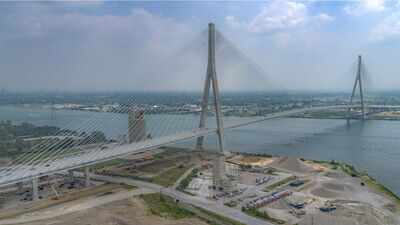
Gordie Howe International Bridge days before its opening, July 2026. Image Credit: Wikipedia
The Gordie Howe International Bridge has opened between Windsor, Ontario, and Detroit, Michigan, creating a new six-lane crossing over the Detroit River and a new link between Canada and the United States.
Its 853-metre main span is the longest of any cable-stayed bridge in North America, while the full crossing stretches approximately 2.5 kilometres.The project is much larger than the bridge itself, incorporating new ports of entry on both sides of the border, approach roads and a direct highway-to-highway connection. The bridge officially opened to traffic on 27 July 2026, adding capacity to one of North America’s busiest commercial land corridors and providing another route for people, vehicles and goods moving between the two countries.
Why North America’s longest cable-stayed bridge is significant
The scale of the bridge is one of its most notable features. According to the Gordie Howe International Bridge project, the crossing is approximately 2.5 kilometres long and has six traffic lanes, with three lanes in each direction. Its 853-metre main span is the longest main span of any cable-stayed bridge in North America.The bridge crosses the Detroit River without piers standing in the water, with its two main towers supporting the long central span.
The project also includes Canadian and US ports of entry, approach roads and the Michigan Interchange, making the bridge part of a much larger border transportation system rather than a standalone structure.The crossing is being added to an already important trade route. The Windsor-Detroit corridor is the busiest commercial land crossing between Canada and the United States, and the official project documentation says it handles almost 30% of all Canada-US trade carried by truck.
The Gordie Howe International Bridge is intended to provide additional capacity and improve the movement of people and goods through the corridor.
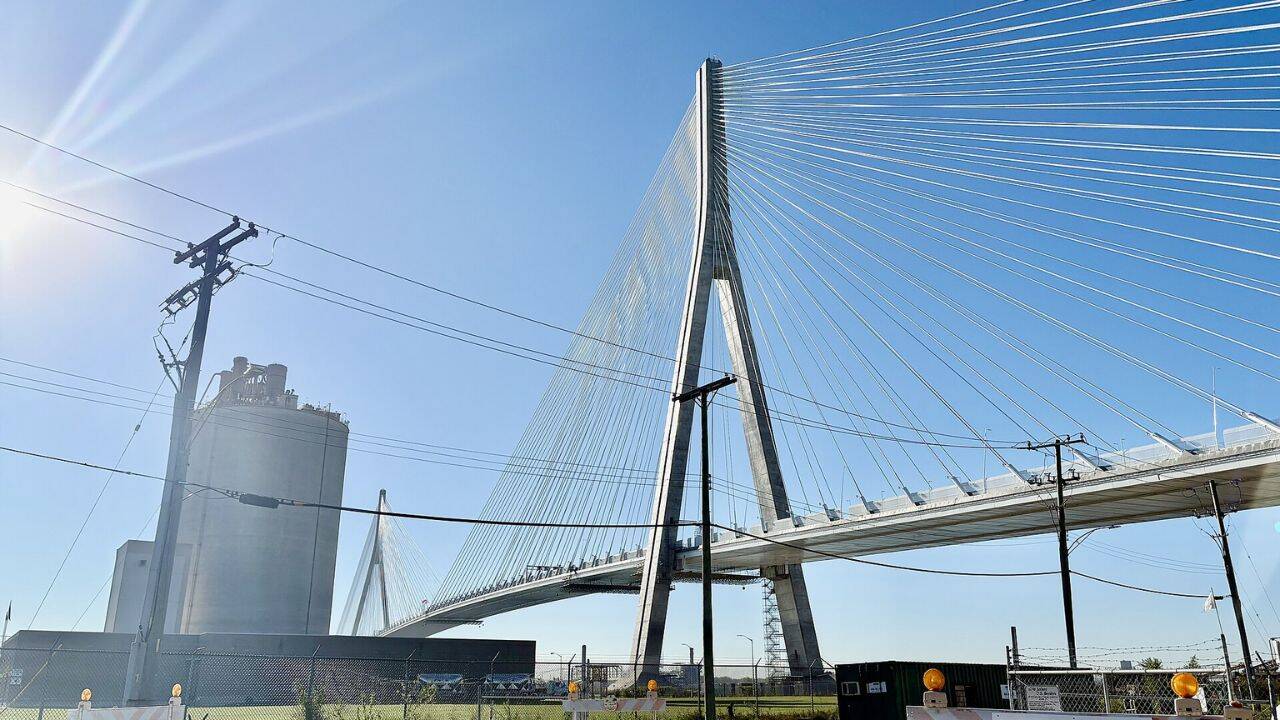
The bridge in late September 2025, shown with the cranes removed from both support towers. Image Credit: Wikipedia
How was the Gordie Howe bridge designed to handle such a demanding environment
Building a long cable-stayed bridge across the Detroit River presented several engineering challenges. DYWIDAG(Dyckerhoff & Widmann AG), which supplied the stay-cable system, says the bridge was designed to cope with extreme temperature swings and the possibility of ice-galloping affecting the cables.The company describes the project as the world’s longest composite-deck stay-cable bridge, with an 853-metre main span. Because of the local climate and the scale of the structure, the cable system required specialised protection and damping measures. DYWIDAG supplied 216 stay cables for the bridge and was involved in developing the cable system alongside the wider bridge design. According to the company, the cable system and bridge geometry were developed in parallel, helping avoid redesigns and reduce design cycles.DYWIDAG also says fatigue resistance, corrosion protection and installation risks were addressed before construction, while a custom damping system was developed to meet the demands created by the local climate and structural requirements. These claims come from DYWIDAG’s own project account and describe the supplier’s role in the bridge’s engineering and construction.
How this record-breaking border bridge is important for trade
The bridge has been built in a region where cross-border transport is closely connected to manufacturing, particularly the automotive industry.
Vehicle manufacturers and suppliers on both sides of the Canada-US border depend on the movement of parts and materials through the Windsor-Detroit corridor. The timing of these shipments can be particularly important because manufacturing operations often rely on components arriving according to tightly managed production schedules.The new bridge is intended to provide additional capacity and another major route across the Detroit River.
It creates a direct highway-to-highway connection between Ontario’s Highway 401 and Michigan’s Interstate 75 through the wider Gordie Howe International Bridge project. Official project documents identify increased border-crossing capacity, improved connectivity and network redundancy among the project's transportation objectives.
That additional route could also give the regional transport system greater resilience when accidents, breakdowns, congestion or other disruptions affect an existing crossing.
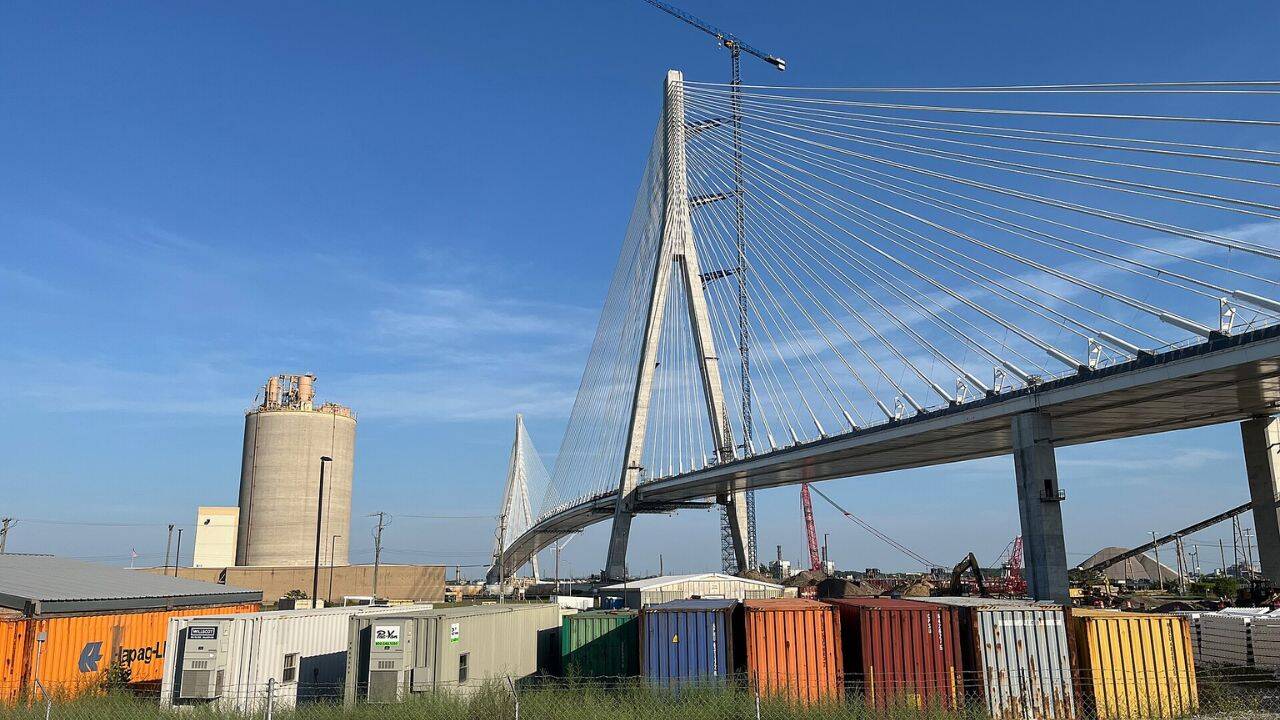
Image Credit: Wikipedia
Is the Gordie Howe bridge only for cars and trucks
The project also includes a dedicated multi-use path for pedestrians and cyclists. The path is separate from the vehicle lanes and is designed to connect with walking and cycling networks on both sides of the border. It is also part of the Trans Canada Trail network, giving the international crossing a recreational and active-travel function in addition to its role in commercial transportation.The pedestrian and cycling facility did not open at exactly the same time as vehicle traffic.
The bridge opened to motorists on 27 July 2026, while the multi-use path opened separately later. The path allows pedestrians and cyclists to cross the Detroit River without using the vehicle lanes, although users must still complete the applicable border-processing requirements. The project has described the path as a toll-free connection intended to provide another way for people to travel between Windsor and Detroit.
What has the project meant for nearby communities
The project has included community investment alongside its transport role. The ‘Gordie Howe International Bridge Community Benefits Quarterly Report’ describes a $20 million Canadian-dollar Neighbourhood Infrastructure Strategy supporting communities on both sides of the border. The report says approximately $14.6 million had been allocated to 29 projects in Windsor and Detroit by 2019, while further projects were later added.
Among the initiatives were improvements to local trails, tree planting, community organisation grants and support for neighbourhood programmes.The Community Benefits Plan has also supported the Delray Home Improvement Program in Detroit. By the end of the 2022-23 fiscal year, the project reported that 65 homes had either been repaired or were in the process of receiving repairs. The programme's service area was also expanded to include eligible homes in the Carbon Works neighbourhood.
The C$4 million figure previously cited for the programme has been removed here because the available official source confirms the programme and its results but does not establish that precise figure clearly enough for inclusion.
What could the bridge mean for the future
The opening marks the completion of a major binational infrastructure project intended to add capacity to the Windsor-Detroit transportation corridor. The bridge combines six traffic lanes, a long cable-stayed main span, new border facilities, a direct highway-to-highway connection and a multi-use path for pedestrians and cyclists.Canadian government officials have said the project is intended to strengthen supply chains, support manufacturing, improve the movement of goods and people and increase the resilience of the North American trade corridor. The longer-term importance of the bridge will depend on how it performs as part of the wider Windsor-Detroit transportation network.Its additional capacity gives commercial operators, commuters and other travellers another route across the Detroit River, while the new highway connections and border facilities are designed to make the crossing part of a more integrated transportation system. In that sense, the bridge is not only a record-setting structure. Its practical significance will ultimately be measured by how effectively it supports the movement of people and goods between Canada and the United States.