
 7 months ago
70
7 months ago
70

 BBC
BBC
Ellie is one of the 2,178 children in Nottinghamshire who are currently being taught at home
"The world is quite a scary place and unless children are prepared, I think that can evoke quite a lot of anxiety and nervousness and fear."
Former primary assistant head teacher Deb Hadden runs sessions designed to support children who are being educated at home in Nottinghamshire.
While working in mainstream education, she noticed "a lot of children" needed more support with the social and emotional aspects she claims "schools just don't have the capacity to provide".
Deb believes the Covid-19 pandemic has had an impact too, namely "more social media, more screen time, less building of those relationships face to face".
She founded the Ethereal Learning Foundation in Nottingham in January 2021 and, at first, ran workshops in schools supporting mental health.
Deb opened a learning centre in Mapperley in April 2024 before moving to run her sessions from St Mary's Church Family Centre in Arnold a year later.
She runs two drop-off sessions a week, where children who are being home-schooled can play and learn with each other.
The number of children attending the sessions has risen from three to 55, Deb says, while latest figures show there has been an increase in the number of children being home-schooled in Nottinghamshire.
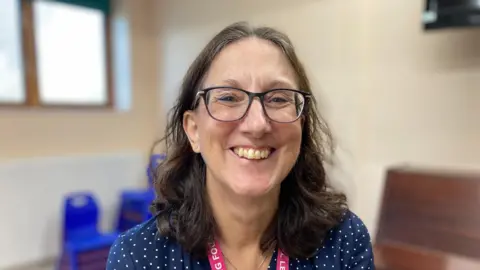
Deb Haddon says the world can be "quite a scary place" for some children
Parents have a responsibility to ensure their child receives a full-time education from the age of five - but, if they are home-educating, they do not have to follow the national curriculum, give formal lessons or formally assess progress.
Government guidance states home education must be age-appropriate and enable children to make progress according to their particular level of ability.
The sessions provided by Ethereal Learning Foundation are for children aged between four and 12 - and because each child attends for less than 15 hours a week, it is not classed as a school and does not need to be inspected by Ofsted.
Deb says: "These sessions are very much about play and project-based learning, discovery, exploration and creativity.
"I set up a theme, but it's very much an invitation to the children to direct their learning."
While the sessions do cover some maths and writing skills, Deb says parents of the children who attend provide the academic side of their learning.
"We provide a lot of the social and emotional aspects," she adds.
Sara home-educates her daughter, Ellie, and takes her to the sessions run by Deb.
The family made a decision to take the eight-year-old out of school after her first few months there.
"It became really obvious that the school environment wasn't right for Ellie, so we started researching home-schooling and what was offered in the community," says Sara.
"After a lot of late-night discussions and talking to family and friends, we decided to take the leap and start home educating Ellie."
As well as reading, writing and other studying at home, Ellie and Sara also visit National Trust properties, and go to gymnastics lessons and swimming.
"I'm not a teacher, but I've always worked with children so I've got some knowledge of what learning can look like and I've done a lot of research," Sara says.
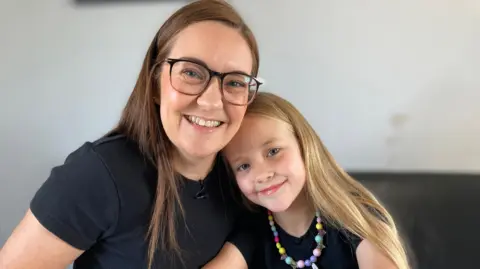
The kitchen at home is also a classroom for Ellie and Sara
Ellie is one of the 2,178 children in Nottinghamshire who are currently being taught at home instead of in schools, according to figures from the county council.
In the previous academic year, there were 1,839 children who were being home-schooled. The rise marks an increase of just over 18%.
"Every parent or carer has the right to educate their child as they see fit, as long as it's in line with the law," says councillor Hana John, Nottinghamshire County Council's cabinet member for education and special education needs and disabilities.
She told the BBC that children's anxiety, other mental health issues or "ideological and philosophical" factors are among the reasons for parents turning to home schooling.
A former teacher herself, Hana believes mainstream school is the best place for most children but says it can depend on a case-by-case basis.
"It depends on the capacity of the family and what they can provide," she adds.
"I have seen home schooling where the parents have become quite overwhelmed because it does involve a lot of organisational skills to provide a high standard - the best standard - of education for your children.
"The best set-up I've seen is when there is a network around that child and a community, so children don't miss out on interacting with other children, and enrichment experience that they would gain if they were in full-time mainstream education."
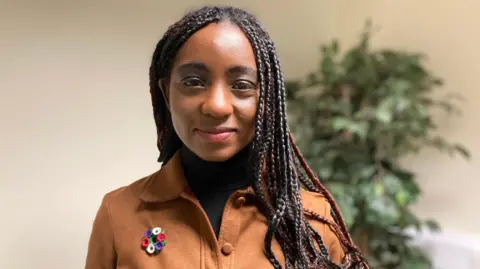
Hana John warns some parents become "overwhelmed" with home schooling
The number of children being home-educated nationally has risen from 111,700 in autumn 2024 to 126,000 in autumn 2025, according to government data published on 15 January.
Pepe Di'lasio, general secretary of the Association of School and College Leaders union, is troubled by the increase.
"There are a lot of things gained in school, outside the curriculum but within the school setting," he says.
He recognises some families can do a good job of home schooling, but says mainstream education is the best place for most children.
Pepe says: "If a child is more isolated, issues such as being anxious might not be dealt with at an early stage.
"Some schools have access to mental health support. Some give staff training in mental health."
'Best interests of all children'
Similarly, a spokesperson for Ofsted says: "Many parents do a fantastic job educating their children at home.
"However, we are concerned about the growing number of parents who feel forced into home educating because they believe there is no local school that can meet their child's needs.
"This is one of the reasons why our renewed inspection framework focuses so keenly on inclusion, and ensuring schools are working in the best interests of all children."
Measures in the Children's Wellbeing and Schools Bill, which was due to be debated in the House of Lords on Monday, will require local authorities to "assess the child's home environment" within 15 days of them being added to a register of children not in school.
In a statement, the Department for Education says: "In the vast majority of cases, children achieve and thrive best in schools - but we recognise that home education can be the right choice for some families when it is suitable and in the child's best interests.
"The Children Not in School registers proposed in the Children's Wellbeing and Schools Bill will help local authorities to identify those children who are not receiving a suitable education and to take action to support them.
"In the upcoming Schools White Paper, we'll set out how we will how we will make sure all children have the chance to achieve and thrive, securing the work and life outcomes they deserve."
Additional reporting by Laura Hammond


