
 7 months ago
51
7 months ago
51

Laura KuenssbergSunday with Laura Kuenssberg
 BBC
BBC
Is there a boys' club in politics? I ask a smart, tough, very experienced woman who has worked at the highest level of government.
"Yes," comes the answer - without a second's hesitation. "The end."
Yes, many more women than ever have taken up perches on the green benches - but that's not the same as having access to the inner sanctum where decisions are made.
Yes, there are many more women working at senior levels in Whitehall - and all the main parties have made big efforts to get more women into parliament. But that's not the same as being listened to.
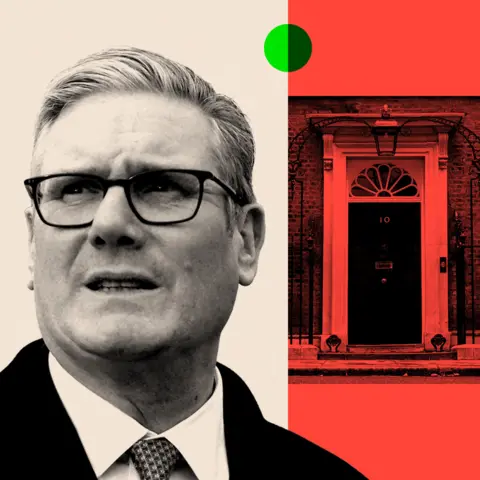
And yes, as part of Sir Keir Starmer's efforts to prop up his administration, three senior men have used the exit – the boss of the civil service, his chief of staff, and his head of communications, to be replaced, at least in part, by women.
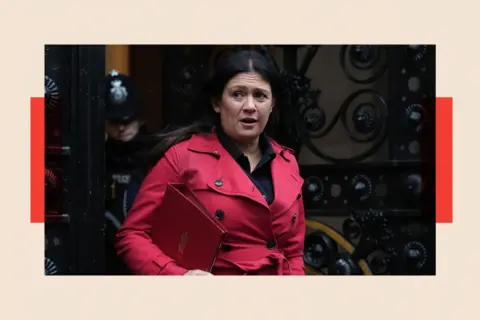
But this week, a serving member of the cabinet, Lisa Nandy, suggested Labour has been operating as a "boys' club" and went on to complain "some of the briefings have absolutely been dripping with misogyny".
Don't just casually ignore one of Labour's most senior politicians suggesting - quite openly - that a clique of men have had too much sway in government, and some of them have used woman hating as a political tool.
But what is the "boys' club" and how big a problem is it for Sir Keir?
"Massive," says one minister.
 PA Wire
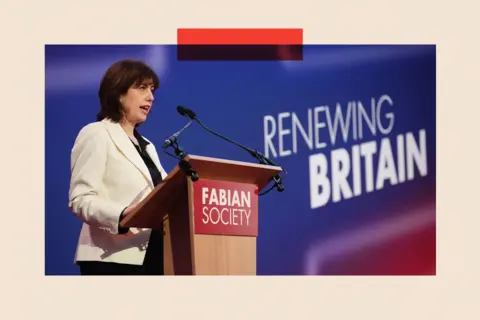
Deputy leader Lucy Powell is the second-highest ranking politician in the Labour Party
It's more than 100 years since the first woman was elected as an MP - there weren't even women's loos when Nancy Astor arrived. She's said to have nipped down to the Ritz to use the facilities before a ladies toilet was installed in Parliament's neo-gothic palace.
More than a 100 years later, Rachel Reeves arrived in the Treasury in 2024 to find a urinal in the chancellor's bathroom - that shows how long it has taken for women to get access to all areas of politics.
Loos aside, one former Labour minister tells me the so-called "boys' club" is a particular problem for Starmer because, "You have a prime minister who is not very political, so he has had to rely very heavily on the network that he has - which is the boys' network. He has been unable to see the pitfalls or the issues or problems of it".
There was even, one cabinet minister says, a "whole network of Matts". Others have joked before about the "boys in blue suits", or the "ladz" (yes, with a z), a group whose hero was Morgan McSweeney, the departed chief of staff.
But there have been plenty of women at senior levels in and around Starmer's operation – the home secretary Shabana Mahmood, the foreign secretary Yvette Cooper, the general secretary of the Labour Party Hollie Ridley, some of the press team, and, of course, his chancellor.
 Reuters
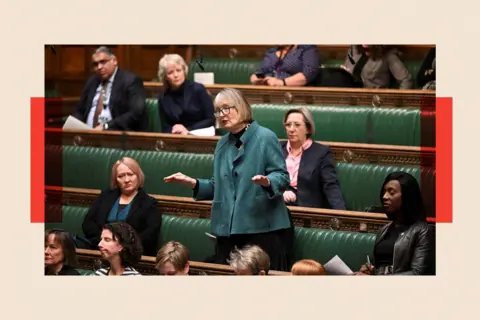
Labour peer Harriet Harman is urging the prime minister to name a woman as his first secretary of state
One insider and Starmer ally told me that "boys' club" perception is "totally unfair on all the brilliant women" who have been involved. Another senior figure said they were "boiling with rage" when that accusation had been chucked around.
Yet senior sources suggest No 10 has sometimes made it difficult for the very senior female ministers to get "face time" with the prime minister – access is one of the most precious commodities in politics.
There does, at least for now, seem a determination that things will change with a new interim female chief of staff and a female political director in post.
"It probably doesn't exist anymore – because a lot of the people that gave rise to some of that culture have gone now," says a cabinet minister.
But they suggest the perception of the "boys' club" was also a shorthand for something else. "It wasn't just a boys' club, it was a factional group as well".
One veteran Labour figure told me: "Not only is there a boys' club, but the most important thing is that there are all these cliques and all these factions that just don't talk to each other - people get together and talk to people only in their bubble."
That is what has led to so many mistakes, many of Starmer's internal critics say.
 Reuters
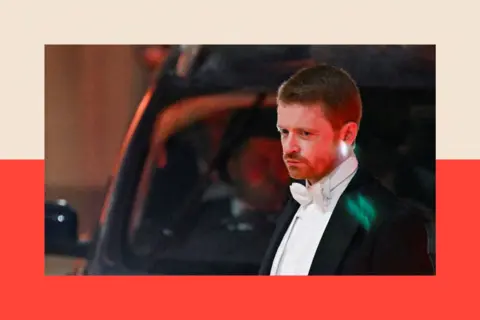
Morgan McSweeney quit as chief of staff after mounting scrutiny over his role in Lord Mandelson's appointment as the UK ambassador to the US
He relied on too small a group of advisers, who came from one, more hard-edged wing of the Labour Party, favoured by Morgan McSweeney, and stuck his fingers in his ears to a wider range of views – it was about one faction dominating, not the deliberate exclusion of females.
One Whitehall insider who deals with Downing Street said: "It means you're not getting the best people if you exclude anyone, for any reason. It's not woke, it's just making sure you get the best people when it comes to the government."
There are promises the prime minister will listen to a wider range of views, more voices from different parts of the party. Some are trying, very obviously, to make sure they get more of a look in from now.
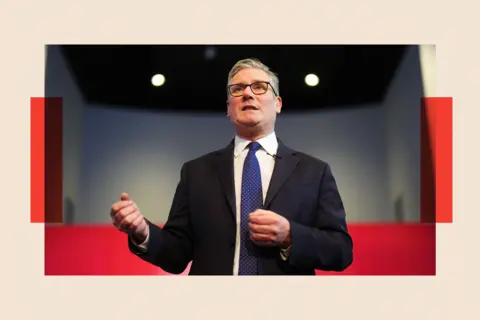
At the start of the week Ed Miliband said the prime minister had to be "bold" and he wanted to focus on class. On Thursday Angela Rayner said the government had to do more for the hospitality industry, and Lisa Nandy made her remarks about misogyny and the "unforgivable" turmoil in government.
One senior Labour politician warns against any attempt to brush off women's concerns by saying it's all about warring factions, telling me: "It's not good enough to just say it's because people oppose Keir or Morgan's agenda - that gives them an excuse to not do anything and that would be hopeless".
And after the last few weeks there are specific calls from women in the Labour Party for an inquiry into the behaviour of the late Mohammed al Fayed, and a woman to be given the cabinet post as first Secretary of State.
 PA Wire
Others are sceptical – suggesting plenty of MPs have tried, and been disappointed, for years to get the party leadership to look outside its own narrow group.
One told me: "We would say, 'Why don't you engage with women? Why wouldn't you engage with backbenchers?' They just looked utterly baffled - he wouldn't engage."
Let's see. Does Westminster have a wider problem when it comes to how women are treated?
There are far too many examples of sleazy or improper behaviour, or harassment. It is still a late night working culture where the line between what's social and what's professional can be blurred, and power swirls around along with the warm white wine.
As an experienced former cabinet minister admits, "if you are a junior female in Westminster you can still find yourself in uncomfortable situations" - or, for that matter, a young male staffer too.
But the atmosphere, and what is considered acceptable, has completely transformed in recent years.
Leaving aside behaviour that is clearly improper, are there features of the way the system works that make it not, perhaps one big giant boys' club, but a place that's easier for men?
 PA Wire
Lisa Nandy has been culture secretary since 2024
Let's spare the blushes of the frontbencher who asked a senior female adviser to get him a cup of coffee during the milling around before cabinet. She told him to get his own. He was mortified minutes later when the prime minister of the day called on her to answer the first question during the meeting.
Politics is certainly not the only business where old fashioned assumptions are still made, women are paid less, or find it harder to progress and are sometimes overlooked.
But as one former cabinet minister suggests, perhaps, "it's not deliberate, but the culture is just so male. There are a lot of what you'd call male characteristics that are deemed to be what you need to get on – saying you have all the answers, briefing against people who aren't doing what you want", referring specifically to a combative way of doing interviews where "No 10 comms would be yelling at you for not pushing back, when it's just not the way women operate".
A hugely experienced female party activist suggests politics, fundamentally, is just more attractive to men, some of whom just see "women are like blobs, the men just hang out together, and they like risk more than women do. It goes back to the days when they went off and killed tigers, and it is in our DNA to be more risk averse".
You might raise your eyebrows, but votes need to be won. That means rivals need to be beaten.
One senior Labour figure describes it as "gang warfare" saying, "you rely on people who have been in the trenches with you and been through battles and that means you are exclusive rather than inclusive".
"Does that mean people you need in the room to make decisions are not there? Does that mean women? Yes, but that is life."
 Reuters
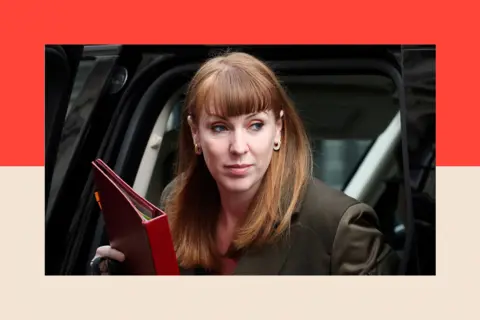
Angela Rayner resigned as deputy prime minister and housing secretary after failing to pay enough tax on a flat in Hove
That remark might drive some people round the twist. Perhaps that is about as honest an admission about why things sometimes work the way they do in SW1 as you're going to get.
And there is widespread agreement in Westminster that women are so often held to different standards than the men they sit alongside. That's not new.
We are a long way since the first female prime minister made time to iron her husband's shirts, and be pictured doing it. But despite record representation of women, parity seems way off. Whether it's how they look, how they act, what they wear, the lens applied to women is different.
A senior Labour figure accepts Angela Rayner made mistakes in her tax affairs, but suggests she's always been treated more harshly than a man would have been in her position.
"She does manoeuvre, but she is also uncompromising and lives her life, has never changed her accent. And some of the men can't cope with that."
Another source points to how Starmer's new pick for Cabinet Secretary, Dame Antonia Romeo, has been briefed against and written about in acid terms in the last few days. It's like, "How dare she be glamorous? All the bits they talk about - her ambition, in any man in those would be seen as strengths. But because it's her, it's used against her".
An investigation into one formal complaint against Romeo alleging bullying concluded there was no case to answer.
"The smears being thrown against her are reprehensible and hypocritical," Rupert McNeil, former head of HR at the Civil Service said recently.
But does the notion of the "boys' club" really make a difference? In a narrow way, it does right now, because dismantling the perception of it, and listening to a wider range of his colleagues is one of the tasks Starmer's been set by his own MPs.
It matters profoundly that one half of the population, the narrow majority after all, is fairly represented by the politicians we choose to serve us.
And it matters too when it comes to having different perspectives in the rooms where decisions are taken.
It's a matter of public record, from the second most senior civil servant in the country during the pandemic, that a lack of women in the room affected the decisions taken during an emergency.
Helen McNamara, who spoke to us about the Covid inquiry on Newscast, said there'd been a lack of thought about childcare during school closures, how domestic violence victims could be trapped during lockdown, and too much attention paid to how it affected more male pursuits - hunting, shooting and fishing.
Another source told me opening up car showrooms and golf courses was considered before thinking about kids' playgrounds.
Before you scream, of course issues like childcare, education and domestic violence affect men, and not just women. Of course, neither men nor women all care about the same things.
But one activist who has been around for many years relates: "I'm still a woman in a man's world. I count every meeting - there are 45 men and five women. They never count, or say, 'Hang on, we need some women around to see their point of view.' They don't think about it".
The numbers aren't always so outrageously heavily skewed. There has been enormous progress in the numbers of female politicians, senior civil servants, and in other parts of public life too.
But as another Whitehall insider suggests: "The habits of Westminster were set when nearly all politicians were men, nearly all journalists were men, and nearly all civil servants were men".
And it was the decision to appoint Peter Mandelson that has prompted this bout of soul searching about women's role in government, with some convinced Starmer would simply never have got into this mess if he'd included women in the decision.
One senior figure said: "At the heart of that decision was misogyny – it required you to think that the Epstein victims were neither here nor there".
Men may no longer always be in such a majority, but perhaps old habits formed years ago, really do die hard. If Starmer really wants to change the perception, the pressure is on him to respond.

BBC InDepth is the home on the website and app for the best analysis, with fresh perspectives that challenge assumptions and deep reporting on the biggest issues of the day. Emma Barnett and John Simpson bring their pick of the most thought-provoking deep reads and analysis, every Saturday. Sign up for the newsletter here


