1 month ago
41
1 month ago
41

 : CIVICUS discusses the challenges posed by Paraguay’s ‘anti-NGO law’ with Hugo González, executive director of the Paraguayan Network of LGBTQ+ Artists (REPAR+), a civil society organisation (CSO) that promotes the rights of LGBTQI+ people, which has joined the constitutional challenge against this law.
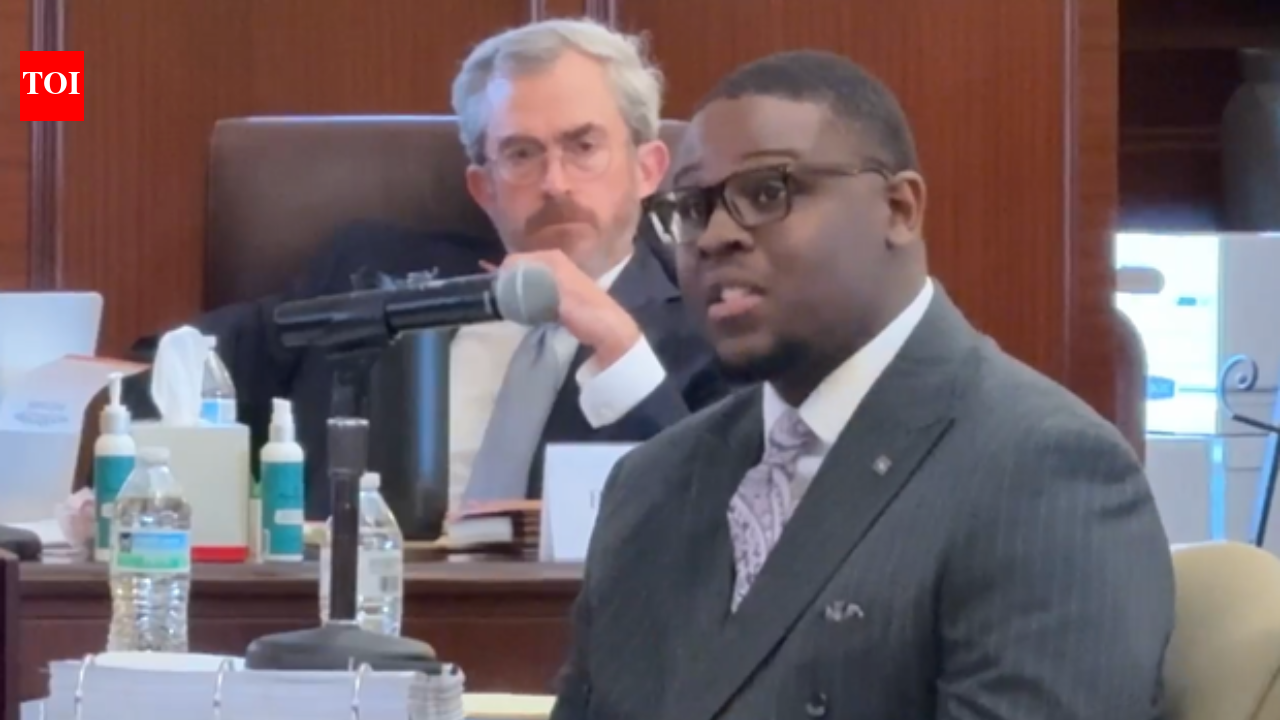
 Hugo González
Thirty-eight CSOs have appealed to the Supreme Court of Paraguay to block Law 7363, which regulates CSOs. Presented as a transparency measure, the law subjects organisations to a registration and monitoring regime that civil society considers disproportionate. Its implementation further restricts Paraguay’s constrained civic space, with groups working on gender equality and sexual diversity under particular pressure.
What are the problems with Law 7363?
The law was enacted in November 2024, and its regulations came into force in October 2025. It applies to CSOs that receive or manage private or public funds from national or international sources and use those funds to influence public policy or state activities. The regulatory decree defines influence broadly, including reports, press releases and other forms of public expression.
The law establishes a public register administered by the Ministry of Economy and Finance and requires balance sheets, minutes, supporting documents and annual reports on programmes, beneficiaries, professionals, staff and affiliated entities. It also prohibits reference to donor confidentiality to circumvent these controls and provides for sanctions ranging from a formal warning to suspension and deregistration.
Civil society doesn’t oppose transparency. We were already complying with civil, labour, tax and anti-money laundering obligations, so this law was unnecessary. We call it the ‘big stick law’ because it duplicates controls, uses broad definitions and turns public advocacy into a risk factor that triggers extraordinary scrutiny for punitive purposes.
In what political context was the law passed?
The bill was passed thanks to the majority held by the ruling Colorado Party. The process moved forward against a backdrop of stigmatisation of CSOs, human rights activists and journalists, and coincided with the work of a congressional committee that framed CSO funding within a narrative centred on money laundering.
The law also reflected the convergence between parts of the ruling coalition and conservative religious networks. Among its main proponents were legislators such as Gustavo Leite and Lizarella Valiente, who have also participated in activities and initiatives linked to evangelical organisations. While this doesn’t prove that these organisations drafted or funded the law, it does highlight an asymmetry in access and scrutiny between groups that influence public policy.
The law treats different groups that influence the same policies very differently. It imposes extensive controls on CSOs but expressly exempts churches and religious groups.
What impact is the new law having?
The impact began even before the first sanctions were imposed. Ever since the Ministry of Economy and Finance launched the registration portal, CSOs have had to devote time, money and staff to complying with the new accounting, administrative and legal requirements. For small organisations or those run by volunteers, this means that a large proportion of their resources is no longer being channelled into activities, assistance, research or support services.
Uncertainty is also a factor. Although sanctions are not yet being applied on a large scale, the law is having a deterrent effect. Donors, organisations and supporters fear the consequences of getting involved or advocating for causes.
The obligation to provide detailed information on beneficiaries and supporters poses privacy risks, particularly in small communities and among vulnerable groups. The safety of these people depends on who has access to the information, for what purpose and with what effective safeguards.
What obstacles do LGBTQI+ organisations face, and how does the new law exacerbate them?
In Paraguay, gender and diversity organisations operate in a context of structural discrimination, characterised by hate speech, exclusion from education and the labour market, barriers to accessing healthcare and difficulties in reporting violence. Added to this is the lack of a comprehensive anti-discrimination law, legal recognition for same-sex couples and accessible administrative procedures for the recognition of gender identity. All this leaves LGBTQI+ people in a particularly vulnerable situation.
Law 7363 exacerbates these difficulties, as it imposes broad and unclear requirements on CSOs that defend these rights. REPAR+’s artistic activities can be regarded as advocacy, culture and support all at once. The vagueness of the law, combined with discretionary powers and the threat of suspension, makes it impossible to predict how these activities will be classified, and could stifle critical voices before any sanction is imposed.
How has civil society mobilised to challenge the law at the Supreme Court?
The response has combined dialogue, international appeals, litigation and technical analysis. Since December, CSOs working on community development, culture, the environment and human rights, as well as rural communities, have filed constitutional challenges against the law and its implementing decree. REPAR+ has joined the effort because we believe freedoms of association and expression are essential for organisations that support LGBTQI+ people, denounce discrimination and engage in public policy.
We hope that the Constitutional Chamber of the Supreme Court will examine these challenges independently and urgently, in the light of the Constitution, the American Convention on Human Rights and the International Covenant on Civil and Political Rights. A favourable ruling would directly protect the organisations bringing the challenges and establish an important precedent. We don’t seek to be exempt from accountability. We seek to prevent a regulatory process from becoming a form of political surveillance, exposing vulnerable people or serving as punishment for dissent.
What action is needed in and outside Paraguay to reverse these restrictions?
Within Paraguay, the court must rule urgently and prevent irreparable harm while it considers the merits of the case. However, a lasting solution requires Congress and the executive to repeal or comprehensively modify the law, through a pluralistic consultation process. Any regulation should be precise, avoid duplicate registrations and protect beneficiaries, donors, victims and workers. Intrusive requests should be subject to independent scrutiny and sanctions should be limited to what is strictly necessary and proportionate. These criteria should apply equally to anyone who manages public funds or influences policy, including religious organisations.
The international community could continue to monitor the situation at the United Nations, particularly through the Human Rights Council Universal Periodic Review process, and at the Inter-American Commission on Human Rights. It can also take action through embassies and cooperation agencies. Donors should offer flexible support to cover accounting, legal, security and technological costs, rather than withdrawing out of fear of the new regime.
Paraguay also needs a comprehensive anti-discrimination law, effective recognition of gender identity and protection for human rights defenders and journalists.
We are not asking for external guardianship or privileges. We are calling for democratic solidarity to preserve a space where people can organise, question and propose ideas. Transparency should strengthen democracy, not expose vulnerable people or turn criticism of those in power into a cause for suspicion.
CIVICUS interviews a wide range of civil society activists, experts and leaders to gather diverse perspectives on civil society action and current issues for publication on its CIVICUS Lens platform. The views expressed in interviews are the interviewees’ and do not necessarily reflect those of CIVICUS. Publication does not imply endorsement of interviewees or the organisations they represent.
GET IN TOUCH
Instagram
Hugo González/Instagram
Hugo González/LinkedIn
SEE ALSO
Paraguay: arbitrary detention of land rights defenders CIVICUS Monitor 24.Apr.2026
Cutting civil society’s lifeline: the global spread of foreign agents laws CIVICUS Lens | report 19.Oct.2025
Paraguay: ‘The new law’s purpose is to increase government control over civil society’ CIVICUS Lens | Interview with Marta Ferrara and Olga Caballero 25.Oct.2024
© Inter Press Service (20260814055428) — All Rights Reserved. Original source: Inter Press Service