52 minutes ago
3
52 minutes ago
3

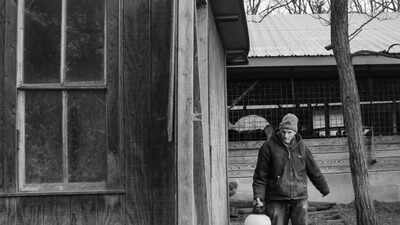
For Biddle, the farm represents decades of work and memories (Bellisario Student Media photo)
For 70 years, Jeff Biddle has lived and worked on Bear Meadows Farm near Tussey Mountain in Pennsylvania. He has raised cattle, grown crops and watched bears, turkeys, deer and waterfowl from the woods around his home.
In July this year, Biddle permanently protected the 170-acre farm from development after turning down two lucrative offers from buyers, according to the Centre County Farmland Trust (CCFT).Biddle finalised a conservation easement with CCFT in July. The legally binding agreement prevents the land from being developed and is attached to the property deed, meaning the protection will remain even if the farm changes ownership in the future.Biddle had been thinking about preserving the farm for about 30 years. He rejected two offers from interested buyers, including one who told him he could make a lot of money from the property and pointed to its beauty.“And I said ‘Yes, I do,’ have a beautiful property,” Biddle said. “And that’s because there’s no houses on it, which is true. I mean, once you build houses and look at rooftops, it’s not beautiful anymore. It’s a nice development,” he added.
For Biddle, the farm represents decades of work and memories. He remembers picking rocks from its fields as a child and did not want to see that work replaced by development.“Honestly, I have been picking rocks off this farm ever since I was a little kid. We grow a lot of rocks here. I don’t know how many tons and tons and tons of rocks I have picked off this farm. And to see a bulldozer come in and take all those years of hard work and not care- no,” he said.
Agriculture and wildlife protected
The conservation easement will keep Bear Meadows Farm protected from development while allowing it to remain available for agriculture. The farm’s fields, forests and open land provide benefits for water quality and wildlife habitat.The land also contains trees and soil that store carbon. Its open fields will remain visible from Route 322 for residents and visitors to Centre County.The farm is near the edge of the Centre Region’s 'growth boundary'.
Dan Guss, president of CCFT, said its fields and forests are also important to the headwaters of Spring Creek.“Bear Meadows Farm is a beautiful, well-run farm located on the edge of the ‘growth boundary’ for the Centre Region,” Guss said. “The fields and forests on the farm are an important groundwater resource for the Spring Creek headwaters,” he added.The conservation agreement was made possible through a partnership between CCFT and ClearWater Conservancy.
ClearWater helped with technical and legal work, easement documents, mapping and fieldwork.“Preserving the Bear Meadows Farm not only protects a loved family dairy farm but also advances the Upper Spring Creek Watershed Coldwater Conservation Plan and maintains scenic open space in our growing region,” said Ryan Hamilton, ClearWater Conservancy’s Director of Land Conservation.
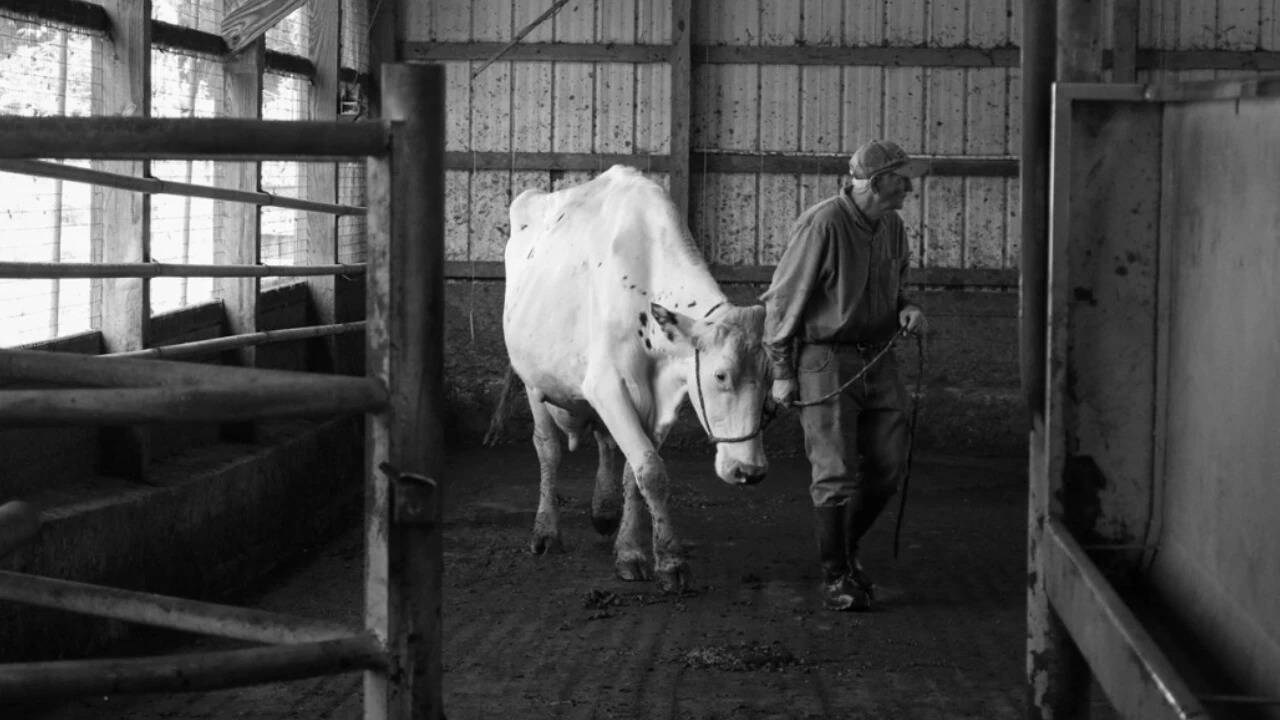
"For some reason, ever since I was a kid I wanted to have a dairy farm,” Biddle said.
Farm connects to Spring Creek watershed
The property is also connected to the wider Spring Creek watershed.
ClearWater Conservancy has worked for more than 30 years to protect the watershed and land around its headwaters.The watershed includes surface streams, groundwater and subsurface aquifers. It provides drinking water, habitat for wild trout and opportunities for outdoor recreation and tourism.Bear Meadows Farm contains a historic spring house from which the headwaters of an unnamed tributary to Spring Creek flow.
The property also has two other unnamed tributaries and two ponds fed by seepage springs.A Baseline Documentation Report prepared by ClearWater as part of the conservation easement said water from the farm flows towards Spring Creek.“All of the seeps and streams on the Bear Meadows Farm Property flow in a northerly direction to Spring Creek, which flows to Bald Eagle Creek, to the West Branch of the Susquehanna River, and finally, the Susquehanna River, a major contributor to the Chesapeake Bay,” the report said.The farm includes 50 acres of pasture and hay and 11 acres of cultivated crops. It also has 55 acres of deciduous forest, 13 acres of evergreen forest, 26 acres of mixed forest and four acres of grassland.
From family farm to dairy operation
Biddle’s connection to the property began with his father, Harold Biddle, who bought six acres in the woods for a hunting camp before purchasing the 175-acre property in 1959. He restored the barn, repaired outbuildings and raised beef cattle.Jeff grew up on the farm before leaving to become a cabinet-maker and run his own woodworking business. He continued helping his father with the beef operation while raising his family with his wife, Claudia.Dairy farming, however, had always been an ambition. “For some reason, ever since I was a kid I wanted to have a dairy farm,” Biddle said. “I don’t know why.”When Biddle was 49, he and Claudia were preparing to buy a farm in Mifflin County.
Instead, he and his father agreed to change the operation at Bear Meadows Farm. Jeff and Claudia took over the farm in 2002.Three years later, they converted it to a grass-based dairy. In 2009, they received a permit from the Pennsylvania Department of Agriculture to sell raw milk. Biddle calls his move into dairy farming his “mid-life crisis”.Today, the farm raises grass-fed dairy cows and sells raw milk, ground beef and eggs. It also sells about 10 types of cheese made from the farm’s milk by an off-site cheesemaker.