4 months ago
25
4 months ago
25


 Getty Images
The Philippines has declared a state of national energy emergency, citing the "imminent danger" posed to the country's fuel supplies by the conflict in the Middle East.
President Ferdinand Marcos Jr said he had signed an executive order to safeguard energy security amid severe disruption to global supply chains.
The US-Israel war with Iran - and the effective closure of the Strait of Hormuz, a key shipping route - has sent shock waves through global energy markets, causing soaring prices and shortages.
The Philippines is highly dependent on fuel imports and particularly vulnerable to disruptions in production and shipments.
"A state of national energy emergency is hereby declared in light of the ongoing conflict in the Middle East, and the resulting imminent danger posed upon the availability and stability of the country's energy supply," Marcos said in the executive order shared with media on Tuesday.
Marcos said the move would allow the government to take "co-ordinated measures" to address disruptions in the country's economy.
He added that a committee had been formed to ensure the orderly movement, supply, distribution and availability of fuel, food, medicines and other essential goods.
The declaration will remain in place for one year unless extended or lifted by the president.
It follows calls from several senators who urged Marcos to acknowledge the "emergency-level" hardship faced by Philippine families due to soaring oil prices.
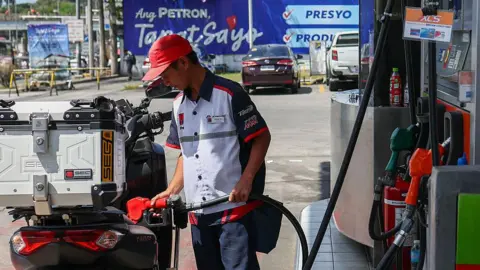
On Tuesday, another surge took the price of petrol and diesel to more than double its pre-war level in February.
The Philippines imports about 98% of its crude oil from the Gulf, and the conflict has had wide-ranging reverberations in the country, from transport to the price of rice.
Since hostilities broke out, the government has handed out subsidies to transport drivers, reduced ferry services, and implemented a four-day work week for civil servants to save fuel.
Earlier on Tuesday, Energy Secretary Sharon Garin said the country had about 45 days of fuel supply left.
Garin told reporters the country would "temporarily" depend more heavily on coal-fired power plants to meet its energy needs in response to the surging costs of liquefied natural gas (LNG).