
 3 months ago
34
3 months ago
34

Just now
Kate WhannelPolitical reporter

 Reuters
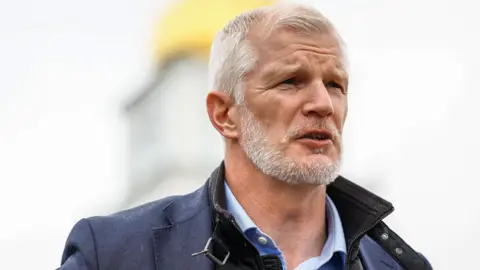
The prime minister needs to make "bold and courageous" decision to fund defence, Al Carns has said, the day after he resigned as the armed forces minister.
Speaking to the BBC, he said he didn't believe enough money had been provided and that an investment plan, which is yet to be published, lacked innovation.
Business Secretary Peter Kyle said he was "sad" to see Healey go but added that he had "faith" in the prime minister and chancellor to fund and deliver a defence plan
Asked if he believed Sir Keir would still be the leader by the next election, Kyle did not directly answer but said: "This is a prime minister with a purpose.
"I am proud to be delivering that purpose with him."
The resignations further weaken Sir Keir Starmer, who has been facing questions about his leadership, particularly in the aftermath of poor elections results at the beginning of May.
The prime minister now has to decide whether to rewrite his long-delayed defence investment plan (DIP) in the light of criticism from Healey and Carns, or stick by his pledge to publish it ahead of the Nato summit next month.
Dan Jarvis, the security minister and a former British Army officer, has been appointed to replace Healey in the cabinet role and will take on responsibility for delivering the DIP.
The plan, initially expected in autumn of last year, will set out how new equipment and infrastructure will be funded over the next 10 years.
In his first interview since quitting the government, Carns said the military could find itself in a difficult position in "the next two to three years should we be tested".
He predicted that in that time there would be a "geographically constrained contest...that will probably involve us, our allies or our partners".
He argued that the DIP was "looking at how to fight the last war not the next one" adding that it "lacked innovation, lessons learnt from Ukraine... a thinking of the bureaucracy and a refinement of procurement processes".
On spending questions, he said the government needed to have "a really honest conversation with the population about the threats we face" and called for "bold and courageous decisions to put the funding in the right place".
Carns said it was down to the prime minister to find the money for spending increases but added: "There is an argument around welfare.
"We need to help people who need to most help in the nation but also get the balance right across defence.
"That's a difficult circle to square, as we're finding."
Kyle defended the government's record on defence spending, pointing to "historic investment" which will see defence spending rise to 2.6% of the national income.
He said both the prime minister and the chancellor wanted to spend more on defence but added: "We have to do so responsibility and have to do in the context of an economy that we inherited that has no growth in it but high taxation and weighted burdens on our economy."
It said the UK needed to move to "war-fighting readiness" and said billions should be spent on additional ammunition, next-generation fast jets, drones and new attack submarines.
The DIP will set out how these commitments will be funded; however its publication has been increasingly delayed by internal departmental wrangling over where the money will come from.
The details of the cuts have not been confirmed, but reports suggest Sir Keir is asking all government departments to trim their capital budgets by 1% to raise £6bn towards defence.
Former Security Minister and Conservative MP Tom Tugendhat said Healey's resignation letter was "about as damning as it gets".
"The reality is now the enemy is at the gate, and we're still not taking this seriously.
"So, it's one of those 'If not now, when?' moments."
Reform UK's deputy leader Richard Tice said the government had made the decision to "fund benefits not bullets and welfare not warfare".
He said his party would "scrap net stupid zero", would not pay voluntary interest on all Bank of England money, and would not pay welfare for overseas nationals to fund defence.


