3 weeks ago
23
3 weeks ago
23

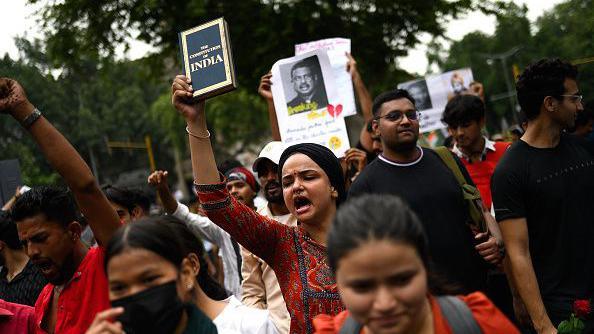 Image source, Getty Images
Tens of thousands of people attended Monday's protests
ByGeeta PandeyZoya Mateen and Azadeh MoshiriReporting fromDelhi
Thousands of supporters of the Cockroach Janta Party (CJP), a youth-led protest movement seeking education and employment reforms, defied a police ban and tried to march on parliament to demand India's education minister resign.
Police wielding canes used tear gas to disperse crowds in central Delhi. Several demonstrators said they were injured in the cane charges. Police did not comment. Some in the crowd threw stones, reports said.
The march followed weeks of protests over alleged exam paper leaks and accusations of a wider education system crisis.
The movement has broadened into one of the most visible expressions of public dissent against Prime Minister Narendra Modi in recent years.
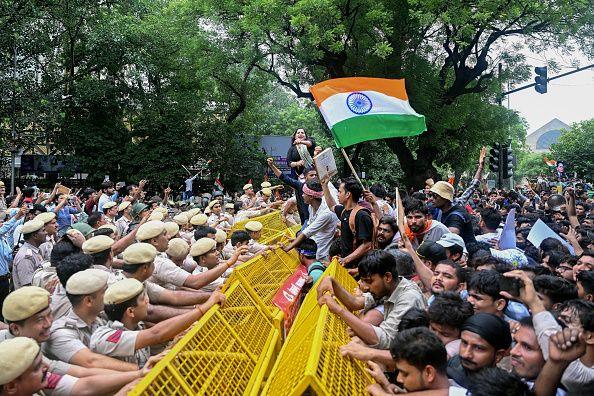 Image source, Getty Images
Clashes were reported between the police and protesters in some places
It gathered fresh momentum over the weekend after police forcibly moved activist Sonam Wangchuk into hospital on the 21st day of a hunger strike in support of the movement. His wife says his fast continues. On Monday, Wangchuk appealed to doctors to discharge him so he could join the march but was not allowed.
The movement takes its name from a remark by India's chief justice, who drew criticism after comparing sections of unemployed young people to "cockroaches" during a court hearing.
Although police had made clear protesters would not be given permission to march to parliament, tens of thousands of students, parents, teachers and professionals gathered from early morning at Jantar Mantar, a 300-year-old observatory in central Delhi, and remained there despite heavy rain.
The contrast between the protest site and the security outside was striking. Young people draped in Indian flags queued for food, painted placards and posed for photographs, while rows of police and paramilitary personnel sealed every road to parliament around them.
Volunteers handed out food and water, patriotic songs blared from loudspeakers and organisers repeatedly urged supporters not to confront police if they were stopped.
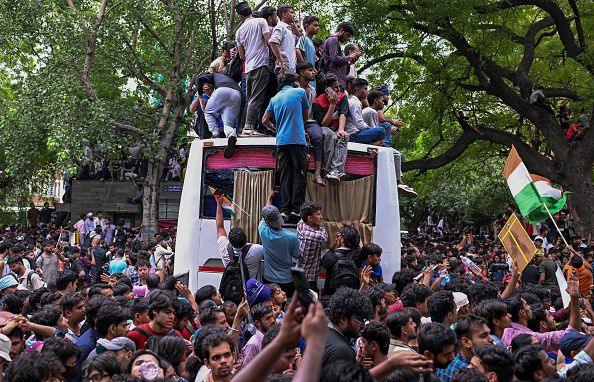 Image source, Getty Images
The protest march began from Jantar Mantar, where thousands have been camping for weeks
As the march began, protesters spilled onto the streets before being halted at successive barricades. Many sat on the road waving flags and shouting slogans.
Others broke away in smaller groups, trying to reach parliament through narrow side streets.
Inside parliament, meanwhile, the opening day of the monsoon session was repeatedly adjourned as opposition MPs protested over the alleged paper leak and other issues.
As police pushed back groups trying to breach the barricades, the first reports of injuries began to emerge.
Some protesters returned to Jantar Mantar bleeding from the head or limping, while others were carried back by fellow demonstrators. Authorities also suspended mobile internet services in parts of central Delhi, leaving many without reliable access to messaging apps or social media.
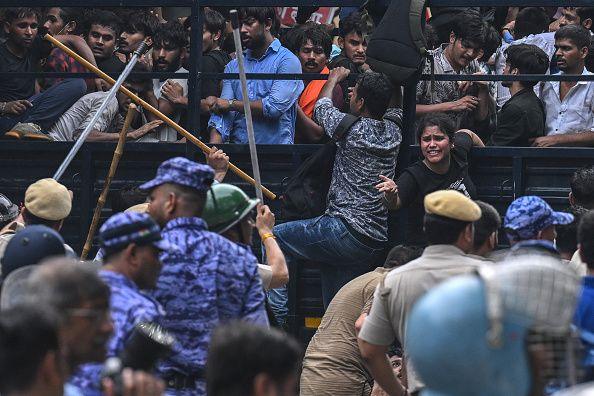 Image source, Getty Images
There was heavy police deployment, with barricades and personnel stopping protesters from marching
"We've treated at least 10 people," volunteer doctor Gaurish Batra told the BBC while bandaging the head of a man whose shirt collar was soaked in blood. A woman with a suspected broken leg was also brought in for treatment.
Both alleged they had been injured in police baton charges. The BBC has contacted Delhi Police for comment.
By early afternoon, two CJP representatives met Health Minister JP Nadda after waiting outside his residence for about two hours.
According to CJP spokesperson Saurav Das, they submitted a letter setting out the group's demands. Das said Nadda assured them he would raise the matter within the government.
Shortly after, Nadda posted on X, urging protesters to end their demonstration and help restore "normalcy" in the capital.
Neither the meeting, nor the statement, did much to ease tensions. Thousands remained at Jantar Mantar, hoping they would eventually be allowed to continue the march.
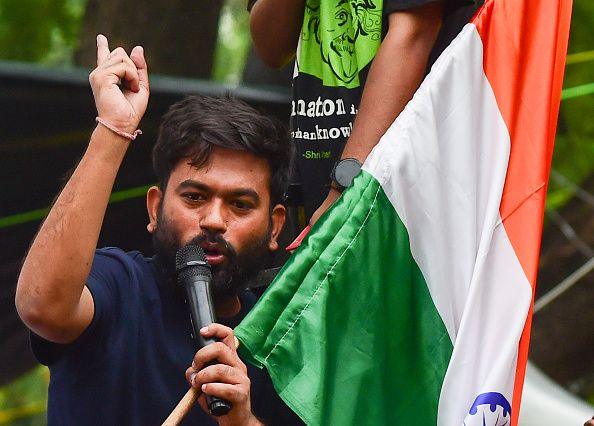 Image source, Getty Images
The protests were led by Abhijeet Dipke, the founder of CJP
When the rain arrived, it barely interrupted the protest. Volunteers stretched blue tarpaulins over small groups as chants continued and soaked demonstrators waited for news from the police barricades.
Among those who had travelled to Delhi was commercial pilot Samrat Khanna, who said he had swapped flying duties to attend the march.
"I felt I had to be here," he said. "I couldn't just watch from the sidelines."
Many others expressed similar feelings. For them, the alleged exam paper leaks had become less the movement's only cause than the catalyst for broader frustrations over jobs, opportunity, transparency and accountability.
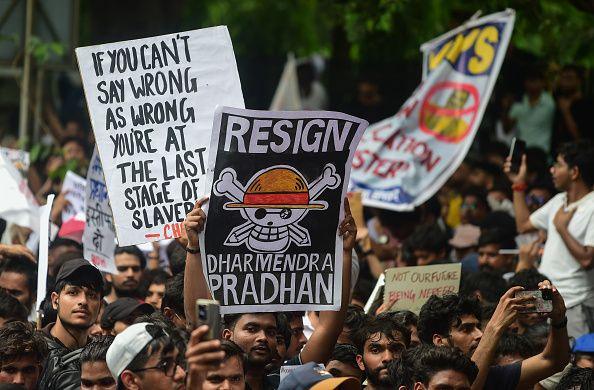 Image source, Getty Images
The CJP wants India's Education Minister Dharmendra Pradhan to resign
Those frustrations are at the heart of the rise of the Cockroach Janta Party, or CJP, founded by Dipke.
Although the chief justice later withdrew the comment, Dipke embraced the label, turning the cockroach into the movement's symbol.
Monday's turnout reflected how quickly the movement has grown since its first protest in June, when it was little more than a fledgling online campaign. Since then, it has spread to cities across India, drawing support from students, professionals, activists and opposition politicians.
By evening, however, the mood had shifted.
Police in riot gear entered Jantar Mantar and announced over loudspeakers that protesters no longer had permission to remain. Officers then began pushing people back, prompting some demonstrators to flee while others linked arms and refused to leave.
There was also brief confusion over Dipke's whereabouts after the CJP initially said he had been detained. The group later clarified that police had attempted to take him into custody but protesters had prevented it. Delhi Police later denied the claims, calling the allegations "entirely false".