1 hour ago
3
1 hour ago
3

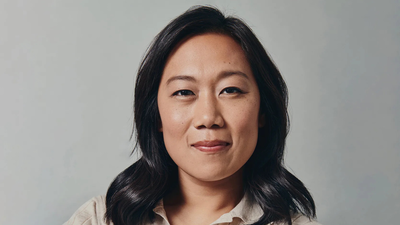
Priscilla Chan was in sixth grade when the death of her grandfather from cancer changed the direction of her life. One morning, he dropped her off at her sixth-grade classroom, but by the time she returned home, he had died.
Chan was left trying to understand how someone who had taken her to school that morning could suddenly be gone. Science had always been her favourite subject, so she turned to it for answers. She bought an oncology textbook soon afterwards and began learning about cancer on her own. Years later, that childhood search for an explanation had evolved into a career in medicine and, eventually, a mission to accelerate biomedical research.
As a paediatrician, Chan encountered children whose diseases medicine could not fully explain, reinforcing the same desire to understand disease that had first emerged after her grandfather's death.
Priscilla Chan's search for answers began in sixth grade
Chan has described losing her grandfather as the starting point of her journey into medicine. Her grandfather had been diagnosed with cancer, and according to a detailed Wall Street Journal profile, Chan accompanied him to medical appointments and helped translate for him.
Her family had chosen not to tell him that he had cancer because they feared the knowledge could make him sicker. Then came the morning in sixth grade when he felt well enough to take Chan to school.
By the time she came home, he had died. The suddenness of the loss left the young Chan asking what had happened. Rather than accepting that she could not understand it, she looked to the subject she trusted. In her own 2026 account, Chan recalled buying an oncology textbook because science had always been her favourite subject and she believed it might help her find answers.
The episode is significant not because it proves that a single book determined her career, but because Chan herself identifies it as the beginning of her journey into medicine.
She taught herself oncology from a cancer biology textbook
Chan's response to the loss was unusually academic for a child. Rather than simply reading about cancer out of curiosity, she used a textbook as a way of trying to make sense of something deeply personal. The Wall Street Journal profile says she found a cancer biology textbook on Amazon and devoured it, teaching herself the basics of oncology.
Chan's own description is that she bought an oncology textbook because she thought science could help her find answers.
That distinction is important. There is no credible evidence that the book allowed her to determine the precise medical circumstances of her grandfather's death, and available sources do not identify his particular type or stage of cancer. What the account does show is an early instinct that would remain central to Chan's later work: when confronted with something she did not understand, she wanted to investigate it.
That habit of turning uncertainty into a scientific question would later become particularly important when she was caring for children with rare diseases for which even trained doctors had few answers.
Her education took that curiosity from textbooks into medicine
Chan eventually turned that childhood curiosity into formal scientific and medical training. She became the first person in her family to attend college and studied biology at Harvard University. Before medical school, she spent a year teaching elementary school science, an experience that added another dimension to her interest in making scientific knowledge accessible.
She then attended the University of California, San Francisco, where she earned her medical degree and completed her paediatrics residency.
CZI's current biography describes her as a paediatrician whose direct experience caring for patients has shaped her commitment to accelerating scientific discovery. Her professional journey therefore gave her something the sixth-grade textbook could not: direct contact with patients, families and the practical limits of medical knowledge.
The questions that had once been personal became professional ones. Instead of asking only why one family member had died, Chan began confronting the much broader problem of why doctors sometimes could not explain what was happening inside a sick child's body or provide an effective treatment.
Treating children with rare diseases showed her the limits of medical knowledge
Chan's years as a doctor brought her face-to-face with the unanswered questions that textbooks could not resolve. At UCSF, she worked with children with rare diseases, including patients referred to a national centre because their conditions were particularly difficult to diagnose or treat.
Chan has recalled looking at a patient's diagnosis, searching the scientific literature and discovering that the medical community itself often had few answers.
In some cases, she and her colleagues had to rely heavily on patients and their families to understand the condition because existing research was so limited. In a 2021 article, she described the difficulty of telling parents, after they had already spent months or years searching for help, that she did not know what was wrong with their child.
She argued that this was precisely where better research could make a difference. Her experience also shaped her view of research as more than an academic exercise. For families dealing with rare disease, she came to see new scientific knowledge as a form of hope because a better understanding of biology can eventually lead to better diagnosis and treatment.
The childhood question eventually became a mission to understand disease
That experience as a paediatrician helped shape the scientific direction of the Chan Zuckerberg Initiative, which Chan co-founded with Mark Zuckerberg.
CZI says Chan now leads efforts to advance biomedical research and technology with the long-term goal of helping scientists cure, prevent or manage all disease by the end of this century. Its work has increasingly concentrated on the intersection of biology and artificial intelligence, including tools that could help researchers understand cells and the molecular mechanisms underlying disease.
Chan has described this shift as deeply personal because her years as a doctor showed her how much remained unknown. In 2025, she wrote that working with children with rare diseases had exposed the limits of medicine and science and convinced her that expanding basic scientific knowledge was essential. CZI's current science programme includes AI-powered models and research tools intended to help scientists investigate human biology in ways that would be difficult or impossible using conventional approaches alone.