52 minutes ago
3
52 minutes ago
3

 Image source, PA Media
Some prisoners will be released early in October to try to tackle overcrowding (file photo)
BySima Kotecha
Senior UK correspondent
Prison governors in England and Wales have been warned against using unsafe cells to cope with overcrowding, according to documents leaked to the BBC.
The six-page letter from the Prison Governors' Association (PGA) has been sent to members urging them to abide by the law when using cells, ensuring they meet health and safety requirements and are suitable for the number of inmates they are holding.
Prison staff told the BBC they were increasingly having to put two inmates in single occupancy cells, as overcrowding across the adult male estate worsens.
"Keeping two prisoners in cells built for one isn't ideal, but the pressure is on to maintain operational capacity.
"We don't have the space. Some cells have problems with heating or plumbing and they [prisoners] shouldn't really be in there to be honest," one governor said.
"The infrastructure is failing, especially in the older establishments, and cramming people into cells isn't going to help - especially when the toilet or sink isn't working."
A Ministry of Justice spokesperson said: "Cells are only doubled up where it is safe to do so."
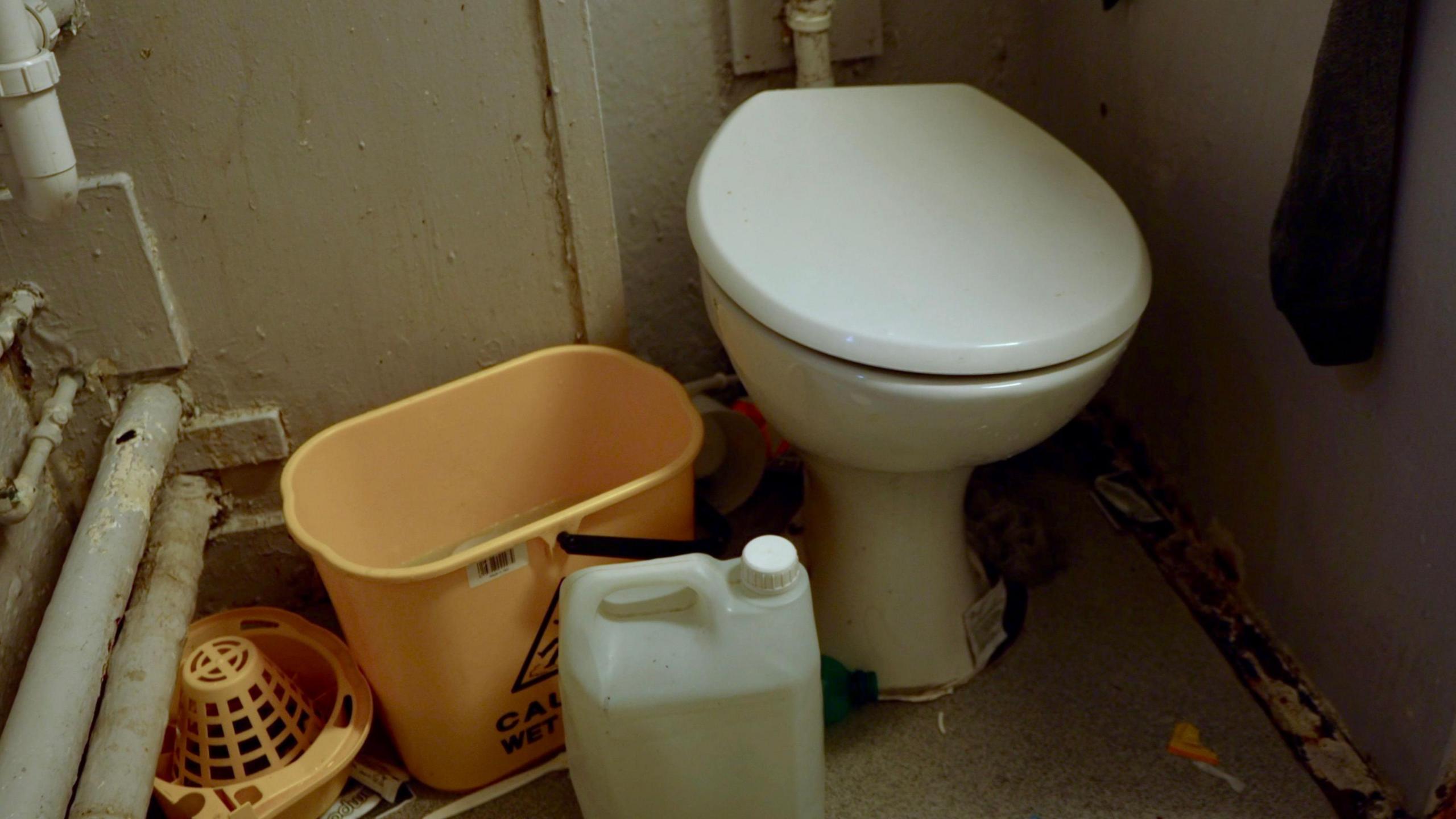
Governors have been warned that cells need to meet health and safety standards, including plumbing
The leaked document, called Operational Capacity Guidance, states: "It is a legal requirement under the Prisons Act 1952, the Prison Rules and the Young Offender Institution Rules that no cell shall be used for the confinement of a prisoner or young offender unless it is certified by an inspector that its size, lighting, heating, ventilation and fittings are adequate for health and that it allows the prisoner to communicate at any time with a prison officer."
It also says the number of people in a prison must not exceed the number of spaces.
There are concerns among some staff that the government is putting pressure on prison management to take more inmates than they can reasonably house.
A growing number of prison staff have told the BBC that rules are being stretched or broken to accommodate additional inmates, potentially posing health and safety risks.
Some regard the guidance as a "warning shot" to those in charge of setting the maximum operational capacity of prisons.
The decision on where the operational capacity of a prison is set lies not with the governor but with their boss - the Prison Group Director (PGD).
The PGD sets operational capacity by judging the total number of inmates a prison can hold and takes into account control and security.
'Not enough staff to monitor prisoners'
One prison staffer said: "We don't have enough staff to monitor the extra prisoners. We don't have the infrastructure to house the additional prisoners. So those who make the decisions need to abide by the law or they're the ones who have to justify why they're making governors take all these people".
The male adult prison estate is at 98.5% capacity, with some staff claiming they have just a handful of spaces remaining.
Prison sources say there are just over 1,200 spaces remaining across the adult male estate - which currently has a total population of around 83,400.
Some prisons hold more than 1,000 inmates - like large Victorian jails. Others can be smaller with a more concentrated population in the low hundreds.
Former prison governor John Podmore said it was "fundamentally unfair" governors were having to deal with a penal crisis they didn't create.
"The public may have little sympathy for prisoners, but that doesn't alter the reality. You can put a second bed in a cell and call it capacity but that doesn't make it sensible or safe.
"Meanwhile, the system is quietly putting thousands back into prison through recall. If ministers want more space, they should look at why the revolving door is getting faster, rather than simply squeezing two people into a cell built for one."
The government is starting an early release scheme from next month to create more room. In total, around 4,500 offenders will be let out sooner over a ten-month period.
Some senior staff believe this will improve the situation in the short-term but worry pressure will continue on prison management to push their capacity numbers to the maximum or even beyond.
On October 1, around 700 offenders serving sentences of up to 19 months will be released earlier than initially scheduled after serving a third of their sentence in custody.
Then on October 13, governors will release a second tranche of 650 prisoners who have been serving sentences of between 19 months and two years and five months.
A Ministry of Justice spokesperson said: "The government inherited a prison capacity crisis after places increased by just 500 in 14 years, but we're pulling every lever available to make sure the country never runs out of spaces and we can keep dangerous offenders locked up.
"We're delivering 14,000 additional places with nearly 3,300 already delivered, converting suitable existing spaces into new cells, securing land for future prisons, and removing foreign national offenders faster."