1 month ago
26
1 month ago
26

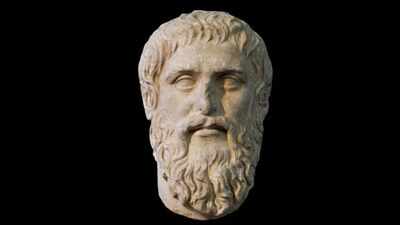
Staying out of politics feels like opting out entirely, but the decisions keep getting made regardless of who shows up to make them. Plato named that trap directly. "One of the penalties for refusing to participate in politics is that you end up being governed by your inferiors," the popular version reads.
Refusing to take part rarely means escaping the outcome. More often it just means someone else decides it instead. It is a considerably older warning than most people probably assume, given how often it gets shared as though it were coined for a specific modern election rather than a debate held in Athens well over two thousand years ago, long before the word politics had any of its current baggage attached to it.
Quote of the day by Plato
"One of the penalties for refusing to participate in politics is that you end up being governed by your inferiors"
Where this quote actually comes from
Oxford Reference cites this precisely to Plato's Republic, Book 1, 347c.
The line has an interesting fact-checking history attached to it too. A classics blog, Sententiae Antiquae, initially flagged the popular phrasing online as likely fake, then retracted that after checking the original Greek directly, confirming it as a genuine, if loosely translated, rendering of the actual passage.The real context, in Socrates' conversation with Thrasymachus, is that genuinely capable people rarely want to hold office at all, since they see little personal reward in the burden of ruling.
What eventually persuades them to take it on, Socrates argues, is not ambition but fear, specifically the fear of what happens if they step back and someone worse takes the role instead.
What the quote is actually saying
Participation, in this reading, does not require becoming a politician. It can mean voting, following public issues, engaging with representatives, or simply staying informed enough to hold power accountable. The consequence of total withdrawal is what the quote is really warning about.
If capable, informed people opt out entirely, the field is left to whoever is most willing to seek power, which is not necessarily the same group best equipped to use it responsibly.
Why disengaging does not mean escaping the outcome
Someone who does not vote has not removed themselves from the results of an election. They still live under whatever government and policy that election produces. Withdrawal feels like rejecting politics, but the decisions themselves do not pause simply because fewer people are paying attention to them.
Why criticism is not the same as withdrawal
Taking part in public life does not require agreeing with every decision made. Voting for a candidate while disputing several of their policies, or engaging with a system specifically because it needs reform, both still count as participation. Genuine withdrawal is different, a full disengagement from paying attention or holding anyone accountable at all.
Other memorable quotes attributed to Plato
- "The beginning is the most important part of the work."
- "Opinion is the medium between knowledge and ignorance."
- "False words are not only evil in themselves, but they infect the soul with evil."
- "Ignorance, the root and stem of every evil."
Why this still matters today
Frustration with politicians and institutions is easy to come by, and withdrawal can feel like the obvious response to it. Plato's line asks a harder question. If informed, capable people opt out entirely, who ends up making the decisions instead, and are they actually the people best equipped to make them.