2 hours ago
2
2 hours ago
2

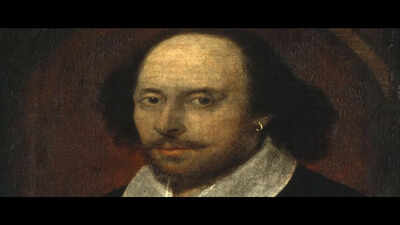
William Shakespeare (Image: Wikipedia)
Two people can look at their own life story and understand its shape in completely different ways. One sees a single, continuous identity, the same person carrying the same fixed role from beginning to end, expected to remain recognisably consistent throughout.
The other sees something closer to a sequence of distinct roles, each one genuinely different from the last, entered and exited on a schedule nobody fully controls. Shakespeare puts this second view into the mouth of Jaques, a famously melancholy character in As You Like It, who follows this opening line with what has become known as the "Seven Ages of Man" speech, tracing a single life from infancy through old age as a series of separate parts, the infant, the schoolboy, the lover, the soldier, the judge, the aging man, and finally a return to a kind of second childhood, each performed and then set aside as the next one begins.
Quote of the day by William Shakespeare
"All the world's a stage, and all the men and women merely players. They have their exits and their entrances, and one man in his time plays many parts."
Written for a theatre whose own motto made the same claim
What gives this line extra resonance is where it was almost certainly first performed. As You Like It was written around 1599, likely staged at the Globe Theatre, the open-air playhouse built that same year for Shakespeare's own company, the Lord Chamberlain's Men. Tradition holds that the Globe carried a Latin motto over its entrance, "Totus mundus agit histrionem," roughly translating to "the whole world plays the actor," a phrase that made the theatre's own architecture a literal, physical echo of the line Jaques speaks on its stage.
Audiences watching actors play multiple roles across an afternoon, in a building built around exactly that idea, would have felt the metaphor collapse the usual distance between the stage and the world outside it.It matters, too, that this speech comes from Jaques specifically, a character other figures in the play repeatedly describe as melancholic and given to overly cynical observations about life. The speech is not presented as simple, comforting wisdom.
It sits inside a comedy that elsewhere shows real warmth, love, and reconciliation between its characters, which makes Jaques's bleak, theatrical view of life as a string of interchangeable roles feel like one perspective among several the play offers, rather than Shakespeare's own final word on the matter.
A simple way to actually use this idea
The useful move here is loosening the grip of any single identity a person has been holding onto past its natural point: a role at work, a family position, a self-image formed years earlier, by recognising that a life is genuinely made up of distinct chapters rather than one unbroken performance.
Treating an old role as permanent, once its actual season has passed, can make the ordinary process of change feel like a personal failure rather than simply the next scene arriving on schedule.A fair test, when a role or identity starts to feel like a poor fit for where you actually are now, is to ask whether you are still performing that particular part out of habit, or whether it's genuinely time for an exit and a new entrance. That question won't make any transition painless. It usually makes it feel less like a crisis and more like exactly what Jaques was describing all along.
Other famous quotes by William Shakespeare
- "To be, or not to be: that is the question."
- "The fault, dear Brutus, is not in our stars, but in ourselves."
- "We know what we are, but know not what we may be."