1 hour ago
1
1 hour ago
1

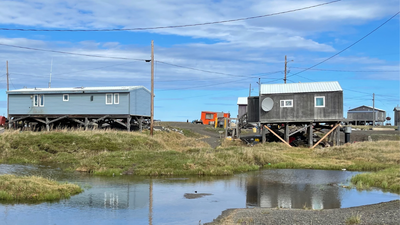
A remote village on Alaska’s North Slope is facing a growing threat from beneath its feet. In Point Lay, also known as Kali, thawing ice-rich ground is causing the land to sink unevenly, damaging buildings and essential infrastructure.
Researchers studying the community have documented widespread ground subsidence and found that large quantities of ice are frozen within the soil beneath the village. As that ice melts, the ground can lose volume and stability, leaving foundations and utility systems vulnerable. But the problem extends far beyond the village itself. The frozen soil also contains ancient organic material that has remained trapped for thousands of years.
As the ground thaws, microbes can break down that material and release carbon dioxide and methane, adding to concerns about climate change.
Why this remote Alaska village is slowly sinking
Point Lay is a small Iñupiat community on Alaska’s North Slope, where much of the ground remains frozen for most or all of the year. The frozen soil contains large amounts of ground ice, including ice wedges that formed over long periods. As temperatures rise, that ice can melt and leave empty spaces underground.
The surrounding soil then settles into those spaces, causing the surface to sink or deform. Researchers have observed signs of this process across Point Lay, with uneven ground affecting buildings, roads and buried utilities.
Some structures have become tilted as the land beneath them changes, turning what once appeared to be a stable foundation into a moving landscape.A detailed study published in Environmental Research: Communications examined Point Lay using field investigations, boreholes, ground-temperature measurements, remote sensing and interviews with local residents.
Researchers found widespread thermokarst development and ground subsidence associated with thawing ice-rich permafrost. In parts of the community, excess ice made up roughly 40% of the ground investigated, while some ice wedges extended more than 12 metres below the surface.
The researchers also identified evidence that the seasonally thawed active layer has become deeper over time, with particularly pronounced changes during the 21st century.
These findings provide direct evidence that warming is changing the physical structure of the ground beneath the community.
What happens when frozen ground begins to thaw
Permafrost is ground that remains at or below 0°C for at least two consecutive years. It can contain soil, sediments and large amounts of frozen water. In areas such as Point Lay, that frozen water helps give the ground its strength and structure. When the ice melts, the soil can compact and settle.
If the thaw occurs unevenly, some areas can sink much more than others, creating depressions and unstable surfaces. This process, known as thermokarst development, can damage building foundations and place stress on roads, water pipes, sewer lines and other infrastructure.
The changes can happen gradually, but their effects can become increasingly difficult and expensive to manage.The consequences in Point Lay are not limited to scientific measurements.
The community has experienced problems involving water, sanitation and infrastructure as the ground becomes less stable. The University of Alaska Fairbanks has documented past incidents linked to permafrost degradation, including the drainage of the community’s freshwater drinking lake in 2016 and damage involving water infrastructure.
Residents have also reported changes to the landscape that affect travel and access across the area.
For a community in a remote Arctic environment, damage to basic infrastructure can be particularly difficult because repairs are expensive, specialised equipment is often required and transportation options are limited.
This is part of a much bigger Alaska problem
Point Lay is one example of a wider challenge facing communities throughout Alaska. A study published in Communications Earth & Environment assessed buildings and roads in 285 Alaskan communities and estimated that permafrost-related damage could cost the state between $37 billion and $51 billion by 2055 to 2064, depending on the future emissions pathway.
The researchers mapped about 53 million square metres of building footprints and more than 50,000 kilometres of roads.
Their findings suggest that the financial consequences of thawing ground could be far greater than previously estimated because large amounts of infrastructure are exposed to changing soil conditions.The physical damage is only part of the concern. Arctic frozen soils contain huge quantities of organic carbon accumulated from plants and other organisms over thousands of years.
Extremely cold conditions have slowed decomposition, allowing much of that material to remain stored in the ground. When the soil thaws, microorganisms can become active and begin breaking down the previously frozen material. That process can release carbon dioxide into the atmosphere and, in waterlogged or oxygen-poor conditions, produce methane.
Scientists are particularly interested in this process because it creates a climate feedback in which rising temperatures can accelerate thaw, while greenhouse gases released from thawing soils can contribute to additional warming.
Thawing ground can become much more permeable
A 2026 study led by researchers at the University of Leeds found that thawing permafrost can become 25 to 100 times more permeable to gases. In laboratory experiments, the researchers warmed frozen samples and monitored how easily gases could move through them. They found that permeability changed dramatically as the frozen material approached and passed through the thawing point. The result suggests that gases stored within or produced inside thawing ground may gain additional pathways to escape.
However, the research does not mean that all Arctic frozen ground will suddenly release massive amounts of methane. Gas release depends on local soil, temperature, moisture and microbial conditions.The large carbon store in Arctic soils has become one of the major uncertainties in future climate projections. When frozen organic material thaws, some carbon can enter the atmosphere, while some can remain in the soil or move into rivers and coastal waters.
The amount released varies depending on whether thaw happens gradually or through abrupt ground collapse, as well as local vegetation and hydrology. This makes the process difficult to predict precisely.
Scientists therefore generally describe permafrost carbon as a climate feedback rather than an inevitable sudden carbon release event. The concern is that continued warming could gradually transform some Arctic landscapes from long-term carbon stores into sources of greenhouse gases.
The threat is not just about carbon
Thawing frozen ground can create other environmental and public health concerns as well. Changes in soil structure can alter drainage, destabilise slopes and affect water systems. Researchers have also investigated whether thawing ground could allow naturally occurring radon, a radioactive gas, to move more easily through soil and into buildings. The significance of that risk varies widely between locations, and it should not be interpreted as evidence of a confirmed radon emergency in Point Lay.
Still, it illustrates how the breakdown of frozen ground can affect systems that communities have long relied upon.
Point Lay offers a warning for other Arctic communities
What is happening in Point Lay shows how climate change can reshape a community without a single dramatic disaster. There is no sudden flood sweeping the entire village away. Instead, the ground itself is gradually changing. Foundations can shift, roads can deform and buried pipes can become vulnerable as the ice supporting the landscape disappears.
The same process is occurring in different forms in other Arctic communities across Alaska, Canada and Siberia.
The extent of the damage varies, but the underlying problem is similar: infrastructure designed for permanently frozen ground is increasingly being exposed to a warmer and less predictable environment.Point Lay’s sinking ground offers a visible example of a much larger Arctic transformation. The melting of ground ice can threaten homes and infrastructure today, while the thawing of ancient organic material could influence the climate beyond Alaska in the decades ahead.
Scientists are still working to determine how quickly different landscapes will thaw, how much carbon will ultimately be released and how much of that carbon will become carbon dioxide or methane.
What is already clear is that the frozen ground beneath Arctic communities is not a permanent foundation. As temperatures rise, it is becoming an active part of the climate system, with consequences that can extend from a small village on Alaska’s coast to the wider world.