1 hour ago
3
1 hour ago
3

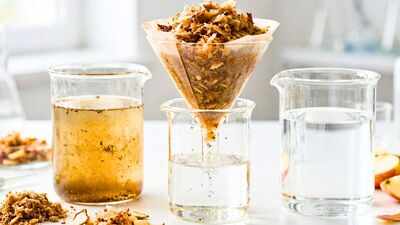
Lead contamination in water is being studied through different approaches, including the use of waste materials that can help remove metal ions from water. Apple pomace, the residue left after juice production, was among the waste materials researchers examined for its ability to remove lead ions from water in laboratory experiments.Researchers compared untreated raw apple waste with material that had first undergone a biorefining process to remove valuable water-soluble and lipid-soluble compounds. According to the research published in Heliyon titled ‘Insights into the environmental benefits of using apple pomace for biosorption of lead from contaminated water’, both materials removed lead from water, while the extracted apple waste was able to remove all the lead under the best conditions tested.
How did researchers prepare apple waste for removing lead from water
The study focused on apple pomace produced during juice preparation.
Researchers prepared two biosorbents from this waste. The first, called raw apple waste (RA), was dried, ground, and sieved without chemical or physical pretreatment intended to improve adsorption. The second, extracted apple (EA), was produced after a biorefining process removed water-soluble and lipid-soluble compounds. Both materials were then tested for their ability to remove lead from a synthetic water solution.
The researchers used an initial lead concentration of 20 mg/L for pH, dosage, and kinetic experiments.
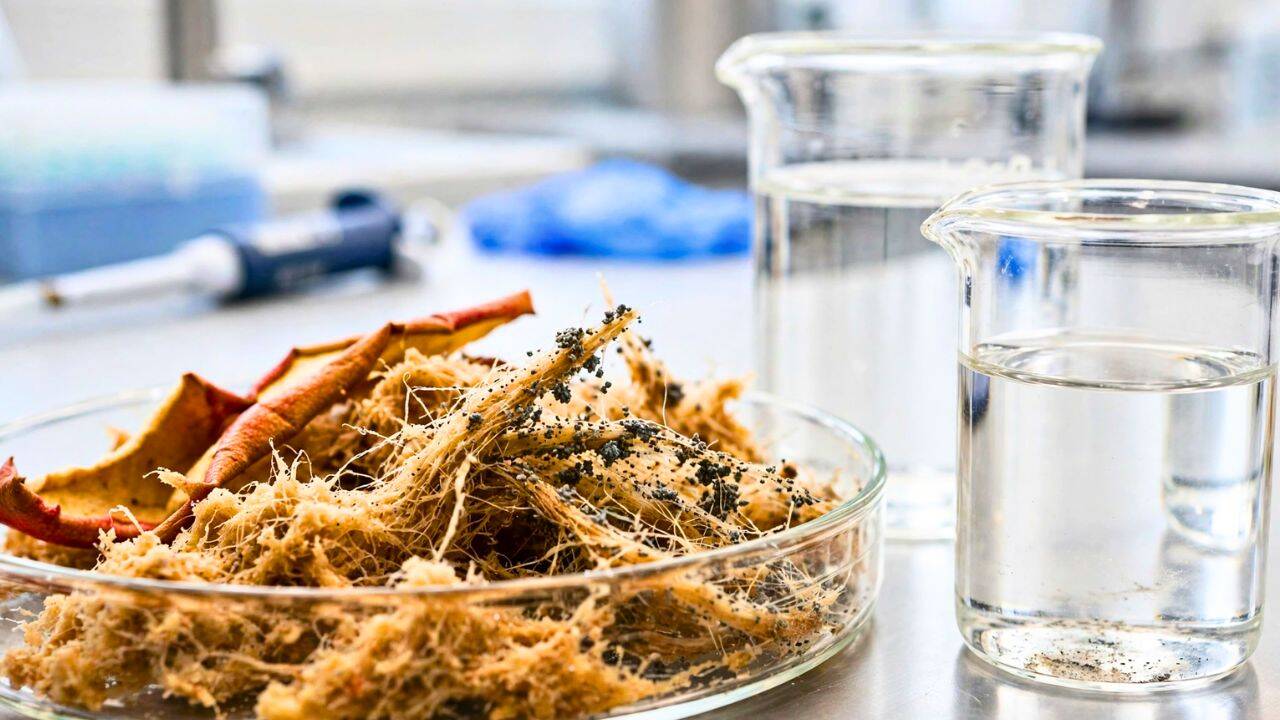
PC: AI Generated
What did the tests reveal about lead removal
Both apple-based materials showed substantial lead removal under the experimental conditions. At an initial concentration of 20 mg/L and an optimal pH of about 5, raw apple waste removed 82% of the lead, while extracted apple reached 100% removal. The researchers also found that increasing the biosorbent dosage improved overall removal.
At dosages above 1 g/L, removal reached about 80% for RA and 100% for EA. However, the amount adsorbed per gram decreased as more biosorbent was added.
The study then selected 0.5 g/L for later kinetic and equilibrium tests, balancing effective removal with efficient use of the biosorbent material.
How long did the apple waste take to remove lead
Under the selected conditions, the researchers observed a rapid change during the first 60 minutes, when roughly 80% of the maximum lead removal had already been achieved by both materials.
Lead removal slowed between 60 and 120 minutes, with about 95% of the lead removed from the water by the end of this period. Mathematical modelling showed that the pseudo-second-order model fitted the kinetic results slightly better than the pseudo-first-order model.
What did the study reveal about lead adsorption by apple waste
Equilibrium experiments reveal that both materials could retain lead effectively even after the apple waste had undergone biorefining. The Freundlich model described the equilibrium data better than the Langmuir model for both biosorbents, as the model produced values of 3.4 for RA and 3.8 for EA, both indicating favourable adsorption.
The Langmuir model estimated maximum capacities of 44.6 mg/g for raw apple waste and 48.6 mg/g for extracted apple.
The researchers found only a limited difference between the two materials. This indicated that removing valuable compounds from the apple pomace did not prevent the remaining material from functioning as a biosorbent for lead.
What did the pH tests reveal about lead removal
The researchers tested pH values of 2, 3.5, and 5.5, since lead-contaminated effluents are typically acidic and lead is predominantly present up to neutral pH. Both biosorbents became more effective as pH increased across this range. At higher pH within the tested range, more negatively charged sites became available on the biosorbent surface, improving attraction to positively charged Pb2+ ions. The study then used pH 5 ± 0.5 for subsequent experiments.
Spectroscopic results also showed changes involving hydroxyl, carbonyl, and related functional groups after lead exposure, indicating that these surface groups participated in retaining the lead ions.