1 hour ago
3
1 hour ago
3

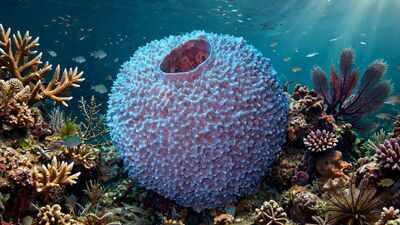
PC: Nicole de Voogd/University of Göttingen
Scientists have discovered at least ten new species of branching marine worms after studying their DNA, newly collected specimens, and body structures. These unusual worms live inside sea sponges and have a distinctive body, with one head connected to a tree-like network of branches.
For more than a century, several of these rare worms were considered part of a single widespread species, despite being found across large areas of the world’s oceans. According to the University of Göttingen, researchers identified thirteen distinct forms, at least ten of which are likely new species. The researchers also identified two major evolutionary groups among the branching worms.
How did researchers uncover 10 likely new branching worm species
The researchers found that branching worms are much more diverse than previously known.
By examining newly collected specimens alongside material from museum collections, the team identified thirteen distinct forms across the Indo-Pacific, the Red Sea and New Zealand. At least ten of these are likely new species.The worms belong to a distinct evolutionary group that has two major lineages. One includes species from the genus Ramisyllis, while the other was placed in a completely new genus called Cladosyllis.
The findings also helped resolve a classification puzzle that dates back to the nineteenth century. For more than a century, branching worms had been classified as a single widespread species, despite being found across large areas of the world’s oceans.
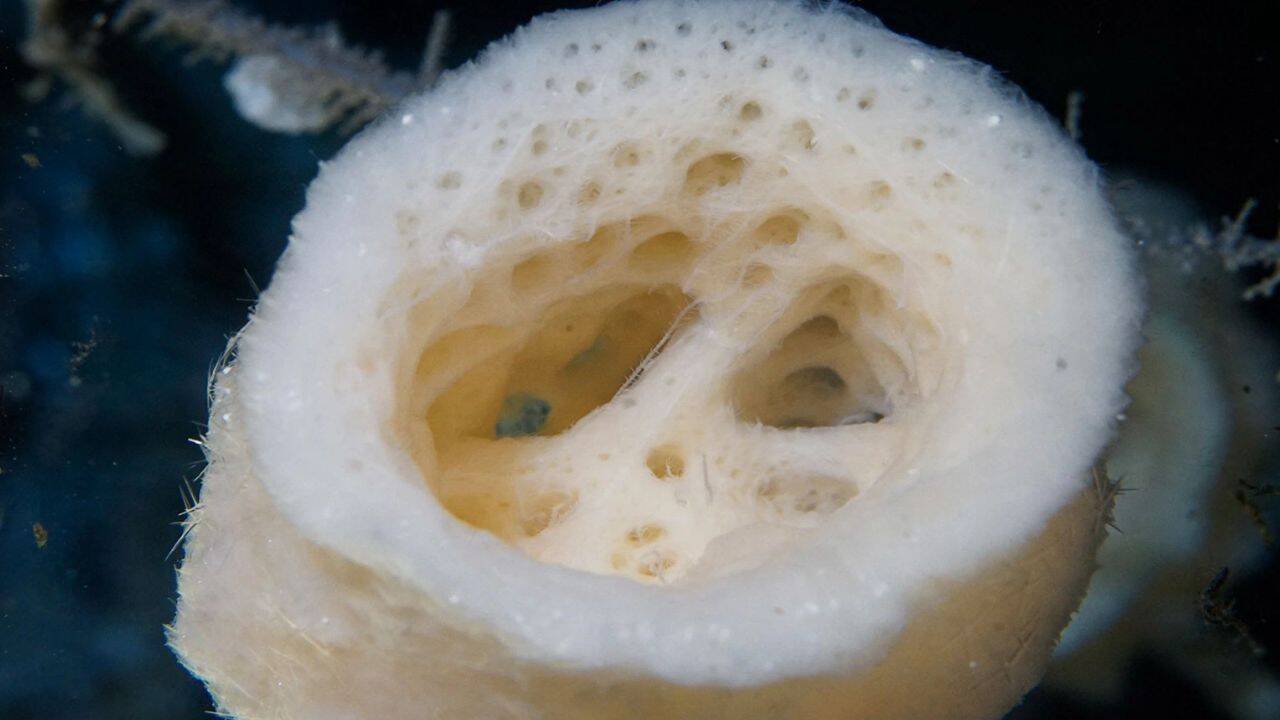
PC: Naoto Jimi/University of Göttingen
Where do branching worms live, and how did they evolve
Branching worms have an unusual body that sets them apart from typical worms. Each has a single head that leads into a tree-like network of branches. The animals live in symbiosis with sponges and can spread through their host using this unusual body structure.
The researchers found that adapting to different sponge hosts played an important role in the worms’ diversification and evolution.Some species live in deep-sea glass sponges at depths of up to 1,000 metres, while others live in sponges found in shallow water. The team also found that the worms’ evolutionary history contains many branches, with each closely linked to a particular sponge species and geographic area.
The finding showed that all branching worms descended from a common ancestor.
How did branching worms evolve their unusual body structure
The researchers found that the unusual branching body structure evolved only once in these worms. Although the two major lineages look similar, they form their branches in different ways. This difference shows how body development can vary during evolution. The findings also provide new information about the evolution of complex animal bodies and the role of symbiosis in shaping biodiversity.The researchers believe many more species of branching worms may still be undiscovered. They suggest that these animals could also help scientists study the evolution of complex body forms, symbiosis, and biodiversity in marine ecosystems. The discovery was made by combining genomic data with anatomical analysis, allowing the researchers to examine both newly collected material and specimens preserved in museum collections for many decades.
A century-old sponge helped uncover new branching worm species
Museum collections played an important role in solving the long-standing mystery. Some of the sponges containing these worms came from the Senckenberg collection and date back to 1914. Researchers used microCT imaging to reveal the worms without damaging the sponges. One museum specimen was a deep-sea glass sponge collected in 1914 from Sagami Bay, Japan.Three-dimensional X-ray imaging produced cross-sectional images showing a branching worm from the newly identified Cladosyllis genus inside the sponge. The researchers combined these older specimens with newly collected material to obtain genomic data and examine anatomy. The findings show that museum collections can continue to generate discoveries, including hidden biodiversity that had remained undetected for more than a century.