1 month ago
28
1 month ago
28

3 hours ago
Iona YoungBBC Scotland News

 PA Media
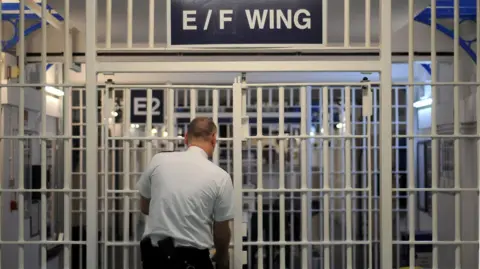
A judge has ruled that prison guidance which allows some transgender prisoners to be held in jails matching their gender identity, rather than their sex at birth, is unlawful.
Judge Lady Ross said sex segregation in prisons must be based on biological sex, based on a Supreme Court ruling on the definition of a woman in equalities law in April last year.
Campaign group For Women Scotland had challenged the Scottish government guidance through a judicial review, saying only those born biologically female should be held in the women's estate.
Lawyers for the government argued this would breach transgender prisoners' human rights and create an unacceptable risk of suicide.
But in her ruling, Lady Ross said the guidance was "in conflict with the requirement that prison accommodation be provided separately for men and women" and constituted "a mis-statement of the law".
She said: "In all the circumstances, the prisons guidance is unlawful."
Currently the Scottish Prison Service (SPS) uses a system of individual risk assessments which aims to keep anyone who poses a danger to women out of the female estate.
However, it does allow for circumstances where trans women - born biologically male - could be housed alongside women if they are deemed not to pose an unacceptable risk to them.
The Supreme Court ruling emphasised that all prisoners retain rights under the European Convention on Human Rights (ECHR), including transgender prisoners.
It accepted that Article 8, which protects private and family life, is engaged in decisions about prison accommodation.
However, the court said Article 8 does not mean there is automatically a right for a transgender prisoner to be housed in a prison designated for the opposite biological sex.
Lady Ross said the right was qualified and may be restricted where there is a legitimate justification, including maintaining sex-based segregation within the prison estate.
The judge acknowledged that exceptional circumstances could arise.
In a case involving a serious threat to life, such as a risk of suicide, Article 2 of the ECHR — which protects the right to life — might require consideration of whether accommodation in a prison for the opposite biological sex was necessary.
 PA Media
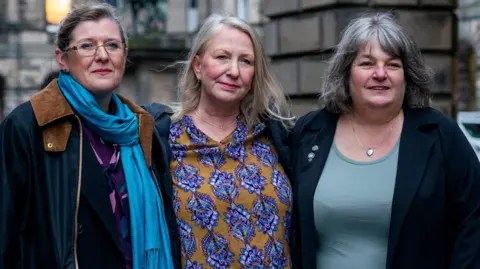
Co-directors of For Women Scotland (left to right) Susan Smith, Marion Calder and Trina Budge outside Parliament House in Edinburgh
For Women Scotland brought the case following its successful appeal to the Supreme Court about the definition of a woman in the Equality Act.
Susan Smith, a co-director of the group, said it was "delighted" to have won a "comprehensive victory".
"We hope that, in future, the Scottish government will start to listen to us rather than the lobby groups who drafted these policies and have so egregiously misled MSPs and MPs," she said.
"We should never have needed to take this case and we hope this will be the last time that we are forced to go to law to defend the rights of women."
Previously First Minister John Swinney told MSPs that the government accepted the Supreme Court ruling, but that its assessment was that prisons guidance "does not need to be changed".
He said ministers "must wrestle with complex issues and make difficult decisions which balance and reflect the interests and rights of individuals".
Scottish Conservative equalities spokesperson Meghan Gallacher said the SNP had "failed" to implement the Supreme Court ruling.
She urged John Swinney to rule out defending any further gender self-ID policies in court and to implement the verdict across public bodies.