6 months ago
22
6 months ago
22


 BBC
BBC
Molly Cuddihy died last year, aged 23, seven years after she had a hospital-acquired infection which her family say had long-term impacts on her health
Scotland's independent prosecution and deaths investigation service is now investigating seven deaths potentially linked to the hospital environment at Glasgow's largest hospital.
The case of Molly Cuddihy, who died last August, has been passed to a specialist hospitals teams in the Crown Office and Procurator Fiscal Service (COPFS) which is also looking at the deaths of Andrew Slorance and Tony Dynes.
In four earlier cases, including that of Milly Main, 10, a police report has been received and COPFS is considering whether to begin corporate homicide prosecutions.
The three more recent deaths at the Queen Elizabeth University Hospital (QEUH) campus are at an earlier stage of investigation.
A spokesperson for COPFS said: "A thorough and independent investigation into the deaths is ongoing and the families will continue to be kept updated in relation to any significant developments."
The QEUH campus, which includes the Royal Hospital for Children, is the focus of a public inquiry looking at whether problems with water and ventilation systems were to blame for infections and patient deaths.
COPFS is conducting a separate investigation into the deaths, which could result in the health board which manages the hospital being prosecuted for corporate homicide or under health and safety laws.
In four cases, including that of Milly Main, two unnamed children and 73-year-old Gail Armstrong, police submitted a "standard prosecution report" last May.
That means they have gathered evidence which leads them to suspect a crime has been committed, and it is now up to COPFS to decide how to proceed.
With the three other cases, involving Andrew Slorance, Tony Dynes and Molly Cuddihy, evidence is still being gathered and police have not yet submitted a prosecution report .
Molly was 15 in 2018 when she was diagnosed with a type of cancer called metastatic Ewings Sarcoma.
During her treatment at the Royal Hospital for Children she became seriously ill with a rare mycobacterium chelonae infection.
This required strong antibiotic treatment which itself had serious side effects.
Her chemotherapy and treatment for the infection left her organs severely weakened. She was readmitted to the QEUH last year and died in August, aged 23.
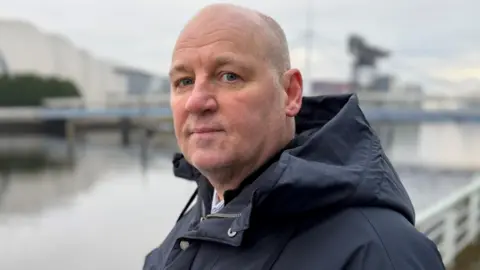
Molly Cuddihy's father John said he believed the involvement of the COPFS hospitals unit showed the investigation was progressing
While it was already known that doctors had referred the case to COPFS, it was previously less clear if her death was being considered along with the other cases of hospital-acquired infections.
Her father John, a former police officer, told BBC Scotland News he believed the involvement of the COPFS hospitals unit showed the investigation was progressing.
"When I first raised concerns with the authorities many years ago, I had no thought that those concerns would one day involve my daughter's death," he said.
"That continues to be deeply difficult but my only focus is ensuring the full facts are established through the independent investigation now under way."
Which other cases are being investigated?
The other cases being investigated by COPFS include 10-year-old Milly Main, who died in 2017 after contracting a stenotrophomonas maltophilia bacterial infection while she was recovering from a successful stem cell transplant.
The deaths of two unnamed children, a three-year-old and a 10-year-old boy who had a cryptococcus fungal infection listed as contributory factor, are also the subject of the police prosecution report.
The fourth case is 73-year-old Gail Armstrong, who died from cancer in January 2019, shortly after the 10-year-old boy.
She had also had a cryptococcus infection - which is often linked to pigeon droppings - which her family believe hastened her decline and may have limited her treatment options.
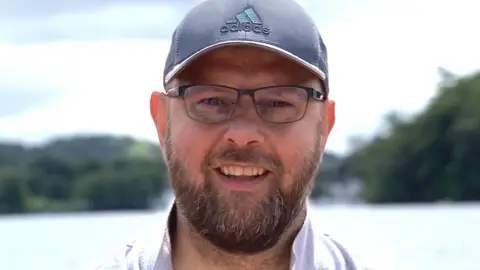
Andrew Slorance died with Covid but also had other infections
Former Scottish government official Andrew Slorance is among three more recent deaths where police or other agencies have been asked to gather evidence.
The 49-year-old died in December 2020 with Covid-related pneumonia six weeks after a stem cell transplant.
His widow Louise has claimed there were a number of failings in his care and that she only discovered he had an aspergillus fungal infection after his death.
The family of Tony Dynes, another cancer patient who died aged 63 in May 2021, have revealed he also had an aspergillus fungal infection, as well as the same bacterial infection as Milly Main.
What does a corporate homicide prosecution mean?
COPFS first notified NHS Greater Glasgow and Clyde in November 2023 that it was being investigated as a suspect for alleged crimes, including corporate homicide and health and safety offences.
The Corporate Manslaughter and Corporate Homicide Act 2007 allows organisations such as health boards to be prosecuted as a single entity rather than individual staff members.
For a conviction, prosecutors would have to prove the way senior management organised hospital activities was a gross breach of their duty of care that fell "far below" what was reasonably expected.
The potential penalties if found guilty include unlimited fines, remedial orders to fix things or publicity orders where the board may have to advertise its failings.