
 4 months ago
53
4 months ago
53

8 minutes ago
Joanna MorrisBBC Shared Data Unit

 Kirsten Coutts
Kirsten Coutts, pictured here with her son Sam, believes parents have a responsibility to ensure their children do not target others
A rise in school suspensions over racist, homophobic and disablist abuse is linked to an erosion in anti-bullying support and wider societal issues, education specialists say.
Between 2020-21 and 2024-25, there were more than 55,000 suspensions linked to racist abuse at English schools.
Department for Education data documenting reasons for suspensions also shows schools logged homophobic or transphobic abuse more than 13,000 times and disablist abuse about 1,600 times in the same period.
A mother who believes bullying contributed to the suicide of her autistic son said the data was "horrifying but not surprising".
Amid calls for a national anti-bullying strategy, the Department for Education described the figures as "shocking" and said it was providing expert support.
Government data documenting reasons for suspensions shows a 68% rise in mentions of prejudicial abuse in fewer than four years.
Because schools can record up to three reasons for each suspension, these figures do not represent individual incidents but show how often different forms of abuse are cited.
Kirsten Coutts' son Sam Coutts was 18 when he killed himself in the toilets at Darlington's Queen Elizabeth Sixth Form College earlier this year.
He was not bullied there, but she said his state of mind had been shaped irrevocably by disablist abuse he suffered as a schoolboy.
"The die was cast, it pushed him into a headspace where he didn't feel the same as anybody else," she said.
'Nothing about you is right'
A few days before his death Sam – described by his mother as 'amazing, enigmatic, funny' - opened up about being bullied.
She said the effect of the bullying made Sam feel like he wasn't welcome in society and had to find a way of curing his autism "one way or another".
"He asked how I'd feel if someone said everything about you is wrong, nothing about you is right," Kirsten said.
"It's hard to articulate how any of this feels, there aren't any words - everyone is broken. I'm his mam and it goes against nature's plan."
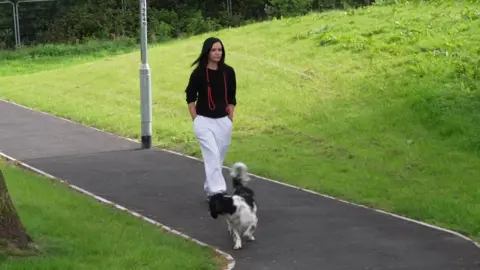
Kirsten Coutts said Sam was singled out because of his autistic traits
Kirsten wants schools and parents to work together to tackle bullying, and to control access to phones and social media for children.
"Something has to change," she said.
"There should be more support for teachers, and parents should have to do more to stop their children behaving like this - it starts at home."
Education specialists told the BBC funding cuts to outreach services, social media harms, divisive politics and a lack of mandatory teacher training were among issues contributing to a growing problem.
Less tolerance of discrimination, heightened awareness and a growth in the use of suspensions overall were also highlighted by charities, unions and teachers.
Pepe Di'lasio, General Secretary of the Association of School and College Leaders (ASCL), said schools only use exclusions as a "last resort" but would not tolerate discriminatory behaviour.
Di'lasio added: "The problems we are seeing are huge societal issues which cannot be solved solely in the classroom.
"It feels as though we are living in an increasingly abrasive era."
Teaching union NASUWT has received "frequent reports" of teachers and pupils receiving prejudicial abuse, general secretary Matt Wrack said.
Wrack warned against "demonising young people" as he said issues in wider society are inevitably reflected in schools.
The union has raised concerns with the DfE over the need to improve the recording and monitoring of bullying.
 Getty Images
Schools are now having to work harder to provide anti-bullying interventions, experts say
Despite recommendations from Britain's equality regulator, the Equality and Human Rights Commission (EHRC), it is not mandatory in England for schools to record incidents of bullying.
As such, robust data is lacking - but the Department for Education's statistics show how many times pupils have been suspended for abusing others.
Martha Boateng, director of the Anti-Bullying Alliance (ABA), said cuts to government funding and local authority contracts for outreach work had contributed to a "real reduction in schools' ability to undertake anti-bullying training".
She said the ABA once reached "tens of thousands of teachers" a year with its resources, but now reaches a fraction of that after introducing charging to meet costs.
BBC analysis of Charity Commission data for 15 organisations linked to school outreach work found 12 had faced cuts in central government grants and contracts since 2019 - including Show Racism the Red Card (SRTRC), which delivers anti-racism workshops in schools.
 Show Racism the Red Card
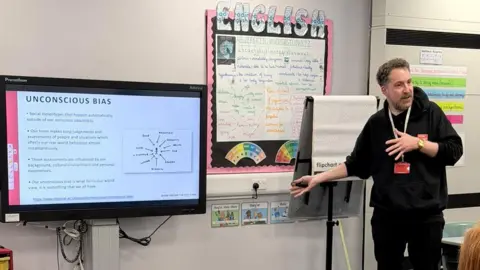
James Kingett said the figures demonstrate how seriously schools are taking prejudice and discrimination
James Kingett, from SRTRC, said the charity had also lost a significant number of local authority contracts after austerity measures saw many councils repurpose funding.
He added that education, rather than "punitive punishment", is the solution to children displaying discriminatory behaviour where it comes from a "lack of understanding and without intention to offend".
Dr Greg Stride from the Local Government Information Unit (LGiU) said central government cuts meant councils had less resource for valuable but non-statutory work like outreach or prevention programmes.
He added: "Councils' hands are tied."
 Cameron Wright
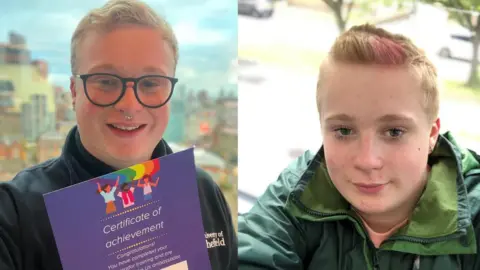
Cameron, pictured recently (left) and as a school child (right) said years of being bullied inspired "internalised homophobia"
LGBTQ+ charity JustLikeUs relies on donations to run its ambassador programme, which sees young people return to school to share their experiences.
Ambassador Cameron Wright, 21, said the work is vital in raising awareness and highlighting the impact of homophobia.
"I can go in and say I know what it's like, I had a difficult experience, but my life's amazing now."
Wright, who uses they/them pronouns, was left suicidal after being targeted with slurs and threats throughout school.
They said the experience had a lasting impact, adding: "School was consistently difficult and it was difficult because I was gay.
"Teachers couldn't get a handle on what was happening and school went from a safe place to a place I felt really excluded from."
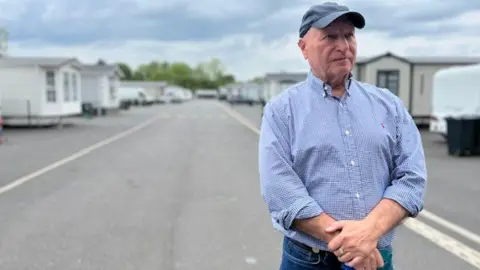
Billy Welch said racist discrimination against his community's children is historic
Gypsy leader Billy Welch said his school visits have made a "huge difference" in tackling racism in Darlington as he urged the government and education authorities to support school outreach work.
Recalling a "very offensive" history of prejudice levelled at his community, he said: "Up and down the country, it's terrible, but in Darlington now, they make a space for the Gypsy children.
"I go into schools and talk about where we came from, our culture, our beliefs and traditions - it does so much good.
"The children love it but the ones who get the most out of it are the teachers, who go back with a different understanding and different approach."
'No place for discrimination'
A Department for Education spokesman called its data "shocking" and said discrimination had no place in schools, adding: "Every child deserves to learn in a safe and calm classroom."
He said the government is providing support for schools with the biggest behaviour challenges and that free breakfast clubs, improved teacher training and clearer guidance around suspensions would help tackle poor behaviour and ensure teachers have "clarity and confidence" to act swiftly when needed.
The DfE's Preventing and Tackling Bullying guidance says schools are required to have bullying prevention policies in place.
- If you have been affected by the issues in this story, support and information is available via the BBC Action Line
More from the BBC's Shared Data Unit


