3 weeks ago
32
3 weeks ago
32

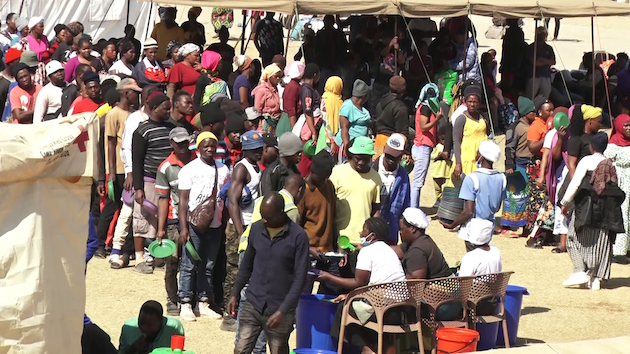 Some of the over 56,000 returnees the Malawian government brought back home are assisted upon arrival. Credit: Thomas Kachere/IPS
BLANTYRE, Malawi, August 25 (IPS) - When the Malawian government announced the conclusion of the repatriation of its citizens trapped in anti-immigrant violence against foreign Africans in South Africa on August 12, 2026, it had brought home 56,723 nationals, according to data from the Department of Disaster Management Affairs.
It marked the conclusion of what had been four months of unusual traffic into Malawi, as almost 900 buses ferried home thousands of people, some returning decades after they left for South Africa in search of a better life.
Rahim Ali, from the Dowa district in central Malawi, travelled on one of the buses late in July.
“It’s a relief, and I’m grateful to the government for bringing me safely home,” he said in a phone interview with IPS from his village on August 2. “Things were terrible in South Africa, and many of us had no way out of that violence.”
Rahim, 33, left for South Africa in June 2019, two years after the death of his father and almost four years after his mother died. He finished secondary school in 2011, but his parents, who were smallholder maize farmers, could not afford to pay for his college education.
In Malawi, up to 270,000 young people enter the labour market each year, scrambling for just about 40,000 formal jobs that the Malawi economy creates annually, according to the latest World Bank data.
Unable to find a proper job, Ali hustled in people’s maize and tobacco fields in his area, clearing land and harvesting. In 2013, he raised money and opened a barbershop where he also charged phones and sold phone chargers and batteries in his rural town. The income wasn’t much, he said, but he was still able to rent a small house and look after himself.
His world of independence crumbled with the death of his father in 2017. The eldest in the family, he took over feeding, paying school fees and dressing his two sisters and a brother.
“With income from a barbershop, things got really hard for us,” he told IPS.
When a former schoolmate who had travelled to South Africa asked him to come along, Rahim jumped on the offer, joining the friend working at a strawberry farm in Johannesburg, where his wage then was R412 per week.
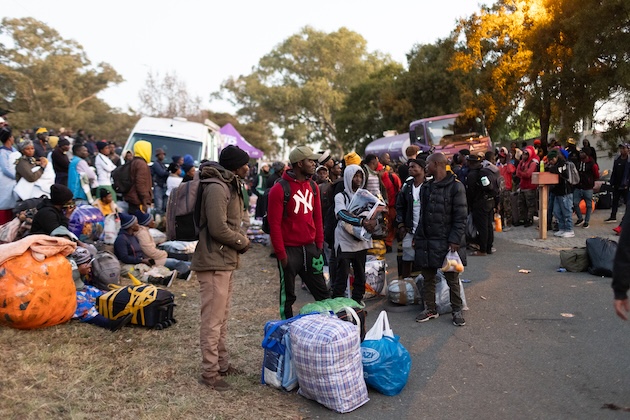 Malawian migrants wait to board a bus during repatriation efforts, 29 June 2026, at the Malawian Consulate in Woodmead, Johannesburg. Credit: Alaister Russell/IPS
Over the next five years, he worked for different farmers. The work was hard, he said. Supervisors would “whip us anyhow and swear at us in a language we could not understand. There was little rest. There was no pay if one fell sick and was off duty. There was no job security, he said.
“Still, the pay was better than what I could get doing similar work here in Malawi,” Rahim said. “Besides, the cost of living is far cheaper there, so I was able to save money to support my siblings.”
In 2024, he got another job as an assistant in an Indian-owned shop selling solar panels. In May 2026, a group of South African citizens invaded the shop and ordered the owner to dismiss the African foreigners working there.
Now jobless, Rahim struggled to buy basics and pay rent. His landlord evicted him, an action that forced him to join Malawians camping at the Malawian consulate office, where the Malawian government processed their return home.
Mobilised by the March and March movement, South African citizens hunted foreigners out of their homes and workplaces between April and June 2026 in a crackdown they claimed was aimed at flushing out undocumented migrants.
This incident was not the first of the episodes of xenophobic attacks in South Africa. In 2008, two weeks of anti-immigrant violence killed more than 60 foreigners and displaced at least a hundred thousand more across the country. In 2019, a breakaway union of South African truck drivers burnt hundreds of trucks to force the removal of foreign truck drivers.
Between 2022 and 2025, Xenowatch, a platform that monitors xenophobic discrimination across South Africa, recorded 406 incidents of xenophobic attacks, with 75 of them resulting in deaths. In 2025, it recorded 151 incidents. Between January and May 2026, it verified 22 cases, 14 of them violent.
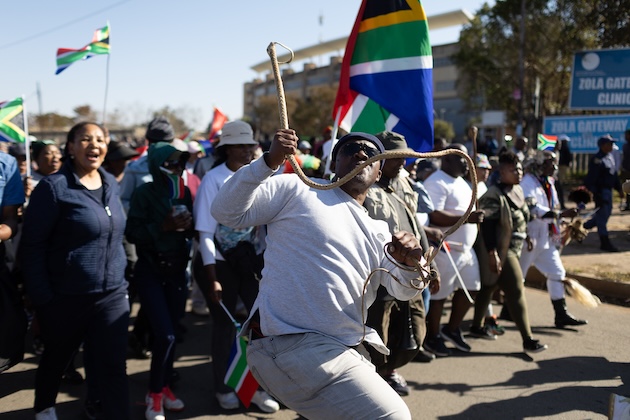 Anti-migrant marchers make their way through Soweto during demonstrations, 29 June 2026, in Jabulani, Soweto. Credit: Alaister Russell/IPS
As the latest wave of attacks flared, South Africa’s president Cyril Ramaphosa said opportunists instigated the protests, exploiting the economic frustrations of South Africans. He said the violence did not reflect the South African government’s policy on foreign nationals.
Ramaphosa said, however, that illegal immigration was straining the country’s housing and healthcare and that his government would tackle it “within the law”.
Loren Landau, co-founder of Xenowatch, said there has been no real action by the South African government to address xenophobic violence.
“First, the government will say there is no xenophobia, but there are frustrations, misinformation and criminals, and we will address them. But what they’ve also said is we will address some of these issues that have been raised by the March and March: increased border controls, increased deportations and increased efforts to control the workplace.
“They are doing those things, but what they are not doing is holding responsible the people who have led the marches or have led the other mobilisations we’ve seen since 2008,” Landau told IPS in a phone interview.
Unless those that mastermind and perpetrate terror against foreigners are held to account, they will continue to use immigrants as a tool for their enrichment or efforts to gain power, said Landau.
He said the seriousness of the recent xenophobic attacks and the resulting repatriations have “greatly damaged” South Africa’s reputation on the continent and set back processes of regional integration around labour, trade and investment.
“I think, in addition to the victimisation of individuals, the rhetoric from the government about basically telling Malawi, Mozambique, Lesotho, etc. to keep their people and solve their problems, I think, is also deeply insulting,” he said.
Kester Chuwuma Onor, in a research paper titled Xenophobia In South Africa and the Realities of Actualising SDG 8, argues that without peace and partnership with other countries, it would be very difficult for South Africa to attain the UN SDGs, especially the goal relating to decent work and economic growth unless it addresses the issue.
Other research agrees, stating that it threatens SDG 1, which aims to eliminate poverty. Justice K. Musya and Eric Blanco Niyitunga, in their research paper titled Xenophobia as a Barrier to South Africa’s National Development Plan and SDGs, argue that xenophobic attacks affect foreign national entrepreneurs’ businesses, resulting in job losses, increased unemployment rates, and negative impacts on economic growth.
In a latest survey, Afrobarometer, a pan-African research network, found that 56 percent of Africans supported the free movement of people across borders to live and work in other countries. At least 40 percent said they would prefer restricting cross-border movement to protect jobs and other opportunities.
Boniface Dulani, an Afrobarometer researcher and a University of Malawi political scientist, says the recent mass expulsions in South Africa will make African citizens feel that the regional and continental narrative for greater integration and cross-border movement only exists on paper.
He further says the South African government’s failure to arrest and prosecute the architects of the recent violence is an act of electoral convenience. South Africa has local government elections in November 2026.
“Given the volatile nature of politics in an important election year, the government’s inaction has to be understood from a perspective where tough action can be capitalised on by some of the country’s opposition elements,” he says.
South Africa’s Department of Home Affairs has since demanded that Malawi, as well as Ethiopia and Nigeria, reimburse nearly R300 million (about US$19 million) it says it spent on facilitating the repatriation of at least 82,000 foreign nationals.
Land says the demand goes directly against Ramaphosa’s claim that following the protests, he would be trying to rebuild relationships with the region.
“To then send this bill is an insult. It’s really kicking somebody when they’re down, but it’s done for domestic political reasons to show that the government is putting South Africa and South African interests first.”
He says South Africa does not expect the countries to pay.
In Malawi, at the height of the repatriations which cost nearly US$5 million, according to the government, members of Parliament proposed a ban on Malawians going to South Africa to seek informal employment without valid documents.
Rahim had a passport in 2019. He had a 30-day visa stamped in it at the Beit Bridge border post as he entered South Africa.
“Things get hard when that visa expires,” he says. “Employers violate your labour rights because they know you won’t report them to the authorities, as that would mean handing yourself over for arrest for illegally staying and working there.”
He has no plans of going back.
While in South Africa, he bought a piece of land in his rural town on which he planned to build a house in the future. He has put it up for sale for money to start a small business.
“I hope it works,” he says. “I saw enough of that violence.”
IPS UN Bureau Report
© Inter Press Service (20260825054821) — All Rights Reserved. Original source: Inter Press Service