1 hour ago
2
1 hour ago
2

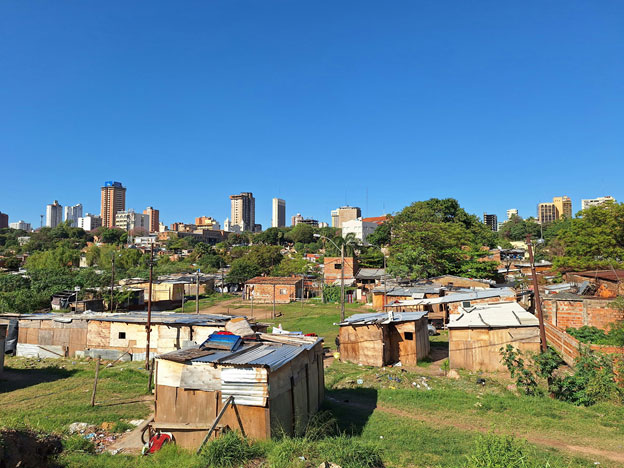 The link between urbanization and poverty may be determined by how cities are planned and governed, according to UN reports. Credit: Benjamin Shurance/Unsplash
UNITED NATIONS, September 18 (IPS) - Urbanization can help concentrate jobs, services, and investments; however, it can also concentrate unaffordable housing, insecure employment, and unequal exposure to contamination and environmental threats. A recent report from the UN Special Rapporteur on extreme poverty and human rights, argues that the difference is not urbanization itself, but how cities are planned, governed, and financed.
Elena Díaz Galán’s report, Cities and Poverty, issued earlier in July and examines social exclusion and the structural drivers of poverty in cities. In it, Galán looks at how land use, housing infrastructure, public services, and participation can either exacerbate or mitigate poverty.
In an exclusive interview with Inter Press Service, Anacláudia Rossbach, UN Under-Secretary-General and Executive Director of UN-Habitat, highlighted how the report’s findings closely align with UN-Habitat’s priorities, particularly in how “the central challenge lies not in urbanization itself, but in addressing the inequalities, deprivations and climate risks that accompany it, which affect people differently based on factors such as gender, age, or socio-economic status.”
UN-Habitat’s World Cities Report 2026: The Global Housing Crisis – Pathways to Action paints a bleak picture of the global housing crisis. Worldwide, at least 3.4 billion people lack access to adequate housing, with 1.1 billion people living in slums or informal settlements. As informal settlements become home to a significant and growing share of the world’s urban population, Rossbach emphasized how “informal settlements hold significant potential to contribute to more inclusive and sustainable urban development”. Informal settlements are often characterized by inadequate housing, limited access to basic services, infrastructure deficits, and insecure tenure; however, “they provide housing, livelihoods, social networks, and opportunities for millions of urban residents.”
Addressing Galán’s point in her report that urbanization has the power to reduce poverty or deepen inequality, Rossbach shared how UN-Habitat’s Strategic Plan 2026-2029 focuses on housing, land, and basic services as the foundation for sustainable development.
“We work to ensure that urbanization contributes to improving living conditions and increasing access to adequate housing, while preventing the deepening of existing inequalities and vulnerabilities, particularly for women and other groups that face multiple and overlapping forms of exclusion,” said Rossbach.
The Cities and Poverty report illustrated how poverty and inequality appear in spatial patterns. For example, low-income individuals are often pushed into more outlying and environmentally hazardous areas, leaving them vulnerable and lacking access to services, jobs, schools, and healthcare. Examples within the report illustrated how informal settlements in Dandora and Korogocho, located near Nairobi’s main landfill, are exposed to toxic environments, including polluted air and groundwater. Cycles of poverty often reinforce themselves in informal settlements. For example, in the peri-urban areas of Woldia, Ethiopia, due to the lack of formal water, sanitation, and electricity networks, the price of water can be up to 1,645 percent more than the price paid by those with private water pipes. These examples and additional costs illustrate the unequal cost of urban life. Showing how people who have the fewest resources are often times forced to pay more for lower-quality essential goods and services.
Building off of these points, Rossbach told IPS how UN-Habitat considers participatory in-situ upgrading as the most effective approach for improving living conditions in informal settlements. Instead of focusing on the eradication of settlements, policy responses should build on the social, economic, and environmental potential in these settlements and support their progressive improvement.
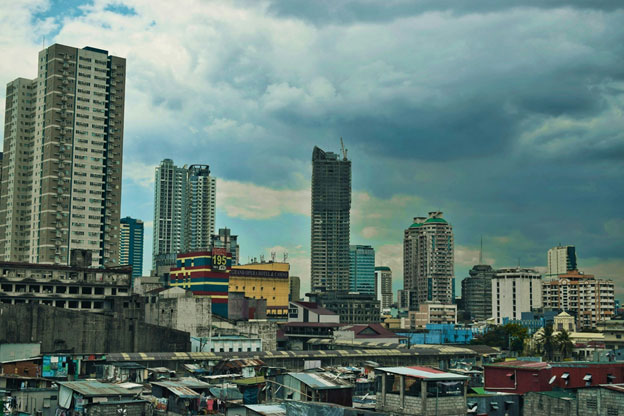 As informal settlements house a growing share of the world’s urban population, they hold potential for contributing to more inclusive, sustainable urban planning. Credit: Nikko Balanial/Unsplash
Successful interventions engage residents along all phases, from design, implementation, and maintenance, to ensure that local priorities, needs, and context-based solutions are taken into account. Most importantly, successful interventions require coordinated responses to integrate informal settlements into the wider urban fabric.
“When combined with broader housing policies and planning reforms, participatory in-situ upgrading can contribute to more inclusive, sustainable, and equitable urban development outcomes,” Rossbach said.
The Cities and Poverty report discussed urbanization through the lens of the processes that lead to it and the impact on human rights. Two urbanization models were included, the first of which is the “15-minute city”. The 15-minute city is an inclusive vision of urban development which seeks to ensure that all residents have access within a short walk or bicycle ride to essential daily services and opportunities. Examples include Shanghai’s Anshan Xincun 15-minute community life circles, which have shown increased mobility in the aging population, helping to make more equitable and inclusive cities.
However, greater accessibility within these 15-minute cities can also lead to gentrification. “When neighbourhoods become more attractive and better connected, land values and housing costs can rise, potentially displacing existing residents,” said Rossbach. In order to protect existing residents and ensure that these changes do not lead to displacement or exclusion, Rossbach proposed three principles for protection:
- 1. Proximity-based planning should help reduce spatial inequalities, not reinforce them.
2. Neighborhood improvements need to go hand in hand with measures to protect housing affordability and tenure security.
3. The communities and residents need to be involved at all levels and should have a meaningful role in deciding what is developed and how.
“The success of a 15-minute city should not be measured only by how quickly people can reach services, but by whether existing residents can continue to live in their communities and benefit from the improvements around them,” said Rossbach.
The second urbanization model discussed was ‘smart cities’. Smart cities utilize digital technologies, big data analytics, and artificial intelligence to improve upon the management and delivery of urban services. However, the report also warns that digitization and smart cities can reinforce existing inequalities and create a sense of double vulnerability where material poverty combines with exclusion from devices, connectivity, and digital skills.
Rossbach discussed how UN-Habitat promotes a “people-centered smart cities approach that puts people and their needs, rather than technology, at the center.” In particular, services and digital services need to be designed to address the realities of low-income neighborhoods and informal settlements, many of which lack affordable connectivity, devices, digital skills, and formal addresses. Most importantly, Rossbach said, “digitization should close existing inequalities, not reinforce them.”
UN-Habitat is working to close these existing inequalities through programs such as the United Nations Innovation Technology Accelerator for Cities (UNITAC). It developed the Building and Establishment Automated Mapper (BEAM), which helps cities better understand informal settlements and fast-growing urban areas by rapidly mapping buildings from aerial imagery. BEAM provides municipalities with better information to plan infrastructure, target upgrading programmes, and improve basic services.
Nonetheless, data itself does not ensure or create more equitable cities. The Cities and Poverty report emphasized how developing human rights indicators are essential, and so are inputting monitoring tools to evaluate the efficiency of government policies and action. Rossbach added that “inclusive digital transformation is about making people visible — both in data and in decision-making”.
Rossbach and Galán, through her report, have called for urban planning that puts human rights at the center. This means promoting affordable housing in well-connected areas, secure tenure, universal basic services, and more equitable investments across neighborhoods. Implementation needs to be people-centered and measured by whether existing residents can remain in their communities and share in the benefits.
IPS UN Bureau Report



© Inter Press Service (20260918164444) — All Rights Reserved. Original source: Inter Press Service