42 minutes ago
2
42 minutes ago
2

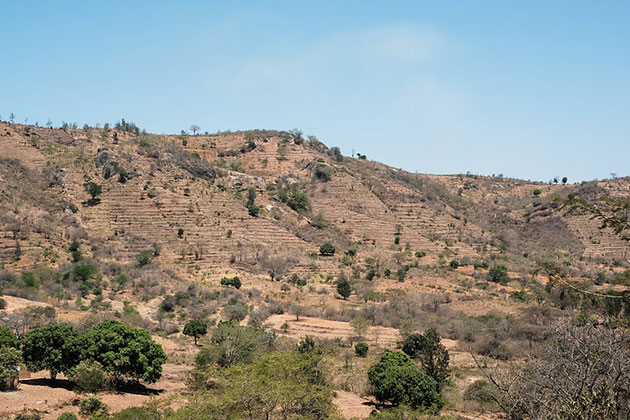 Drylands landscape near Kitui, Kitui County - Kenya. Credit: Axel Fassio/CIFOR
NAIROBI, Kenya, September 1 (IPS) - Open a can of something fizzy and the reason the sugar doesn’t separate immediately is gum arabic, tapped by hand from acacia trees across the Sahel. Spray on perfume and the reason the scent is still there at dinner is frankincense, a resin cut from Boswellia trees on the dry escarpments of the Horn of Africa. The fat that gives a chocolate bar its snap may well be shea, gathered and pressed by women in the parkland belt of West Africa. The cashmere jumper came from goats that can only be raised on cold, dry rangelands.
These are drylands. They cover 44 per cent of the planet’s land, hold 44 per cent of the world’s cropland and half its livestock, and two billion people live in them. We have spent decades describing them as empty or unproductive. For a long list of things most of us use without thinking, they are the only places on earth that produce them at all.
It is no secret that our world is becoming hotter and drier. Three quarters of the planet’s land experienced drier conditions in the last 30 years than the previous 30. This year’s El Niño is intensifying fast, compelling the world to look back at what dryland systems already know. Nearly every model now points to a record-strength event: the US Climate Prediction Center puts the odds of a “very strong” El Niño at over 90 per cent for this fall and winter, and a 69 per cent chance it exceeds anything on record since 1950.
Drylands have been living through exactly this kind of shock-and-recovery cycle for generations, and their playbook offers real lessons. Farmers in places that have always been able to count on rain are beginning to face a question that dryland farmers answered generations ago: what do you grow, and how, when the water is not guaranteed?
Dryland systems are the longest-running operating record anywhere of producing value under conditions of scarcity, volatility and shock. These landscapes are home to generations of knowledge on how to thrive with limited water and high variability. This includes practices such as spreading risk across several crops and animals rather than betting the season on one, understanding land closely enough to move livestock before the pressure is too much, and building income that arrives at different times of the year so a bad month is not a ruined one. These are powerful lessons needed now.
Now is the time to listen and learn from dryland communities, practices, and regenerative production models. When this wisdom, data, and experience serve as our foundation, we can transition to sustainable business models and unlock investments to power our future world using knowledge that already exists in the places we have been calling marginal.
Mongolia, the host of the recently concluded UN’s COP17 talks under the Convention to Combat Desertification (UNCCD), is a case in point. Three quarters of Mongolia’s land is already classified as degraded or at risk. However, Mongolian herders supply 40 per cent of the world’s raw cashmere, increasingly innovating to shift away from an extractive model to practices that generate diverse value, from wool to grass-fed meat, examples of what a healthy landscape can offer.
In northern Ghana, the Ojoba Women’s Shea Cooperative processes shea butter by hand in the arid Upper East Region, using a skill passed down through generations. They now supply international buyers including L’Occitane and Lush.
In both instances, the land already had value, and the skills already existed within the communities. What was missing was a route to the market willing to pay for them. These initiatives demonstrate what is possible when investment is designed around the realities and value in drylands.
Investment can take many forms: from financing cooperatives through the shift to new practices; insurance that pays out on rainfall; water and energy infrastructure that keeps a harvest sellable in extreme heat. There is growth potential beyond raw commodities too; processing into oils, powders, waxes compounds the returns. And payments for ecosystem services, from stored carbon, biodiversity and watershed protection, sit alongside that.
Donors like the European Union have already recognised the value of drylands with the €20 million Thrivelands initiative, led by Landscape Alliance, to build the coalitions and action this work needs; including innovations needed to protect and restore land. These innovations range from the tools to monitor and restore soil health accurately to the Land Degradation Surveillance Framework and the Regreening Africa app, which brings this data into the hands of farmers.
But public funding alone cannot unlock the drylands opportunities. Adapting to a drier world means restoring a broken nature finance system and closing the $700 billion finance gap to apply proven expertise across a growing area.
Many companies already depend on drylands through what they source, without having assessed how much of their supply comes from them. For those in the agrifood, textiles, and cosmetics sectors, investing in restoring and protecting these landscapes is a way to stabilise their supply chains, manage growing levels of risk and meet climate goals.
There is also the question of what inaction costs. Investing in drylands agriculture could avert a 12 per cent reduction in global food production over the next 25 years and prevent the release of about 60 per cent of stored carbon.
COP17 is a reminder of how little time is left. The UNCCD finance framework closes in 2030, with 82 per cent of the cumulative need for finance unmet. Time is running out to leverage the lessons from drylands to protect future food security. The gap between what is needed and what is being invested remains enormous.
The landscapes on which our future depends may be getting drier, but they are not devoid of opportunity. With science and innovation that enhances traditional knowledge, they are saturated with opportunities to bolster food security and climate resilience.
Dr Éliane Ubalijoro, chief executive officer of Landscape Alliance
Salina Abraham, Head of Thrivelands, Landscape Alliance
IPS UN Bureau
© Inter Press Service (20260901063221) — All Rights Reserved. Original source: Inter Press Service