2 weeks ago
6
2 weeks ago
6

On the shores of Nkondo, in Uganda’s Kikuube district, the day begins before sunrise. Fishers enter the lake to fish, while families around Lake Albert rely on its waters for food, income and daily survival.
But, behind these daily activities lies an increasingly visible threat: plastic waste and other debris entering Lake Albert.
Leaders of the local fishing community are warning that without urgent action, pollution could endanger fish stocks and, as a consequence, the lives of future generations.
Like the local fishers, the UN has also warned of the decline of freshwater species due to pollution and environmental degradation in recent decades.
Surface water bodies are shrinking or being completely lost in areas home to 93.1 million people, while more than a quarter are becoming increasingly cloudy because of pollution, according to a 2024 report by the UN Environment Programme (UNEP) and UN-Water.
In celebration of World Lake Day, marked annually on 27 August, Solomon Wamara, the chairperson for fishers on Lake Albert, said the community cannot continue to view the lake as a source of livelihood while allowing it to be filled with waste.
“It is a good time to highlight the threats facing this lake that is our lifeline,” he told UN News.
Plastics threaten fish breeding grounds
For Mr. Wamara, plastic waste is not just a sanitation issue. It directly affects the future of fishing and food security.
He said that when plastic bags and other waste are thrown away, they eventually end up in the lake, where they can affect the areas where fish breed and grow.
But the pollution doesn’t stop at the lake’s shores.
Agricultural activities and waste disposal often carry waste from the Wambaya, Waki and Nguse rivers into Lake Albert, Mr. Wamara said.
“River pollution affects fish breeding grounds and also food security. These rivers are essential for the survival of fish and communities that depend on the lake,” he said. “The lake is our life.”
Society’s responsibility
The community should change the way it cares for the lake, according to Mr. Wamara.
He urged communities living around Lake Albert to stop dumping waste – especially plastic – and to participate in environmental sanitation activities.
Mr. Wamara supports monthly the cleanliness campaigns and say such efforts should be expanded and involve more communities.
Conservation efforts should also consider the financial situation of the people whose livelihoods depend on the lake, he said.
Rather than excessively taxing traditional fishers, he said authorities should help them continue fishing sustainably and within the law.
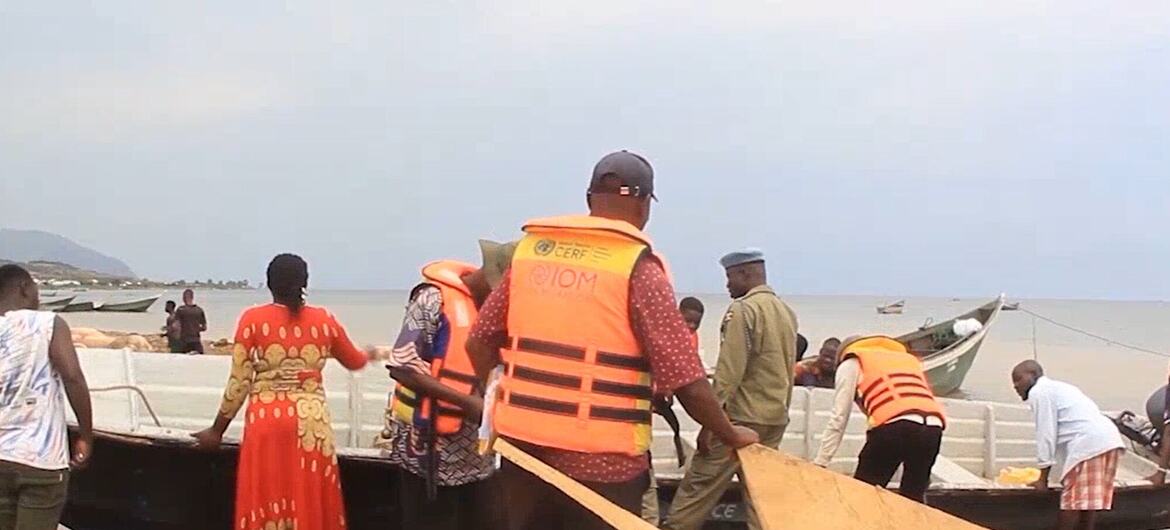
UN News
Fishers on the shores of Nkondo, Lake Albert, in Kikuube district, Uganda.
A common resource
Godwin Angalia, the Kikuube district commissioner, who also comes from a fishing community and was once a fisher, said the government sees lakes as an important pillar of local economies and people’s lives.
However, Lake Albert faces several challenges, including environmental pollution and illegal fishing.
According to Mr. Angalia, the government continues to take steps to combat pollution resulting from human activities while also aiming to protect the water sources that feed the lake.
“Of course, rivers like Nguse and Wambaya have been polluted,” he said. “Also, the Bugoma Forest is very important for the life of Lake Albert and the creatures in it.”
Mr. Angalia said efforts are ongoing to protect the Bugoma Forest and the rivers that empty their waters into Lake Albert from destruction and pollution.
He has also urged village leaders to be vigilant and report people who pollute the environment or destroy lake resources to the relevant authorities.
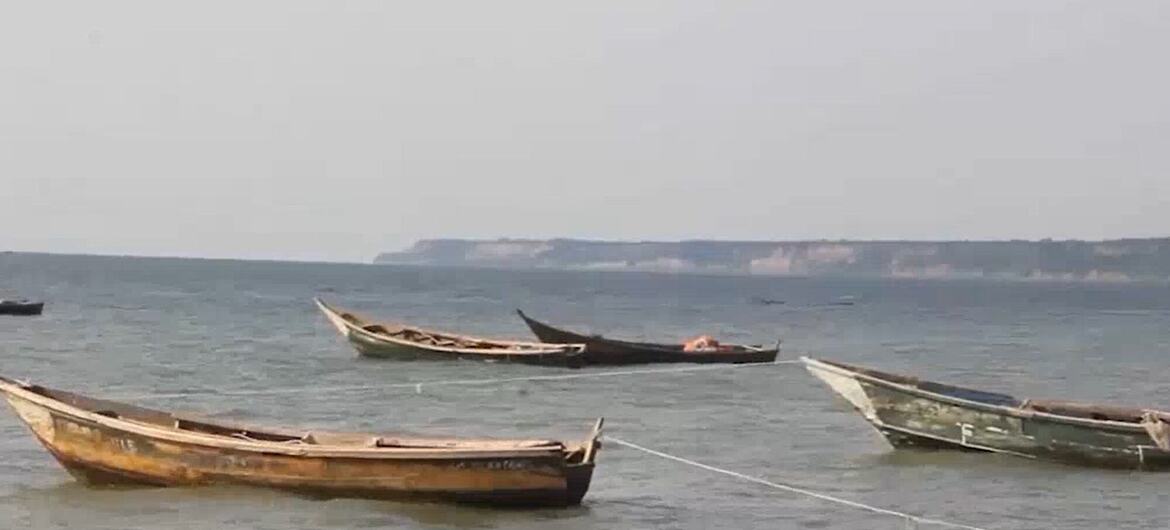
UN News
Weathered wooden fishing boats anchored on Lake Albert in Uganda.
Fishers’ role
In addition to government measures, Mr. Angalia said the community should be part of the solution.
The government has begun forming indigenous community committees that will assist in fisheries management in their areas.
Mr. Angalia said fishers’ participation is important because they are familiar with the lake’s environment and understand how its resources can be used without depleting them.
“We fishermen ourselves know that we should not catch young fish,” he said. “We use natural and environmentally friendly methods in fishing.”
For Mr. Angalia, fishers are at the center of discussions around conservation, not only as part of the problem, but also as important guardians of the resources they depend on.
Future in everyone’s hands
As human activity increases, so does the pressure on Lake Albert’s ecosystem.
For surrounding residents, the message is clear: the lake cannot be protected by the government alone.
If Lake Albert is to continue sustaining the food, income and livelihoods of communities like Mr. Wamara’s, protecting it isn’t an option, but a necessity.
“If we protect the lake, we protect our lives and the lives of future generations,” he said.
Where next?
Latest news
Read the latest news stories:
- ‘The lake is our life’: Protecting a shared lifeline in Uganda Sunday, August 30, 2026
- Rising seas, rising stakes: What increasing sea-levels mean to humanity Saturday, August 29, 2026
- Uganda Announces End of Ebola Outbreak, Yet Regional Risks Remain Friday, August 28, 2026
- SWEDEN: ‘The New Migration Laws Are so Vague That People Don’t Know What Might Be Used Against Them’ Friday, August 28, 2026
- Family Planning and Population Dynamics Are Key to Water Security Friday, August 28, 2026
- Internally Displaced in Ukraine: Between Hell and a Future That Does Not Exist Friday, August 28, 2026
- Consequences of Inaction: UN Security Council Pressed to Act Before Hunger Becomes Famine Friday, August 28, 2026
- Will the Future of the UN be Dictated by a Hostile US? Friday, August 28, 2026
- Four children killed as separate attacks in Gaza destroy aid supplies Friday, August 28, 2026
- As the Himalayas melt, deadly floods become the new normal Friday, August 28, 2026
Link to this page from your site/blog
Add the following HTML code to your page:
<p><a href="https://www.globalissues.org/news/2026/08/30/43930">‘The lake is our life’: Protecting a shared lifeline in Uganda</a>, <cite>Inter Press Service</cite>, Sunday, August 30, 2026 (posted by Global Issues)</p>… to produce this:
‘The lake is our life’: Protecting a shared lifeline in Uganda, Inter Press Service, Sunday, August 30, 2026 (posted by Global Issues)