
 6 months ago
20
6 months ago
20

Noor NanjiCulture correspondent

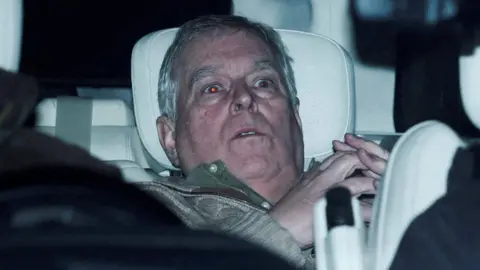 Reuters/Phil Noble
This picture of Andrew Mountbatten-Windsor has been seen across the globe
It was 7 PM, two Thursdays ago. Andrew Mountbatten-Windsor had just been released from police custody when a haunted photo of him, slumped in the backseat of a car, suddenly dropped.
The image immediately went viral and was on the front page of most major newspapers the following morning.
Days later, another image made headlines - albeit a grab from moving footage. This time, it was Lord Mandelson, returning home in a black cab after his arrest on Monday.
Celebrities, royals and politicians frequently find themselves photographed as they get driven from one location to another.
They may not be the best photos ever taken, but they can become the most famous.
The curious phenomenon, described by celebrity crisis PR Lauren Beeching as "distinctly British", is largely explained by the fact it feels "off guard".
"Most public imagery of celebrities, royals or politicians is managed in some way," she told BBC News.
"The backseat of a car feels like the moment someone assumes the performance has stopped."
But capturing such moments is rarely easy. It requires skill, technique, patience - and a little bit of luck.
We've been speaking to snappers about the art of the "one shot" - and also asking showbiz experts why we're all so fascinated by the snatched backseat photo.
The first thing that all photographers say is that you have to be patient to get the snap.
"The waiting can be pretty endless," says newspaper photographer Jamie Lorriman.
When Mountbatten-Windsor was arrested on suspicion of misconduct in public office last week, I was deployed to Sandringham where I joined the press pack waiting outside his home.
Every single car that went by was met with a wall of frantic camera flashes. No one knew which vehicle might be carrying the former prince - and no one wanted to miss getting the shot.
It also rained relentlessly, and there were no loos or food options anywhere in sight.
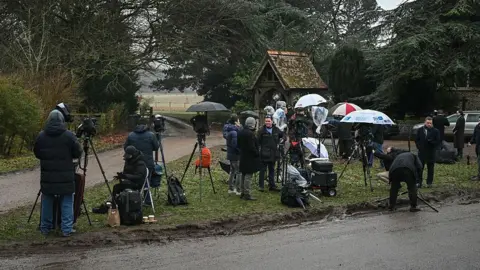 Justin Tallis / AFP via Getty Images
Members of the media staking out an entrance to Andrew Mountbatten-Windsor's new home, Wood Farm in Sandringham, the day of his arrest
That's why being prepared is so important, says news photographer Jacqueline Lawrie. She adds that good shoes and weatherproofs are essential.
"I've done a lot of stakeouts and doorstepping in my time," she told BBC News. "In the back of my car, I have everything you could ever need."
“You need to be primed and ready to go at any moment," agrees Mark Harrison, news photographer turned celebrity photographer.
"You can't just go off and have a cup of tea.”
In the end, the photo of the night was taken around 40 miles away, outside Aylsham police station.
Reuters photographer Phil Noble waited six hours in the cold until the former duke's car arrived. It was “hit and miss”, he told BBC News.
But he got the shot, and it’s now been shown everywhere. It’s also led to countless viral memes on social media.
Mountbatten-Windsor, who was released under investigation, has consistently denied any wrongdoing.
In recent weeks, photographers have also been camped out outside two properties linked to Mandelson, in Wiltshire and north London.
Lawrie was one of those outside his north London home.
Two weeks later, Mandelson was arrested on suspicion of misconduct in public office, before being released on bail. Photographers and cameramen were poised and ready to take a shot of him in his car when he returned home.
Mandelson has not responded to requests for comment but the BBC understands his position is that he has not acted in any way criminally and that he was not motivated by financial gain.
'You've got seconds to get it right'
For Noble, capturing Mountbatten-Windsor in the backseat of a car was "more luck than judgement".
Most photographers agree it takes a bit of both.
One of the key factors for success is being in the right place.
Often, says Lorriman, it's "a total punt".
"I've done my whole shift and then found out the person wasn't even there," he says.
But other times, you have more information.
On the day Mountbatten-Windsor was arrested, Lorriman was sent to Clarence House to try and get the first picture of King Charles following the news.
He knew roughly what time the King would emerge, because he was due to attend an event that afternoon at London Fashion Week.
"So that narrowed down the window of opportunity, and I managed to get several car shots of him leaving," he says.
Then there's the actual task of taking a picture of someone in a moving car.
"It's one of the hardest things," says Lawrie. "It's dark, you don't know what you're focusing on, the vehicle is moving fast, and you don't know where they are sitting in the car."
Tinted windows present an additional challenge. One way photographers get around them is by using more flash, but some government cars are also fitted with blinds.
In those cases, Lorriman's solution is to shoot through the front windows or windscreen, but that presents its own challenges. "It's very narrow, you need to get the exact angle, and not have the rearview mirror blocking the person out," he says.
Overall, most agree educated guesswork is key.
"You have to make several guesstimates ahead of time - where to stand, where the car might emerge, which side they'll be on," Harrison says.
"It's a one-hit trick, it's all an estimate. You've got seconds to get it right."
'Peering into the bubble via a lens'
That's how the photographers do it. But why do it at all?
For Beeching, the reason there's such a delicious appeal to backseat car photos is because they are so different to the curated, tightly controlled way in which we usually see celebrities.
"It feels off-guard," she says.
Entertainment journalist Emma Bullimore agrees backseat car photos draw us in because they take us behind the curtain.
For many, it feels "exciting" to "peer into that bubble via a lens", she told BBC News.
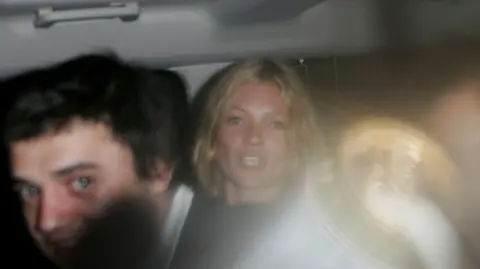 MJ Kim/Getty Images
Kate Moss, in a car with Pete Doherty, throws a full beer can at photographers at Glastonbury Festival in 2005
Famous examples over the years include supermodel Kate Moss, who was often papped on her way home after a night out in the 90s and 00s.
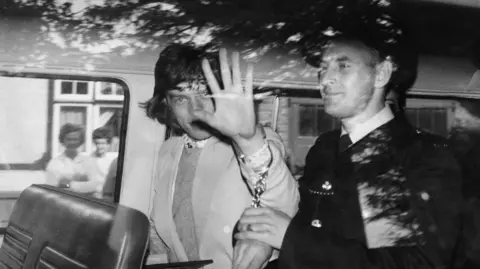
Margaret Thatcher was famously seen looking tearful in the back of a car when she left No 10 for the final time, while rock star Mick Jagger was pictured in handcuffs after being sentenced for drug possession.
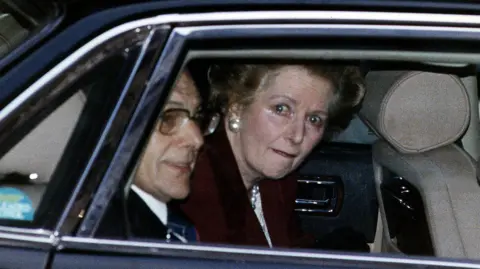 Trinity Mirror / Mirrorpix via alamy
This picture of Margaret Thatcher looking tearful as she left No 10 Downing Street for the last time in 1990 made headlines
 Corbis via Getty Images
Mick Jagger was pictured in handcuffs after being found guilty of drug possession in 1967
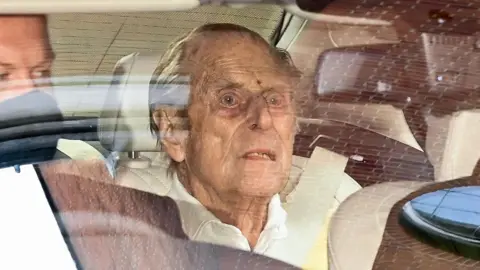
In 2021, the late Prince Philip was photographed leaving hospital in the back of a car, which went viral and sparked multiple memes.
For Beeching, the reaction to that picture says something about "how comfortable we are mixing authority with irreverence".
She said while paparazzi culture exists everywhere, the tone of Britain's response feels different. "We don't treat powerful or senior figures as untouchable."
In moments of controversy, the backseat car image can carry a particularly sharp edge - because it often presents the celebrity in an unflattering way.
"That is where the idea of glee at downfall sometimes comes in,” says Beeching. “The photograph can be read as symbolic.”
 Daniel Leal/AFP via Getty Images
This 2021 photograph of Prince Philip in the back of a car sparked dozens of memes
These sorts of pictures - whether of royals, politicians or celebrities - don't come out all the time.
There needs to be a public interest threshold. News editors will be weighing up whether the public interest in showing the images outweighs any infringement of an individual's privacy.
Beeching argues there is "a historical anxiety" tied to this.
"The legacy of Princess Diana still shapes how people perceive cars and photographers," she said. "Even when situations are nowhere near that scale, the symbolism remains powerful."
But Lorriman says that, as a photographer, he is always acutely aware of the "news value" of any images he's taking - even if the decision to run them ultimately lies with editors.
"There's always got to be a clear news purpose for why we're taking that picture," he said.
Ultimately, backseat photos have long been the fodder of tabloids - and that is unlikely to change any time soon.
Such images have always played an important role in the context of our 24-hour rolling news culture, says Bullimore.
They also travel at lightening speed on social media.
And if a photographer gets it right, their images can even become the story itself - as we have seen in recent weeks.
"The goal is to capture the entire story in one single frame," says Lawrie.
"It's not easy, but that's the fun of it. And you always know when you've got something really good."


