3 months ago
50
3 months ago
50

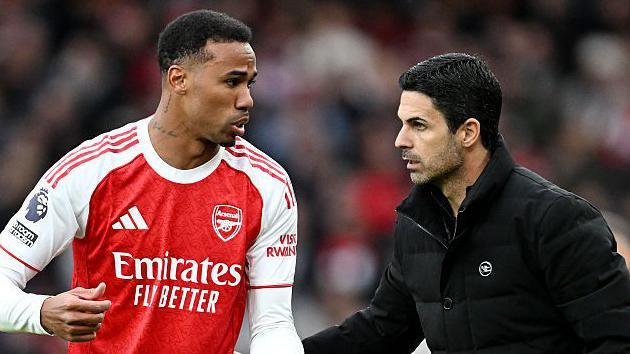 Image source, Getty Images
Arsenal are bidding to win the Champions League for the first time
By
Football tactics correspondent
Mikel Arteta's Arsenal are hoping to follow up their Premier League triumph with a Champions League trophy against Paris St-Germain on Saturday but know a mammoth task is ahead.
Arsenal's men have thrived in Europe with a high possession approach that has minimised the number of chances they concede, boasting the most clean sheets (9) in the competition so far.
Luis Enrique's PSG, by comparison, have only five clean sheets but are the tournament's top scorers with 44 goals to Arsenal's 29.
Although these stats set the game up as the best attack against the best defence, Arteta will hope his side are front-footed, playing in PSG's half as they did for large parts of the two legs in last season's semi-final exit.
'It's been written' - Arsenal players look ahead to UCL final
The value of a different type of number nine
A tactic that worked impressively - despite the narrow defeat - in the second-leg tie between the two sides last season was the use of midfielder Mikel Merino as a number nine.
PSG, known for their ability to press intensely and often in a man-to-man fashion, stepped up to Arsenal as they looked to build out from the back.
A key principle of positional play is finding the free man. When opponents apply man-to-man pressure, finding a free man is harder.
With Merino dropping deep into central midfield, PSG centre-back Willian Pacho was reluctant to follow him, which allowed the French team to keep an extra player in the defensive line.
Arsenal, without a striker, however now had an extra man in midfield.
PSG's midfield trio, alert to Arsenal's midfield three, looked to shift across onto Merino at times but this would leave another Arsenal midfielder free helping the Gunners get up the pitch.
Although Swedish striker Viktor Gyokeres has seen out the season in strong form, both Merino, who is fit again after a long absence, and Kai Havertz are players naturally suited to this tactic.
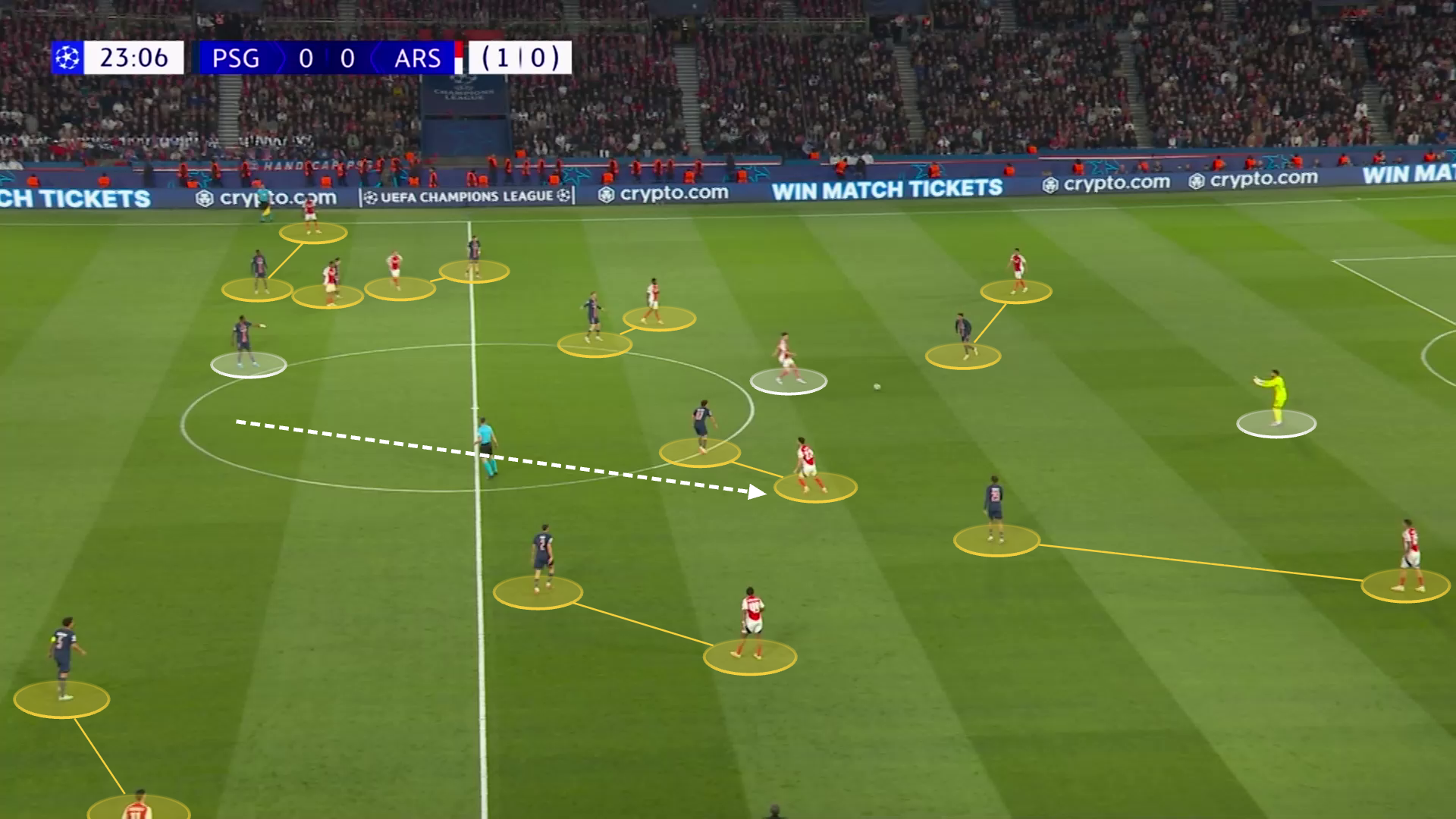
PSG step up to defend in a man-to-man fashion but because Merino drops into central midfield without Pacho following him - one of PSG's midfielders has to come across to mark him. This leaves Declan Rice and David Raya (in white circles) as free men and Arsenal progress the ball up the pitch
Against high man-to-man pressing, the long ball over the opponent's attack and midfield is also a valuable tactic.
Merino and Havertz, again, are best placed to bring down or flick on long passes from David Raya before Arsenal's midfield swarm the second ball making this another tactic to look out for.
Gyokeres could make use of long balls by duelling with defenders in wider areas, looking to run the channels.
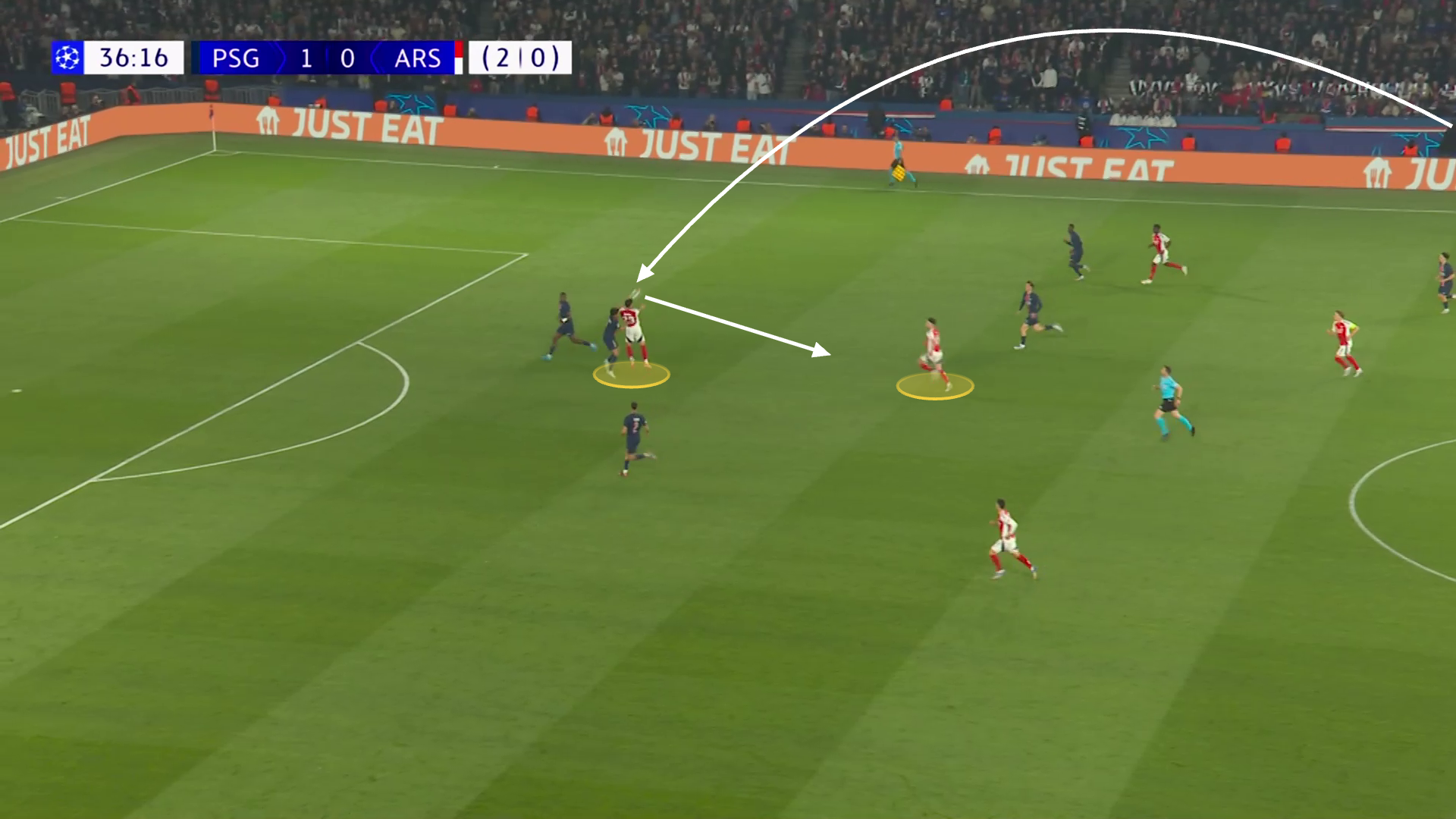
An example of William Saliba playing long to Mikel Merino as PSG step up to apply pressure. Merino wins his duel and knocks it down for Declan Rice in space
The bravery to play in small spaces
Last season, Arsenal struggled to score against PSG, often thanks to Gianluigi Donnarumma's heroics.
PSG have not conceded many goals this season but Chelsea, RC Lens and Bayern Munich have all attacked well against them.
By positioning their players close to each other, those teams have been able to draw PSG and their man markers higher up the pitch into crowded clusters. This then leaves other parts of the pitch with fewer players.
Releasing the ball from these crowded areas into more open spaces is a tactic that has helped teams break down a resolute PSG, particularly while attacking down the middle.
Arsenal tend to shy away from playing centrally, focusing more on safer attacking play and crosses, as losing the ball centrally makes you more susceptible to a counter attack.
But this might be a risk they could lean into with the likes of Leandro Trossard, Havertz, Bukayo Saka, Martin Zubimendi and Eberechi Eze capable of playing in close proximity under pressure paired with players capable of finishing moves centrally.
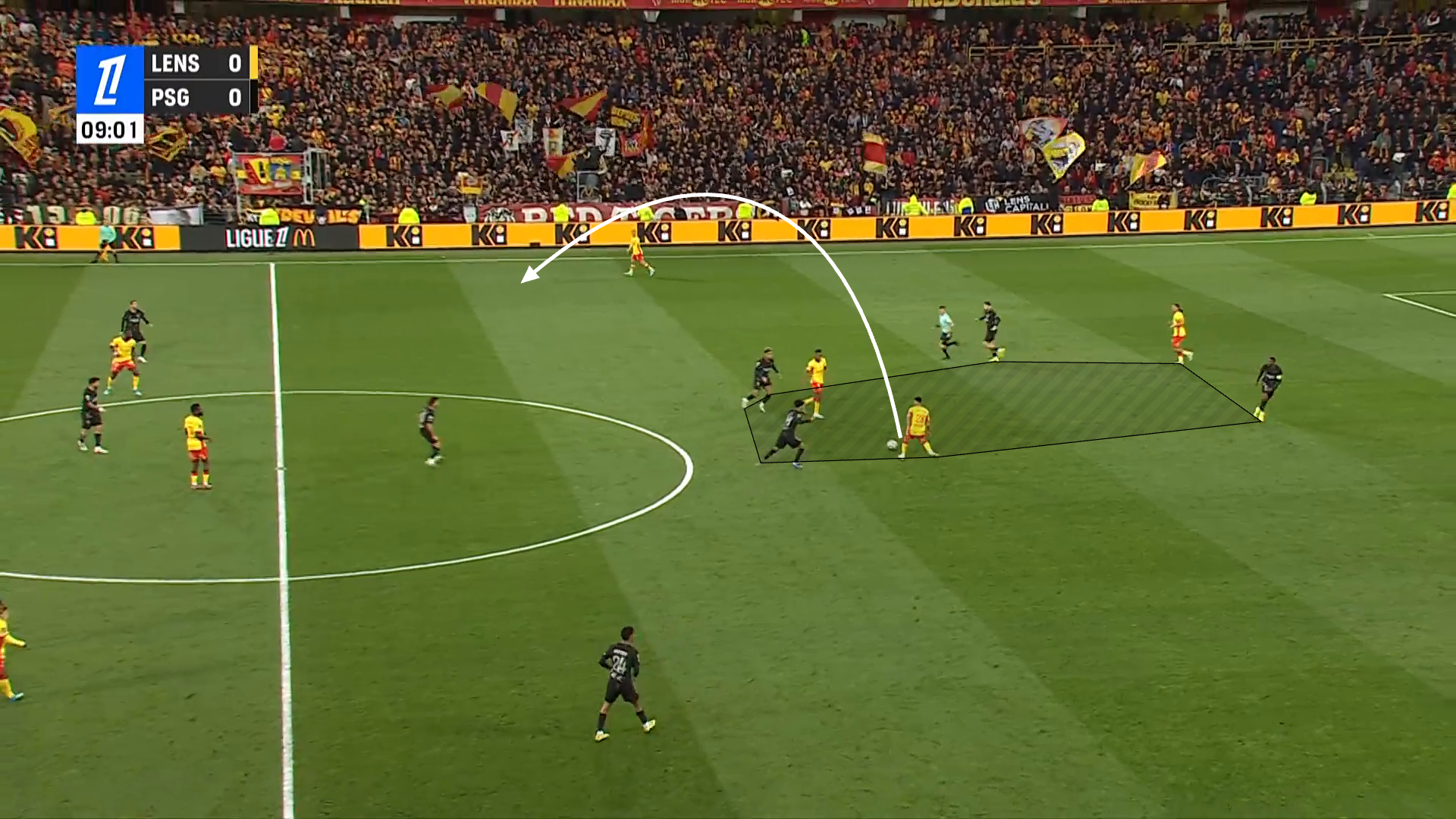
Lens, like Chelsea in the Club World Cup, used central midfielders close to each other. This drew PSG's midfielders onto them before they found passes into less crowded areas
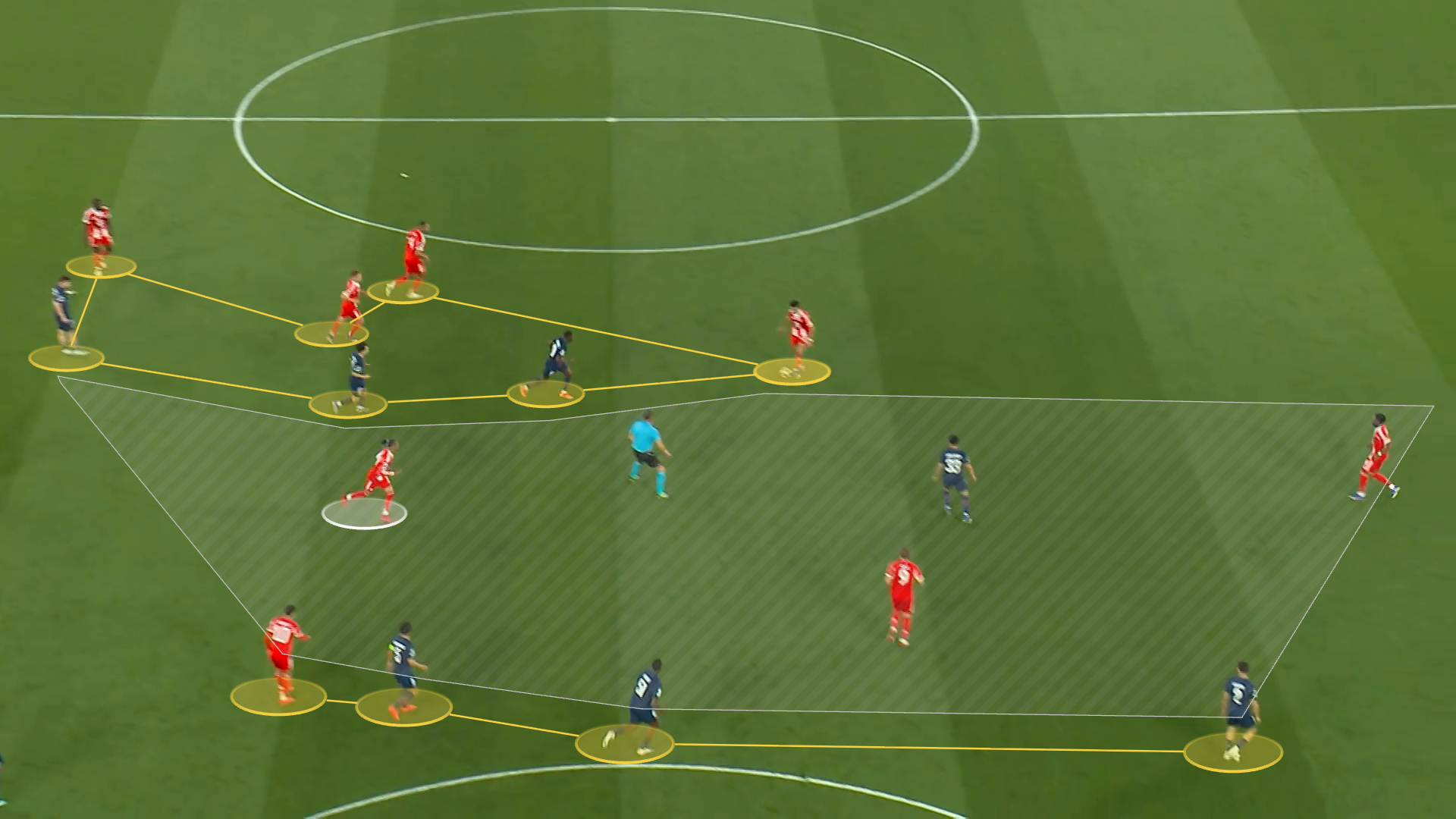
Michael Olise (white) scored against PSG from this move. Note the four Bayern players dropping deep, positioned close to each other, drawing three PSG players towards them. With this area of pitch crowded, space is left elsewhere (grey box) which is where the goal comes from
Stopping PSG's fluid attack
Khvicha Kvaratskhelia, an explosive right-footed left winger is one of football's most dangerous players, and Arsenal will need to keep him quiet.
PSG under Luis Enrique are a very fluid side but follow certain rules as outlined in this tactical analysis of the side earlier in the season.
One of these ideas is that they have certain areas of the pitch they look to keep occupied throughout the game including the two centre-back positions, both flanks, and the centre-forward position - but who moves into these positions is less important.
The many rotations of different players into these areas helps PSG pull apart the opposition's defensive shape.
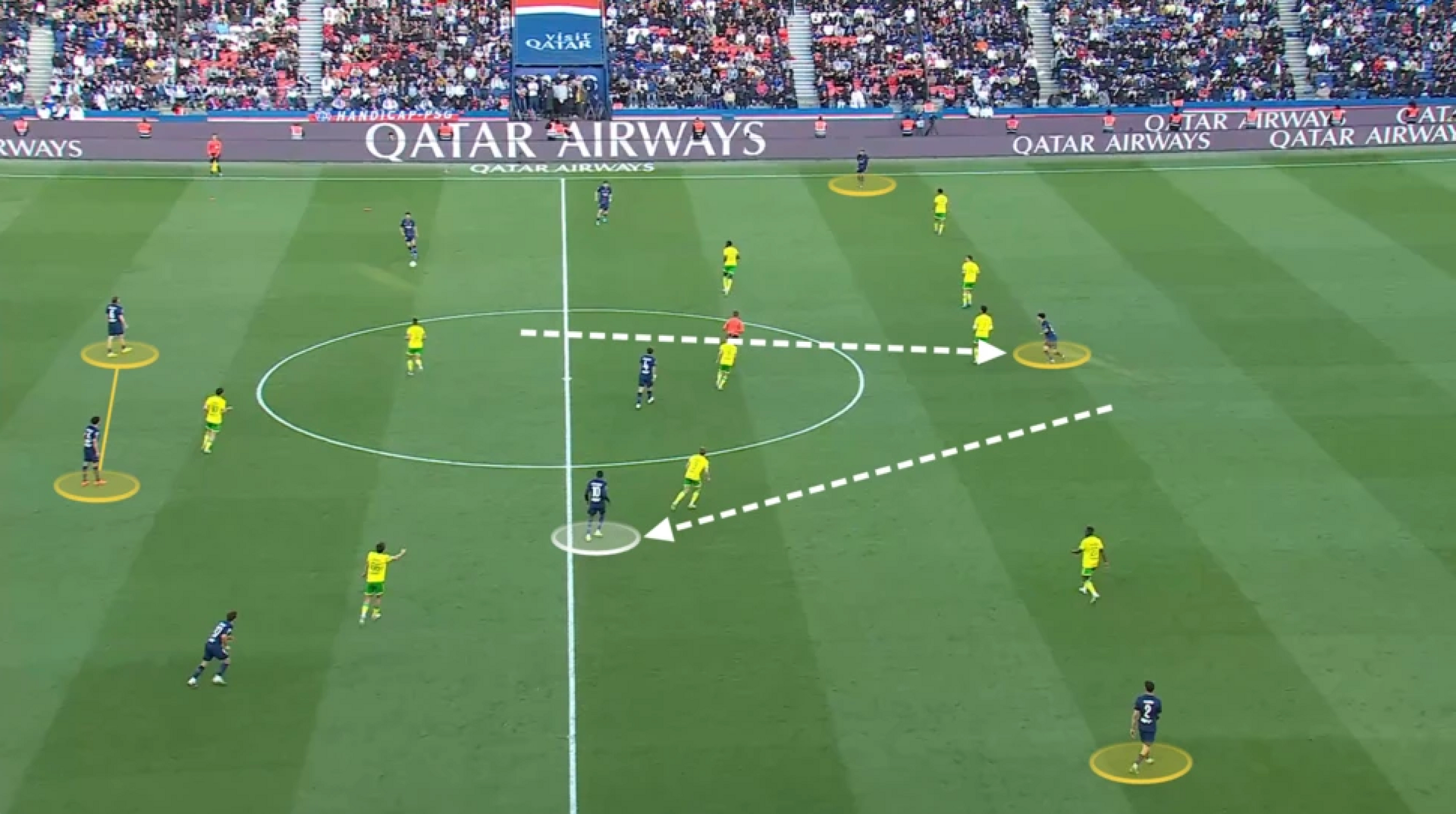
In yellow, you see the five areas of the pitch PSG look to occupy at all times while there is more fluidity for the players positioned in the midfield areas. In this example, the striker position is occupied by one of the midfielders pushing up as Ousmane Dembele has dropped into a midfield position
Kvaratskhelia naturally finds himself on the left touchline often. From here, his off-the-ball movement stands out.
In PSG's first leg against Bayern, Desire Doue dropped deep from the attacking line - a common movement Arsenal will need to be alert to.
With Bayern's Dayot Upamecano less than touch-tight, Doue had time on the ball. Kvaratskhelia feinted to run in behind, then dropped short, then looked to run in behind, dropped short again before eventually running in behind.
These movements froze Bayern's full-back and Doue clipped a pass in behind for his team-mate to run onto before he cut inside and scored.
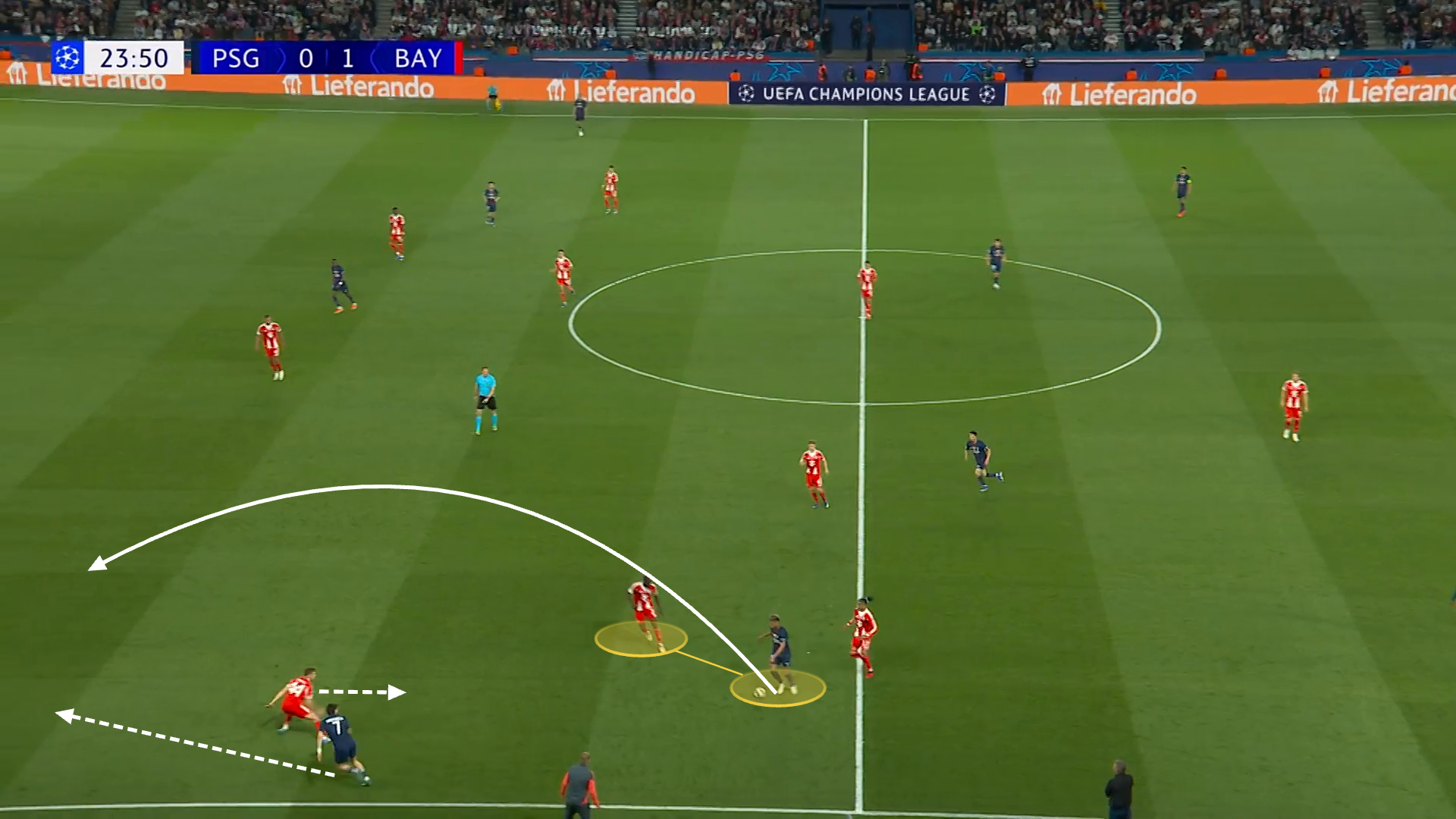
Kvaratskhelia's feints cause Stanisic to step up, rendering him unable to track the run in behind. Upamecano fails to press tighly enough which gives Doue room to play the pass
If Arsenal are to nullify PSG, in these situations they will have to commit to an approach.
This could be to stay very tight on the players that drop deep so as not to give them time to find runners in behind or they could drop off, letting them have the ball in certain areas but reducing the space in behind their defence.
After going 1-0 down in that first leg last season, Arteta tweaked his side's defensive approach, saying after the game that "we had one issue that we corrected after 15-20 minutes, that turned the game around".
Martin Odegaard's role in the press changed higher up the pitch making it harder for PSG to find their midfielders but the other key difference was the increased pressure and attention William Saliba applied to Dembele. He went man-to-man even when Dembele dropped very deep.
This echoes former Chelsea boss Enzo Maresca's sentiment too who, after a 3-0 win against PSG in the Club World Cup, said: "The idea was to go man-to-man. PSG are so good that if you give them time you are going to struggle. You have to press them very intensely."
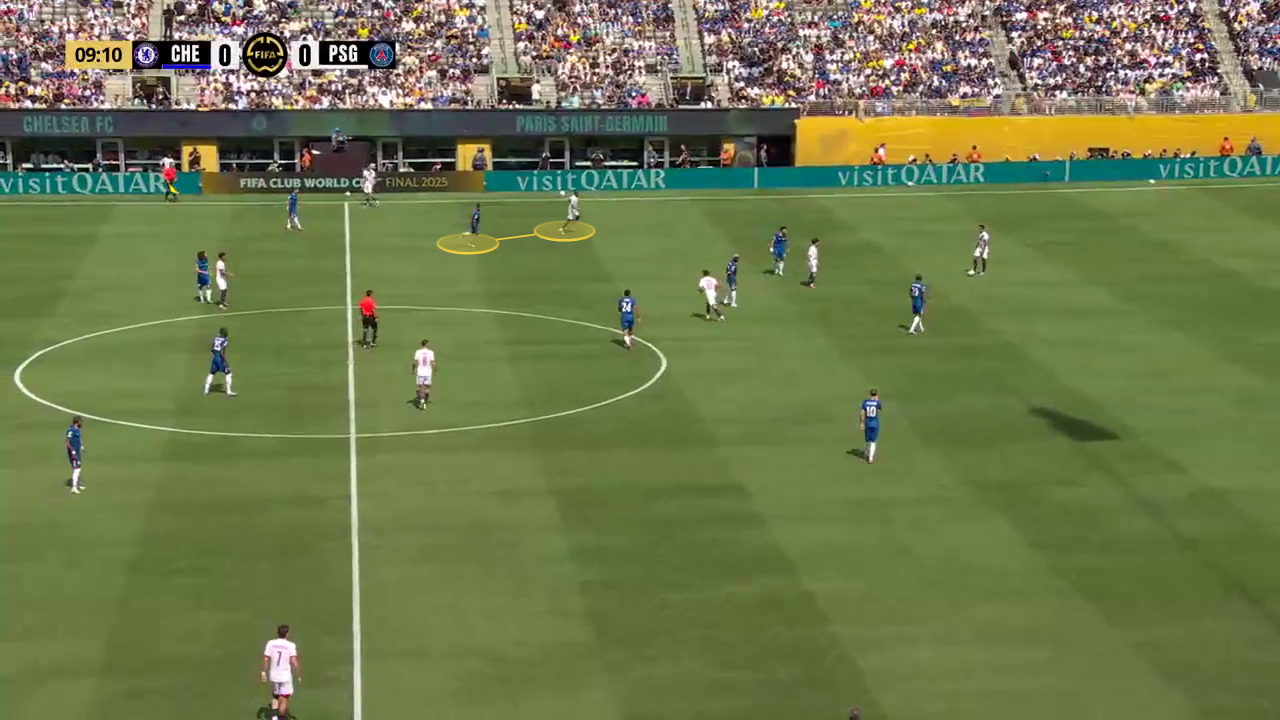
In Chelsea's Club World Cup win against PSG, centre back Levi Colwill was seen stepping up to press striker Ousmane Dembele irrespective of the awkward positios he picked up
Set plays could decide the final
It would be negligent to write about Arsenal beating a direct opponent without mentioning their most effective tool this season.
PSG have only conceded 29 goals in the league this season but six of them have come from non-penalty set-pieces. The size of their squad makes this an obvious area of weakness.
Thomas Frank’s Spurs lost to PSG in the Champions League earlier this season but managed to score three goals, one coming from a corner. They also lost on penalties against them in the Uefa Super Cup in August, scoring both goals in a 2-2 draw from crossed free kicks.
Under Frank, Spurs adopted various Arteta-isms including making set-plays one of their main methods of breaking teams down.
For all three set-piece goals, Spurs targeted the back post before heading the ball back across goal, either for a teammate or directly to goal.
PSG appear uncomfortable dealing with crosses that float over their heads as they track back and the header back in the other direction goes against the direction they are moving in, giving the attacking side, who know where the ball will go, an advantage.
Arsenal are even better placed for that, so if they are able to get up the pitch in the first place, forcing corner kicks or winning free-kicks will produce good looks at goal.
While there is little that can be done about potential moments of brilliance, there are at least signs of hope that Arsenal can hurt the defending champions.