7 months ago
46
7 months ago
46


 Cherylann Mollan/BBC
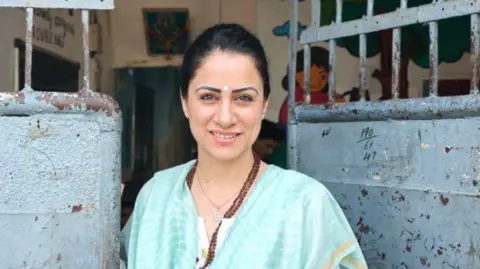
Rouble Nagi won the Global Teacher Prize 2026 for her contribution to learning in India
A narrow lane in Mumbai city's upmarket Colaba area opens up to a patch of land filled with small concrete cubicles - nooks washermen use to clean and dry the city's laundry.
Surrounding the area are shanties painted in bright hues - red, blue, green and yellow - which sit one on top of the other like puzzle blocks in a lopsided Tetris game. The settlement is largely inhabited by washermen and their families, many of whom live and work there.
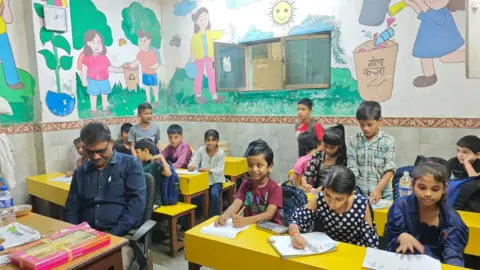
Tucked within the maze is a small learning centre offering free lessons in basic math and language skills, helping their children get a formal education for the first time, or return to it after dropping out from school.
The centre is run by a non-profit founded by Rouble Nagi, a 45-year-old artist who for three decades has worked to bring education to some of the city's most marginalised communities.
 Cherylann Mollan/BBC
The learning centre in Colaba has murals about waste disposal
Earlier this month, Nagi received the Global Teacher Prize, a $1m award launched by the Varkey Foundation in collaboration with Unesco to recognise teachers who have made exceptional contributions to the profession.
Nagi was selected from among 5,000 nominations and applications from 139 countries, according to the Global Teacher Prize website.
It said that Nagi, through her non-profit organisation - the Rouble Nagi Art Foundation (RNAF) - had established "more than 800 learning centres across India in over 100 underserved communities and villages".
Nagi said her inspiration to take learning to the less-fortunate came about unexpectedly, about three decades ago, when a boy walked into one of her art workshops in Mumbai. She learnt that the child lived in a slum and could not afford to go to school.
Nagi says that the conversation motivated her to visit the boy's slum community and she offered to spruce up the locality by decorating the walls with murals.
"Children began to gather where we were painting. So, I asked them if they'd like to hear a story. They all said 'yes'," Nagi recounts.
She said that's when she realised that children in poor communities wanted to learn and that she could spark their interest in education through art.
 Cherylann Mollan/BBC
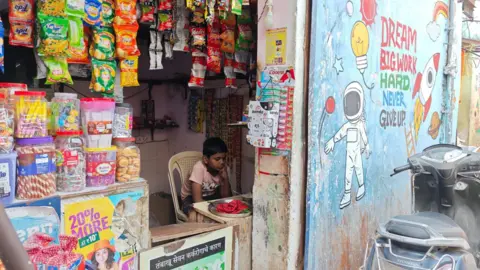
Nagi's foundation paints educational murals on the walls of slum communities
Over the years, Nagi and her team have set up learning centres in several cities across India, where teachers are encouraged to use art-based learning to simplify concepts. Volunteers are roped in to offer skill-based lessons and donations help children access books, bags and other school supplies.
Nagi explains that not all of the centres are brick-and-mortar classrooms. Sometimes, classes are held in an open area in a slum with students seated on mats and carpets.
"Learning can happen anywhere. You just have to make it interesting," Nagi says.
But running these centres is also challenging. Nagi says many of the children come from dysfunctional families and her teachers often have to double-up as their counsellors and protectors.
"If a child doesn't show up at one of our centres for a week, a volunteer visits their home to check on them," Nagi explains.
She adds that she also holds regular sessions with parents to keep them interested in their child's learning. This has helped many of her students complete their schooling and even pursue a college education after leaving the centre, she says.
 Cherylann Mollan/BBC
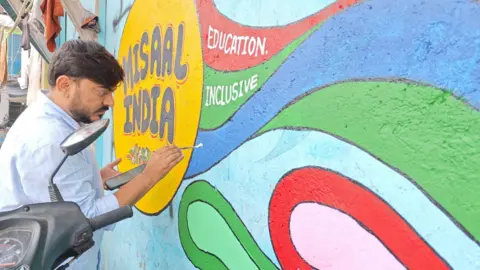
Mayur runs his own art classes and also volunteers with RNAF
One former student, Mayur, now runs his own art classes and a small printing business. At weekends, he volunteers with Nagi's foundation, hoping to give other children from the community the same opportunities he received.
"When you work in areas like these [slums], you have to build relationships not just with the students but the entire community. Whether that's through monetary help, supplying provisions in difficult times or offering a listening ear to someone who's overwhelmed. If we earn the trust and support of the community, we can continue our good work," Nagi explains.
She says she is also passionate about her foundation's 'Misaal' (meaning 'an example') project - which focuses on converting slums into "open-air classrooms" by painting educational murals on walls on topics ranging from science and hygiene to environmental awareness and social responsibility.
Nagi says these murals spark curiosity among residents and, in the long run, can also help bring about a change in people's behaviour and attitudes.
 Cherylann Mollan/BBC
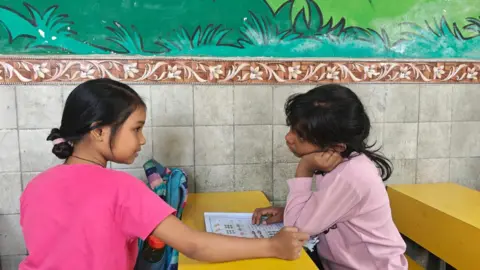
Khushi (left) says she wants to become a teacher when she grows up
With the prize money, Nagi hopes to take her foundation's initiatives to more places in India, beginning with the federally-administered territory of Jammu and Kashmir, where she grew up and now wants to build a skill-cum-learning centre, complete with computers.
Back in Colaba, huge murals and inspirational quotes cover the walls of shanties. The walls of the learning centre too are painted in bright colours and feature subjects ranging from plants to the animal kingdom.
Seven-year-old Khushi, a student at the centre, says she enjoys coming to "school" and dreams of becoming a teacher. Her mother, a domestic worker, is currently the family's sole earner.
Many of the other children come from similar economic backgrounds, but all nurture big ambitions for the future. And Nagi's schools hope to play a part in turning them into reality.