3 hours ago
4
3 hours ago
4

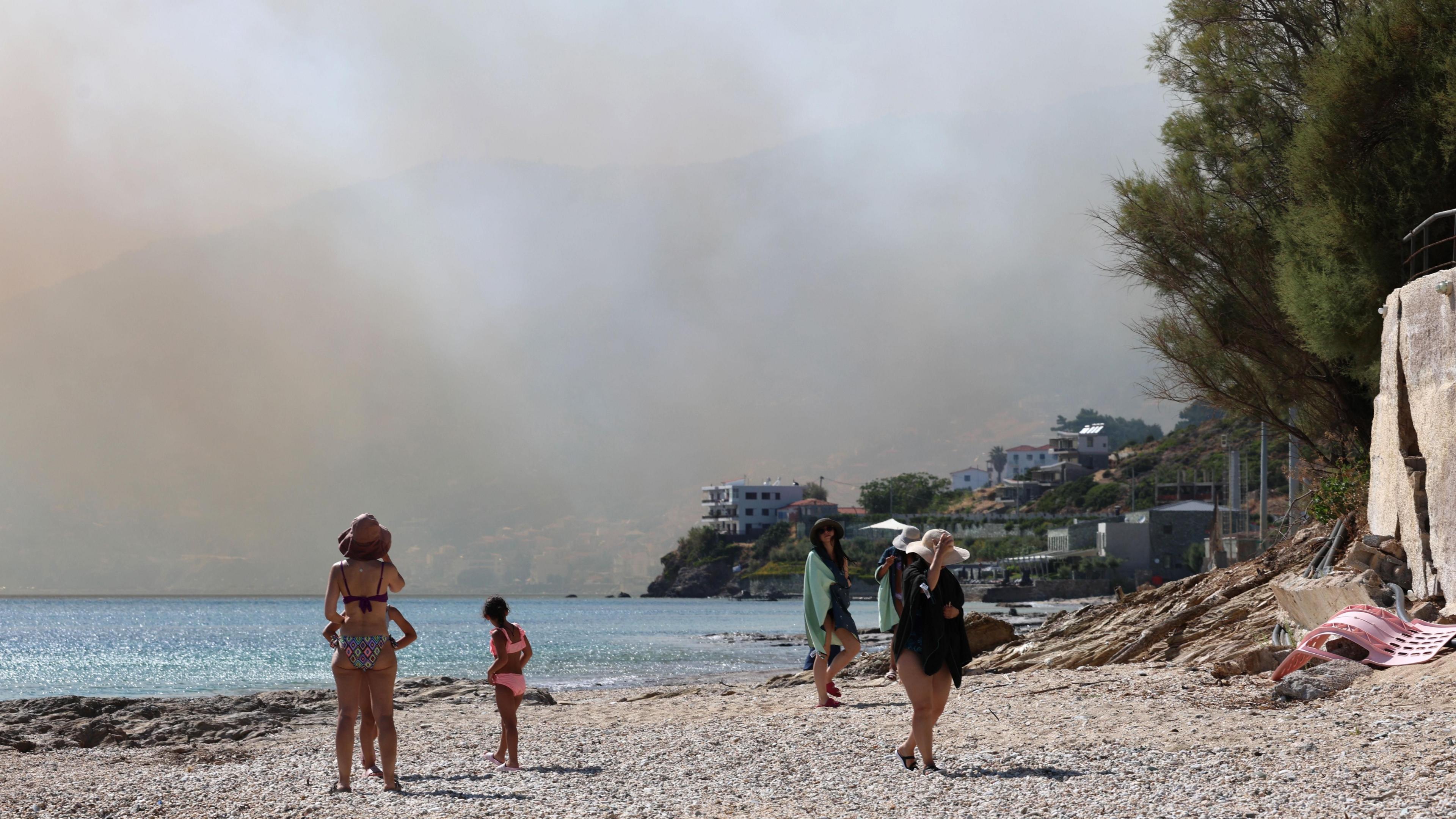 Image source, EPA/Shutterstock
Residents and tourists have been evacuated from several villages in Crete
Thousands of people have been evacuated on the Greek island of Crete as wildfires fanned by strong winds menace tourist resorts and villages.
Around 8,000 people were evacuated overnight in Rethymno, where gusts have reached 125km per hour.
The evacuations came after two firefighters died on the island on Wednesday after getting trapped near Krya Vrysi, and a third died near the Peloponnese port town of Gytheio.
Greece is among many European countries facing devastating fires and droughts as the continent experiences extreme high temperatures.
Forecasters warn fire-prone conditions will spread towards the centre of Europe this week, with Greece and Turkey among places most affected.
The blaze currently raging in Rethymno, in western Crete, broke out on Wednesday and is believed to have already destroyed a number of homes and agricultural land.
It is one of the biggest fires currently active on the island, with its front exceeding 15km (9.3 miles) and burning out of control.
There is no clear picture of the destruction so far, Rethymno's Deputy Regional Governor Maria Lioni said, adding that the fire was still burning and that containing it was the main priority.
Lioni described Wednesday as a "dark day" for the region and said gusts overnight reached up to 11 on the Beaufort scale - a wind force which is categorised as "violent".
Despite firefighting efforts, strong winds are fanning flames and hampering containment operations - with local media reporting that firefighting aircraft have been unable to fly on Thursday morning.
Some of those evacuated in Rethymno have been moved into a temporary shelter in a neighbouring municipality, Lioni said, adding provisions were also in place for tourists.
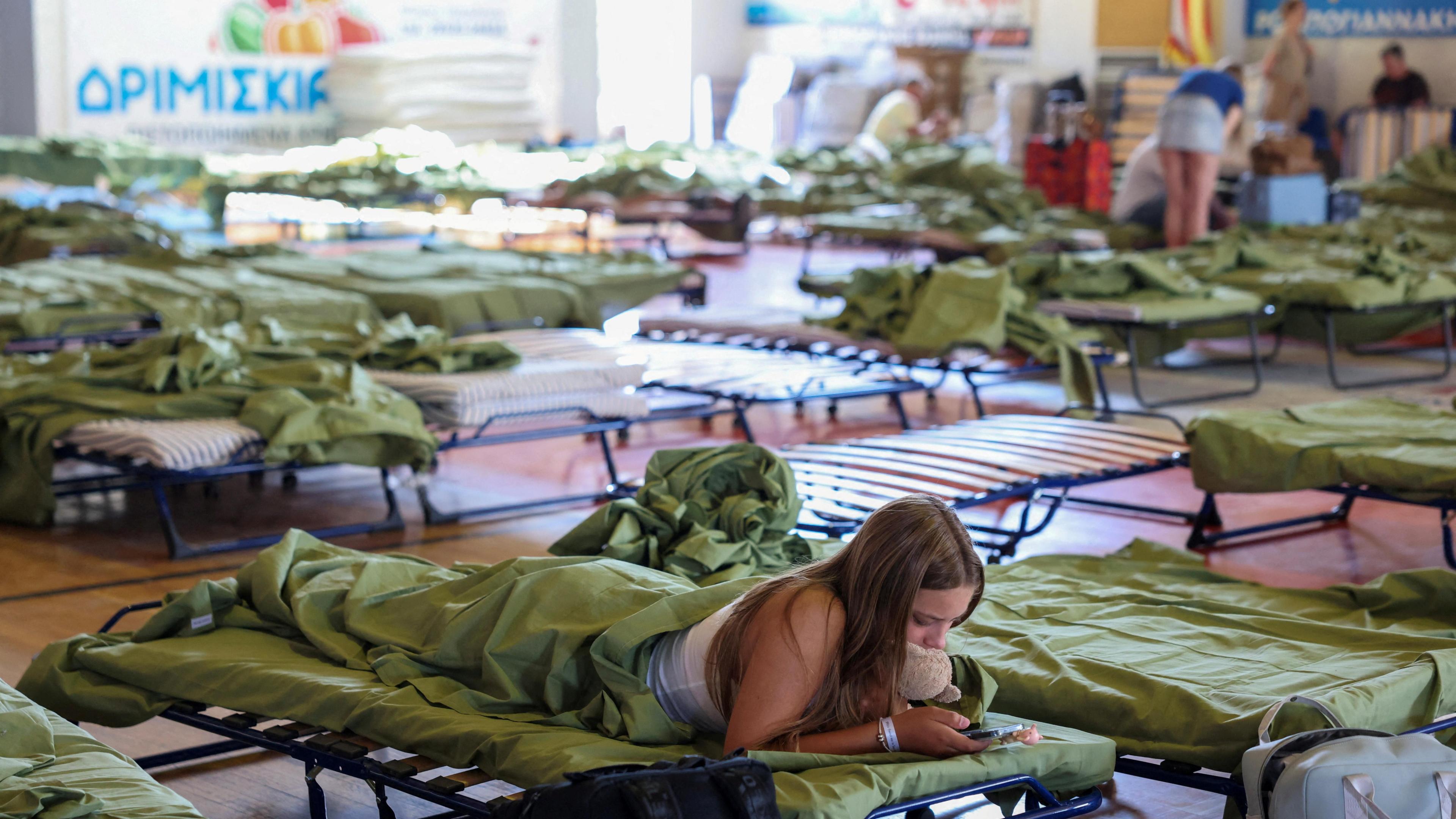 Image source, Reuters
Temporary shelters have been set up for residents and tourists in Crete
July is one of the busiest months for tourists in Crete, with millions visiting the island each year.
Around 224 firefighters have been deployed in the region, with 53 engines,11 specialised units and two aircraft allocated, according to the country's fire service.
Greek Fire Service chief Theodoros Vagias published a note of condolence to the two firefighters who died on Wednesday, naming them as 58-year-old Emmanouil Stratidakis and 25-year-old Pantelis Diamantakis.
Both will be buried on Thursday, the statement added.
Meanwhile, around 600 people have been evacuated in Spain near the border with Portugal due to a fire in the Spanish city of Zamora.
Five people have been injured in a fire in the eastern town of Valpaços in Portugal, according to local media.
However, fires near the Spanish capital of Madrid have stopped spreading and thousands of residents been allowed to return home.
Further west, a fire in Ávila province, which has burned more than 43,000 hectares (108,000 acres) over the last week, is now considered the largest recorded wildfire in Spanish history.
In Turkey, hundreds of homes have also been evacuated but the majority of fires in the region have been brought under control, authorities said.
Despite temperatures of up to 41C (106F) in the last couple of days, a wildfire in France's Gironde region has not spread for the third day in a row, with cooler weather and some rain expected on Thursday.
The fire, which ravaged some 42,000 hectares (103,784 acres), is the largest to burn in France since 1949.
In the south-east of the country, several regions have been placed under orange heatwave alerts, starting Thursday at 12:00 local time (11:00 BST).
Climate change is driving up temperatures around the world, and Europe is the fastest warming continent, heating up twice as fast as the global average, according to the Copernicus Climate Change Service.
This is causing increased summer heatwaves, greater pressure on Europe's water supply, and more intense wildfires.