1 hour ago
3
1 hour ago
3

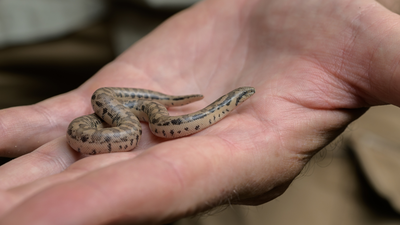
In late July 2026, Prague Zoo announced a rare triple success in its reptile collection, three snake species that had never bred there before produced young. Rough-scaled pythons hatched from a clutch of eggs, Nosy Komba ground boas gave birth to live young, and Tartar sand boas added a litter of their own.
The animals come from three very different corners of the world, from the gorges of north-western Australia to the island of Madagascar and the sand dunes of Asia. Here is what happened, why the story matters for conservation and wildlife protection.
How three snake species hatched or were born for the first time at Prague Zoo in the Troja district
Prague Zoo announced on 27 July 2026 that three snake species had reproduced there for the first time in its history. According to the zoo, a clutch of rough-scaled python eggs produced two young.
A female Nosy Komba ground boa gave birth to ten, while a female Tartar sand boa delivered four. The Madagascan species appeared under different names in the press; the Prague Daily News called it the Madagascar boa and the brown boa, whereas the zoo's own name, used here, is the Nosy Komba ground boa.
Rough-scaled pythons from north-western Australia
The zoo's announcement describes the rough-scaled python as a small, tree-dwelling snake. Scientists discovered it in 1981, and until 2007 it was known from only ten individuals, the zoo explained.
It is a relict species, a survivor of a habitat that once reached further. It lives in humid forests and has persisted only in the deep gorges of the Kimberley region in north-western Australia. The zoo stresses that its range is among the smallest of any snake in the world. For a species this scarce and this little studied, two healthy hatchlings carry real weight.
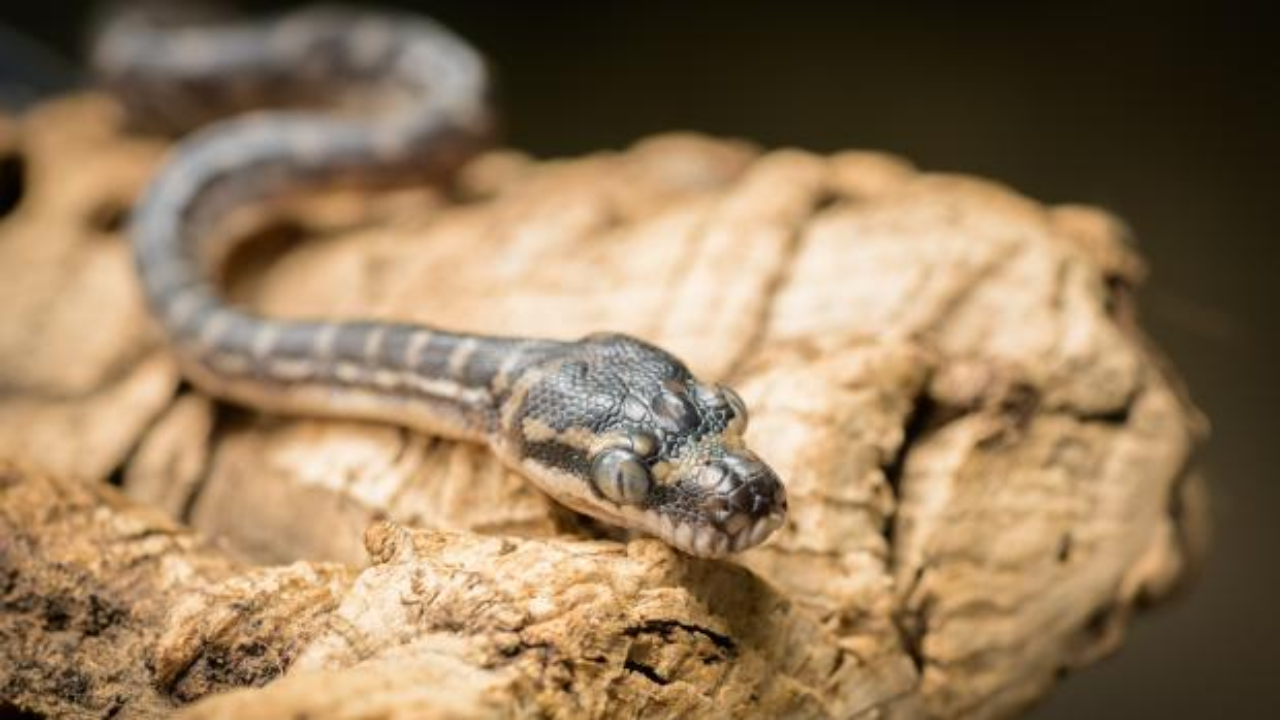
Image: Petr Hamerník, Prague Zoo
Nosy Komba ground boas from Madagascar give birth to ten youngs
The official announcement identifies the Nosy Komba ground boa as endemic to the island of Madagascar, and says the young are more colourful and striking than the adults.The species also has a revealing scientific history. Prague Zoo notes that it was once classed as a subspecies of the Madagascar tree boa, until genetic testing showed the two have been evolving separately for millions of years. A litter of ten therefore represents a full, distinct species rather than a regional variety.
Tartar sand boas, the sand-swimming burrowers of Asian deserts
The third species spends its life underground. According to the zoo, the Tartar sand boa comes from the semi-deserts and deserts of the Middle East and Central Asia, and is known as a "sand swimmer".
Its reduced eyes and cylindrical body are adaptations to moving through loose sand. The announcement said the female's four offspring delighted her keepers.
They descend from snakes confiscated from wildlife smugglers
The story has a sombre background. Petr Velenský, the zoo's Curator of Reptiles, told the announcement that all three rearings were welcome, but the pythons and the sand boas meant a little more to him. Both sets of young are the grandchildren of snakes confiscated from smugglers, the pythons in Vienna and the sand boas in Cologne.Velenský described the successful breeding of these descendants as "a nice continuation of what is otherwise quite a sad story". It shows how animals seized from illegal wildlife trafficking can support carefully managed breeding in zoos.
Where visitors could find the snakes at Prague Zoo
When the news was released, the zoo pointed visitors to three locations. The rough-scaled python lived in the Darwin Crater exhibit. Opposite it, in the Terrarium building, visitors could see the Nosy Komba ground boa. The Tartar sand boa was in the upper part of the zoo, in a small pavilion within the Gobi exhibit.