1 hour ago
2
1 hour ago
2

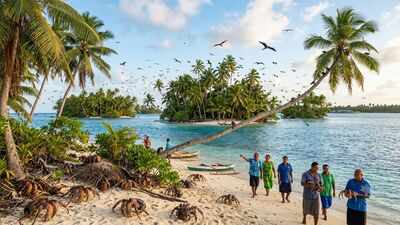
On small islands scattered across the Pacific, changes in wildlife can be surprisingly easy to notice. A few more birds along the shoreline, coconut crabs appearing where they had become scarce, or native animals moving through places they once avoided can all point to a shift in the balance of an ecosystem.
In Tuvalu, that shift has followed a large-scale effort to remove invasive species from several islets. According to Island Conservation, rats have now been eradicated from six islands, while work on invasive yellow crazy ants and mosquitoes has also reduced their numbers. The project involved local residents, government departments and conservation groups, with the aim of giving native wildlife a better chance to recover and keeping the islands useful for the communities that live there.
Tuvalu rat eradication removes invasive predators from six islands
The rat eradication covered four small islands in Nukufetau Atoll: Sakalua, Motumua, Teafuone and Teafuatule along with two islets in Funafuti Atoll. For Tuvalu, where land is limited and individual islands can support important breeding and feeding grounds, removing a predator that does not naturally belong there can have consequences beyond simply reducing the number of rats.Rats are particularly damaging on islands because many native species evolved without mammalian predators.
Eggs, chicks and other vulnerable animals can become easy targets, while food resources are also taken by the introduced rodents. Their presence can therefore affect several parts of an island's ecosystem at once.The work was not treated as a single operation that ended once the baiting and removal had finished. Follow-up monitoring was carried out to check whether the rats had really been eliminated. That matters on islands, where even a small surviving population can eventually rebuild.
The monitoring has so far confirmed the eradication effort's success.
Rat-free islands give Nukufetau's birds and crabs a chance to return
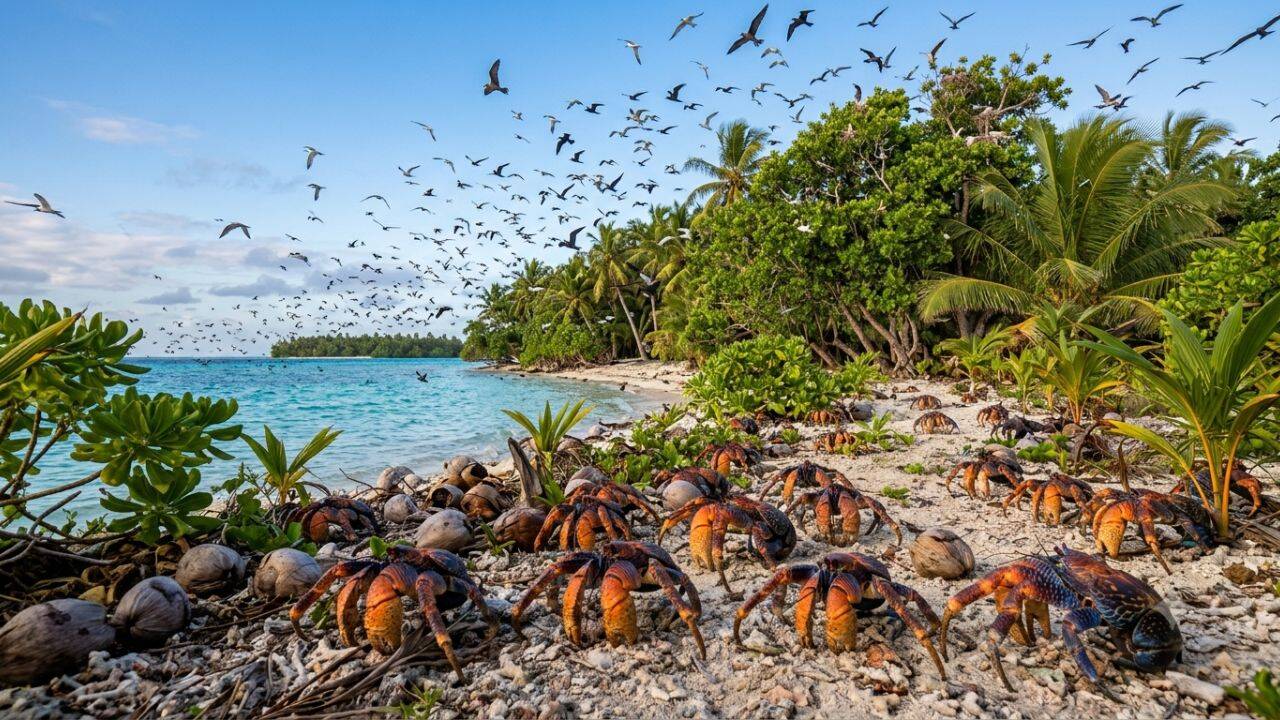
For people living on Nukufetau, the difference has been something that can be seen rather than measured only in reports.Community members involved in the project described seeing fewer birds and crabs when rats were present. Since the rodents were removed, those animals have begun appearing more often.As reported by Island Conservation, Jesse Friedlander, a Project Manager at Island Conservation said, “The recovery we’ve already seen in such a short time is astonishing,”.“The last time we were here, we saw very few coconut crabs. Now, birds and crabs are free to flourish. Healthy reefs aren’t optional for Tuvalu, they’re a matter of survival.”That kind of local observation became an important part of the project. Residents were not simply asked to allow conservation workers onto their islands. They took part in awareness sessions and received practical training connected with invasive-species management.
Yellow crazy ants were another invasive threat facing Tuvalu's islands
Rats were not the only introduced species being tackled. Tepuka, within Funafuti Atoll, had also been affected by yellow crazy ants.The ants are an invasive species with a reputation for rapidly disrupting island ecosystems. Their name comes from the erratic way they move, while their unusually long legs and antennae give them a distinctive appearance. They are also capable of forming large colonies and spreading quickly.Yellow crazy ants have caused severe ecological problems elsewhere, including on Christmas Island in the Indian Ocean, where dense populations have affected native wildlife. Their presence on a small Tuvaluan island presented a different but related concern: an introduced species gaining an advantage in an ecosystem with limited space and resources.Control efforts on Tepuka have brought the ant population close to elimination, alongside work targeting invasive mosquitoes.
The combination of these measures means the project was dealing with several threats rather than focusing on rats alone.
Local teams lead Tuvalu's invasive species fight
Much of the operation depended on cooperation between organisations that would normally work at different levels.The Tuvalu government led implementation on the ground, while the Secretariat of the Pacific Regional Environment Programme designed and led the wider project. Funding came mainly from New Zealand's Ministry of Foreign Affairs and Trade.That arrangement allowed the project to draw on specialist knowledge without taking responsibility away from the communities themselves. For an island nation made up of 124 islands, that distinction is important.
A healthier ecosystem has wider consequences
The return of birds and coconut crabs is one visible part of the change. Removing invasive predators can also alter how plants regenerate, how nutrients move through an ecosystem and how native species use available habitat.There is a practical side to this as well. Tuvalu's islands are closely tied to the surrounding ocean, and the condition of coastal ecosystems matters to food supplies and the resilience of communities. Conservation work on land does not sit entirely apart from those wider concerns.The project has therefore been framed not just as an exercise in removing rats, but as part of a broader effort to strengthen the ecological condition of inhabited and uninhabited islets.For residents, though, the results can be much simpler to describe. Wildlife that had become harder to find is being seen again.
The next challenge is keeping the islands rat-free
Eradication is only the first stage. An island can be cleared of an invasive animal and still face the possibility of reinvasion later.That makes monitoring particularly important. It also explains why local training was included from the beginning. Residents who know how invasive species arrive, what signs to look for and how to respond can provide an early warning if rodents or other pests appear again.For now, the most immediate evidence is on the ground in Nukufetau and Funafuti: rats have been removed from six islets, invasive ants and mosquitoes have been pushed back, and some of the wildlife that had become less common is beginning to reappear.