3 months ago
21
3 months ago
21

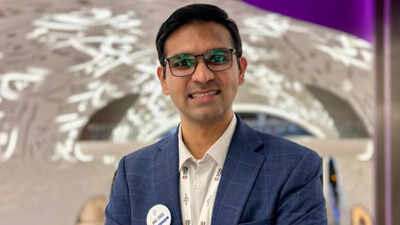
Startup founder Nikin Tharan
An Indian-origin entrepreneur based in US has spoken about the struggles behind his immigration journey, including two green card rejections despite holding an O-1 visa and building multiple successful startups.Nikin Tharan, now a Bay Area-based founder, traced his path from building tabla-playing robots as a teenager in Bengaluru to studying and launching companies in the US, while also facing repeated visa hurdles that he says nearly ruined his career.Tharan moved to the US at 16 after securing a scholarship to Northeastern University. He later worked in advanced radiation detection systems before entering the startup world.
Along with five friends, he co-founded Medsix, a medtech startup that went on to win two MIT awards. He has since co-founded multiple ventures, including GreenCard Inc. and Openventure, a platform designed to help high-skilled immigrants manage admissions, housing, jobs and visa processes.Recalling his early years, Tharan said, “I grew up in Bangalore as a kid interested in science and innovation, building circuits, learning building chips and boards while I was just a teenager.
My parents were very progressive and, seeing that I was advanced, began homeschooling me. As I did not match the age criterion for a traditional tenth grade exam, I gave my tenth standard exams IGCSE, as per the UK board, as a private candidate and, after passing, enrolled in grade 11 two years earlier.
”He said his ambition to study abroad was limited by financial constraints, until he won a scholarship that allowed him to pursue education in US.Tharan began his professional journey on an F-1 visa and later worked under CPT and OPT programmes while building his early ventures. He said he was careful about legal compliance throughout his early career, even while incorporating his first company, MedSix.However, his immigration journey became increasingly complex as he progressed. His O-1 visa was approved quickly but his green card applications under the EB-1 category were repeatedly rejected.“I think this is the blind spot about immigration that we all have. We think that if we do everything right, excel in our fields, it will take care of itself. But for me it ended up killing me,” he said.He added, “I learnt you cannot overlook immigration roadblocks as it can hit your entire career, financials.”Tharan faced multiple setbacks during the process. “I always had a work authorization but my green card process was tiring.
When I applied for a green card, the first time, I got an RFE which was then rejected, the second time it got denied again. It was only the third time that I got accepted,” he said.He also spoke about the anxiety of uncertainty during the process. “I was anxious if this doesn’t get through, how I will stay in the country, and what would happen to my startups. I underestimated this huge risk to my career, my livelihood in the US.”Despite strong professional achievements, including work on medical technology during the Covid-19 period, he said his applications still faced rejection, which left him confused.“In my second RFE, they were telling me what they wanted. Like I had done many hackathons so they wanted peer reviews, case studies, published papers. And I remember asking the attorney—instead of providing the information we think is strong, why don’t we just give them what they are asking for?” he said.That adjustment eventually helped his third application succeed.Tharan now advises young founders to stay consistent with networking and learning opportunities. “Even if you don’t see immediate results, you will meet some people aligned to your vision,” he said.He added: “Keep trying, it will pay off.”