3 hours ago
4
3 hours ago
4

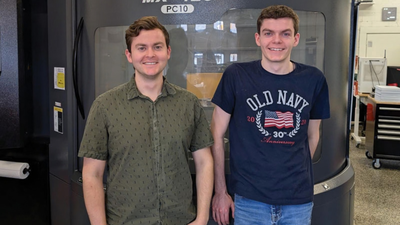
Brothers Sean (left) and James (right) Cerven launched Cerven Solutions from their parents' garage in 2020 (Image: HVMFG)
Two brothers from New York transformed a pandemic-era experiment in their parents' garage into a precision manufacturing business serving technically demanding industries.
Sean and James Cerven began learning CNC machining in 2020 after purchasing a Tormach PCNC 440 milling machine. Working from their parents' garage in Poughkeepsie, they initially took on small jobs that helped them gain practical experience. As their interest in machining developed into a long-term business ambition, they established Cerven Solutions. The company later expanded beyond its garage workshop, joined the Xometry Partner Network and invested in advanced machinery and inspection equipment.
Today, it produces complex, precision-machined components for the aerospace, defence, radar and satellite communications sectors.
How two New York brothers turned a garage experiment into a high-tech company
During the COVID-19 pandemic in 2020, mechanical engineering students James and Sean Cerven began learning about CNC machining. The process uses computer-controlled machines to cut, drill and shape materials such as metal and plastic according to digital designs.After purchasing a Tormach PCNC 440 milling machine, the brothers began experimenting in their parents' garage in Poughkeepsie, New York.
They initially received small jobs from customers, giving them an opportunity to build practical experience despite their limited background in commercial machining.As they became more familiar with designing and manufacturing components, the brothers realised they wanted to pursue machining professionally. They began developing their project into Cerven Solutions, turning their technical interests into a commercial manufacturing venture.While looking for additional customers, the brothers discovered Xometry through a machining group on Facebook. They contacted the company and subsequently purchased additional tooling and inspection equipment. After completing a test part, they joined the Xometry Partner Network, which connected them with potential manufacturing projects.The company soon outgrew its garage workshop as the volume of work increased.
In its February 2025 case study, Xometry reported that Cerven Solutions had completed 671 projects through the platform and generated $1.5 million in Xometry revenue. The report also stated that the company had moved into a 3,000-square-foot workshop and was investing in additional machinery and quality-control equipment.
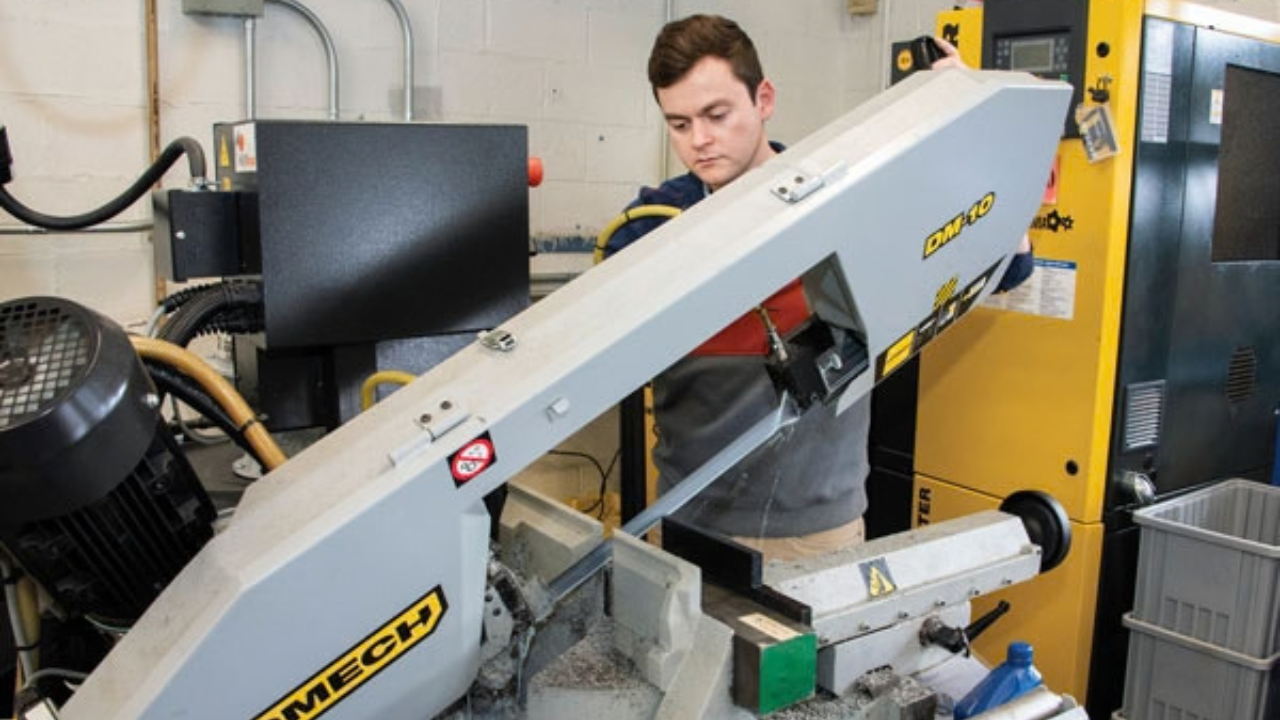
Co-Founder Sean Cerven cutting bar stock to the required dimensions (Image: HVMFG)
Making precision components for specialised industries
Cerven Solutions produces precision-machined components for aerospace, defence, satellite communications and other specialised technology sectors.
The company lists capabilities including waveguides, split-block assemblies, RF couplers, power dividers, polarisers, radio-frequency housings, filter bodies and resonator cavities. It also lists antenna structures, optical and sensor housings, thermal-management components such as cold plates and heat spreaders, along with brackets and mounting hardware.For aerospace and unmanned aerial systems, the company lists structural fittings, hardpoints, motor and payload mounts, fins, canards and actuation fittings.
Its listed capabilities also include power and battery enclosures, such as module housings, sealed lids and terminal plates. These examples come from Cerven Solutions' official website, which describes the types of hardware it builds rather than identifying specific customer orders.As Cerven Solutions expanded, the brothers invested in equipment designed to improve machining precision and production efficiency.
The company's website lists a Matsuura MX-420 PC10 five-axis machining centre, FANUC RoboDrill machines and a Datron neo machining centre.It also lists a Zeiss DuraMax coordinate measuring machine for dimensional inspection. Such equipment allows manufacturers to check whether finished components meet the measurements and tolerances specified in engineering designs.
Working with challenging materials
The company works with materials including aluminium, titanium, stainless steel and high-performance plastics.
Its website describes capabilities involving thin walls, deep pockets, tight corners and substantial material removal.These machining tasks require careful control because manufacturers must maintain dimensional accuracy while cutting away material. Cerven Solutions says it has developed processes to manage challenges such as chatter, wall taper and material stress when producing complex components.
The company also states that it is working towards Cybersecurity Maturity Model Certification (CMMC) Level 2 and is not currently certified under that standard.Sean and James Cerven began with a CNC milling machine in their parents' garage and initially relied on small customer jobs to build experience. As their confidence and ambitions grew, they developed the project into Cerven Solutions and explored ways to secure more manufacturing work.