
 6 months ago
52
6 months ago
52


 Reuters
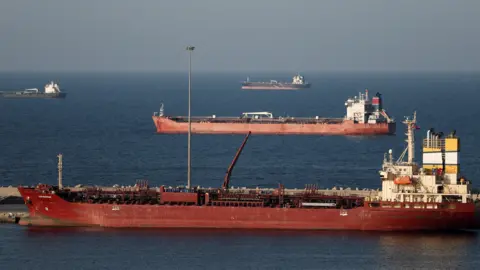
The UK is looking at "any options" - including working with US and allies - to secure key oil shipping routes through the Strait of Hormuz, Ed Miliband has said.
It comes after the US President Donald Trump on Saturday threatened to open the channel "one way or another" and urged countries including China, France and the UK to send warships to the waterway.
The Energy Secretary told the BBC's it was "very important" that the strait was made safe for shipping, but refused to give details of options considered by the government.
Iran's new Supreme Leader Mojtaba Khameini has vowed to keep blocking the strait as a means of political and economic pressure against the US. About 20% of the world's oil usually passes through the strait.
As the US and Israel's war with Iran enters its third week, a number of ships have been attacked as they attempt to navigate the narrow strait. There are also concerns that Iran has placed mines in the passage as part of its attempts to hinder shipping.
Speaking on Sunday with Laura Kuenssberg, Miliband said it was a "priority" for the Strait to be reopened.
He added there was a "range of things that we can do" including the possibility of sending minesweeping drones to the region, but refused to be drawn into details of the plans.
Meanwhile, Liberal Democrat leader Ed Davey argued the UK should not send ships to help secure the Strait, and instead focus on "de-escalating" the war.
Hitting out at Trump as "very reckless" in this "illegal and damaging war", Davey said Britain should not be at the beck and call of an American president "who does not seem to know what he is doing".
Also speaking on Sunday, Shadow energy secretary Claire Coutinho said the UK should explore sending ships or drones to the Middle East if it is in the UK's national interest.
It was in the UK's interests to re-open international shipping lanes and protect military assets abroad, she said, and added the Conservative party would have allowed its US allies to use UK military bases more quickly than Labour did.
In 2025, about 20 million barrels of oil passed through the Strait of Hormuz per day, according to estimates from the US Energy Information Administration (EIA) – that's nearly $600bn (£447bn) worth of energy trade per year.


