4 months ago
18
4 months ago
18

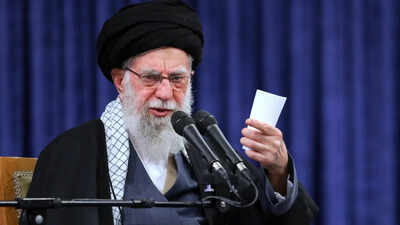
File photo (Picture credit: AP)
Iran has warned that the United States has crossed “a very dangerous red line” by killing Supreme Leader Ayatollah Ali Khamenei, as tensions continue to rise across the Middle East.In an exclusive interview with CNN, Iranian deputy foreign minister Saeed Khatibzadeh said US President Donald Trump had triggered serious consequences by authorising the strike.
‘We have no option but to respond’
Khatibzadeh said Khamenei was not only a political leader but also a major religious figure for millions of Shiite Muslims.
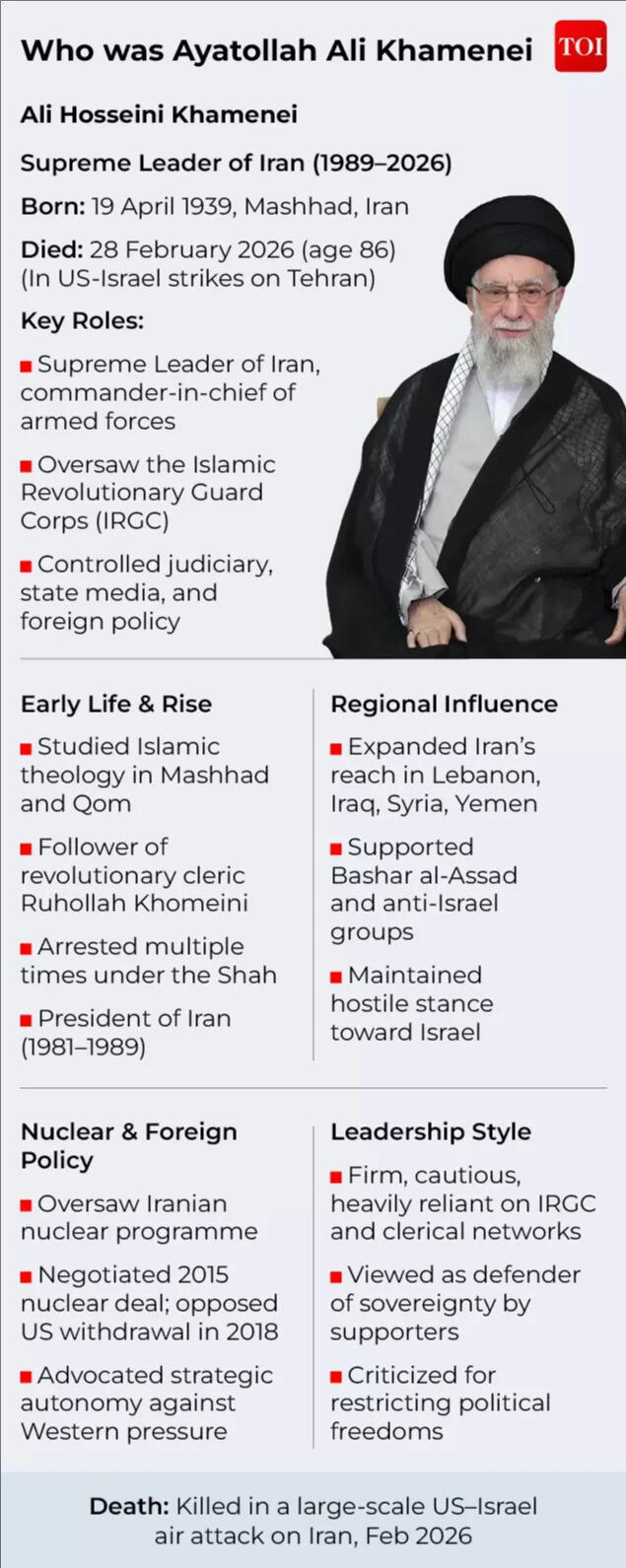
“Of course, from a religious aspect, he was a great religious leader, so many of Shiite followers across the region and around the world are going to react to that, and this is very obvious because President Trump passed a very dangerous red line,” he told CNN.
“We have no option but to respond,” he added.Khamenei, 86, was killed in joint US–Israeli strikes targeting Iranian military and government sites. His death has shaken the leadership of the Islamic Republic and raised fears of wider regional instability.
Wave of retaliation across the region
Following the strikes, Iran launched an unprecedented wave of missile and drone attacks across the Middle East. Targets included countries hosting US military bases, such as Bahrain and the United Arab Emirates.
According to news agency AP, explosions were reported in Tehran as Israel said it was striking the “heart” of the Iranian capital. At the same time, Iran fired missiles and drones at Israel, US installations in the Gulf, and cities including Dubai and Riyadh.

Iran’s paramilitary Revolutionary Guard earlier threatened to launch its “most intense offensive operation” ever against Israel and US bases.The violence has disrupted air and sea traffic, caused civilian casualties and damaged infrastructure across several countries.
Iran warns Gulf states over US bases
Khatibzadeh told CNN that Tehran had contacted Gulf Arab states about American military bases on their soil.“We communicated with them: either to shut down those American bases that are constantly threatening Iran and are constantly using to offend on Iran, or we have no option just to push back,” he said.He added that Iran cannot directly strike US territory.“Iran cannot reach out to American soil, so we have no option just to attack any bases which is under US jurisdiction,” he said.Several Gulf states, including Kuwait, Qatar and Bahrain, have reported intercepting Iranian missiles and drones. Qatar said eight people were wounded in attacks early Sunday, raising its total to 16 injured since the conflict began.
Diplomacy in doubt
When asked whether diplomacy was still possible, Khatibzadeh said Washington had repeatedly disappointed Tehran.“The US has disappointed Iran several times and there was no necessity to start this aggression,” he said.“If President Trump didn’t want to see Iran hitting back … President Trump should have not started this war from the beginning,” he added. “It was a war of choice.”Meanwhile, Trump warned Iran not to escalate further. In a post online, he said the US would respond with unprecedented force if Tehran intensified its attacks.
Uncertain leadership in Tehran
As the conflict continues, Iran has moved to stabilise its political system. A 66-year-old cleric, Ali Reza Arafi, has been appointed to a three-member leadership council that will govern until a new supreme leader is selected.The council includes President Masoud Pezeshkian and judiciary chief Gholam Hossein Mohseni Ejehei.At the same time, Israeli officials claimed their strikes killed several top Iranian military figures, including chief of staff Abdolrahim Mousavi. Iran has not confirmed those claims.
Region on edge
The crisis has already spread beyond Iran and Israel. Protests have broken out in places such as Karachi and Kashmir, while embassies across the region have issued security alerts.US embassies in Bahrain, Israel, Iraq, Jordan, Oman and Pakistan have advised staff and citizens to shelter in place. Several airports across the Middle East remain closed, stranding thousands of travellers.With both sides exchanging threats and missiles, and diplomacy appearing distant, the killing of Khamenei has pushed the region into one of its most dangerous moments in years.