2 hours ago
2
2 hours ago
2

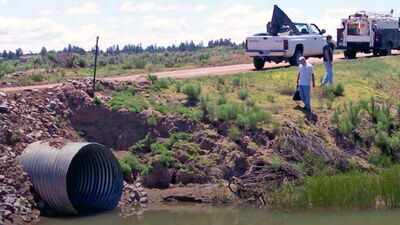
The site was decommissioned. However, contamination remains underground.
In 1967, the United States tried an unusual method to increase natural gas production. It detonated a 29-kiloton device and had an explosoion 4,227 feet below the ground in north-western New Mexico to stimulate the flow of natural gas.According to the US Department of Energy (DOE), the test, known as Project Gasbuggy, was carried out on December 10, 1967, at a site in Rio Arriba County. The location is about 55 miles east of Farmington and 12 miles south-west of Dulce, in the Carson National Forest. The site covers 640 acres.The nuclear device was placed in an emplacement well called GB-E. The aim was to use the blast to fracture the rock around a gas-bearing formation and create pathways through which natural gas could flow more easily.The test was part of the Plowshare Program, which was designed to explore peaceful uses of nuclear energy. The Atomic Energy Commission, a predecessor of the DOE, carried out the project jointly with the US Department of the Interior and El Paso Natural Gas Company. Gasbuggy became the first natural gas reservoir stimulation experiment under the programme.
Blast created a rubble-filled chamber
When the nuclear device exploded, the extremely high temperature from the blast vaporised some of the surrounding rock.
This temporarily created a large cavity underground, surrounded by fractured rock.The fractured rock above the cavity later collapsed into the empty space. This formed a rubble-filled collapse chimney extending above the original detonation point.As the underground cavity cooled, melted and vaporised rock collected at its bottom and solidified. The resulting material, known as melt glass because of its glass-like texture, trapped most of the radionuclides with high melting points.The idea was to use the fractures created by the nuclear explosion to help natural gas move towards the collapse chimney. The chimney would then act as a collection chamber for the gas.To test whether the method worked, a re-entry well called GB-ER was drilled into the collapse chimney. Gas from the detonation zone was then brought to the surface and flared during a series of production tests.
5 tests, 213 million cubic feet gas
Production testing began in July 1968 and continued until October 1969.
Over five tests, the project produced 213 million cubic feet of natural gas.The nuclear blast did increase gas production compared with nearby conventional gas wells. However, the results also showed major problems with the experiment.
The gas produced from the test area contained measurable amounts of radioactive constituents. The DOE also found that the gas had a significantly lower heat value.Another problem was the extent of the underground fracturing.
The fractures created above the cavity did not spread into the gas-bearing formation as extensively as expected.That meant the nuclear explosion had not achieved the level of gas stimulation that the project had hoped for. After evaluating the production results, officials decided in 1976 that no further testing would be carried out at the Gasbuggy site.
Site decommissioned and cleaned
The Atomic Energy Commission decommissioned the site in 1978.
Equipment and structures used during the project were removed after being decontaminated where necessary.The site also contained radioactive waste from the experiment. Liquid radioactive waste was injected into the former underground cavity, which had become the lower part of the collapse chimney. Solid radioactive waste was removed and taken to the Nevada National Security Site.The test wells were also decommissioned and plugged. Soil sampling was carried out in 1978, 1986, 2000 and 2002.
Surveys covering cultural resources, endangered and sensitive species, floodplains and wetlands were conducted in 1993.Final surface remediation was completed in September 2004. As part of the work, 5,562 cubic yards of contaminated soil were removed from mud pits.The DOE says no further corrective action is required for the surface and shallow subsurface. A permanent monument with a brass plaque on a concrete base was installed at surface ground zero.
The plaque records the historical importance of the project and outlines restrictions on digging underground.
Radioactive material underground
Although the surface has been cleaned up, radioactive contamination remains underground near the GB-E test well.The DOE has studied whether the contamination could reach nearby natural gas wells. Its modelling found that the contamination is expected to remain within the area of the underground blast and not spread to nearby wells.Gas wells around the site are regularly tested. The DOE says samples have not found radionuclides linked to the Gasbuggy test.Water around the site was also monitored for decades. The Environmental Protection Agency began annual testing in 1972, taking samples from springs, ponds, drainage areas, ranch wells and livestock watering wells.The DOE took over the water monitoring programme in 2008. Tests did not find radionuclides linked to Gasbuggy in the sampled locations, and the programme was stopped in 2015.The focus later shifted to nearby gas wells. The DOE began testing natural gas and water from active wells around the site in 2009. No Gasbuggy-related contamination has been found in the samples.Today, the Carson National Forest land has largely returned to its earlier use. There are no restrictions on surface use, although historical markers and a small parking area mark the site of the underground test.Restrictions remain underground because radioactive material is still present near the blast site. The DOE continues to monitor the area and oversee the site's long-term safety.