1 hour ago
1
1 hour ago
1

The global travel industry, already weighed down by the ongoing tensions between the US, Israel and Iran, is being buffeted by more headwinds as United States President Donald Trump declared that the ceasefire with Iran was over and that more attacks on the country were imminent.
What should have been a typical busy travel season is now expected to see more disruptions in light of the latest flare-up, as fuel costs are likely to soar again, with the benchmark crude up 4.84 percent on Wednesday.
Recommended Stories
list of 4 items- list 1 of 4Nasdaq vs Dow: How are the key indices different as SpaceX joins one?
- list 2 of 4Oil surges as US strikes Iran, reversing return to pre-war prices
- list 3 of 4Why have half a million Russians gone bankrupt amid Ukraine war?
- list 4 of 4Trump’s Iran strike comments shake markets, Brent crude hits two-week high
The slowdown was evident even before that.
During the recent three-day July 4 holiday weekend in the US, more than 7.3 million people went through the nation’s airport security checkpoints, down 2.3 percent from the same period last year, according to data from the Transportation Security Administration (TSA).
About 45 percent of Americans are opting not to take a holiday during the normally busy summer travel season amid heightened costs of air travel and fuel for car travel, according to a recent joint NPR, PBS News and Marist College poll — a 2 percent decline from this time last year.
That is despite the otherwise expected surge in travel both to the US, Canada and Mexico, and within those countries because of the FIFA World Cup. Market analytics firm Sojern forecasted that the number of travellers hitting the skies to attend games was mostly domestic US travellers.
The pressure on the airline industry has ramped up for months. After the US and Israel first struck Iran and the subsequent retaliation, airline prices jumped for US consumers. Prices for airfares have increased by 8.2 percent since February, according to inflation data released by the US Department of Labor.
Major players in aviation have warned about price surges. United Airlines in April announced that it would have to raise prices by as much as 20 percent amid heightened fuel costs. American Airlines scaled back some select routes for August and September as fuel costs rose.
At least one carrier did not survive increasing jet fuel prices. Budget carrier Spirit Airlines ceased operations in May after roughly three decades in the skies. In bankruptcy court filings, that air carrier blamed “geopolitical conflicts” as a reason, as fuel costs began to rise.
The strain on the US airline industry could last for months to come because of the slump in summer travel.
“Typically, there’s a statistically significant rise in the number of scheduled flights during the summer, but the war has really affected airlines’ ability to schedule and anticipate how the summer months will go,” John Deal, managing director of capital markets at the Post Oak Group investment bank, said.
“As much as 40 percent of their revenue can come from summertime travel. The downstream effect of jet fuel on the market is even stronger than gasoline in a lot of ways because there’s not as much capacity.”
This comes as the path to the end of the war between the US and Iran narrows, putting more pressure on global oil markets.
“The ceasefire between the US and Iran was always fragile, and some flare-ups were inevitable, unfortunately. The question is whether this represents a bump in the road or whether we’re emerging from the eye of the storm,” Ryan Sweet, chief global economist at Oxford Economics, said in a note on Wednesday.
European airlines have also not fared well. In April, Lufthansa grounded 200,000 short-haul flights as the carrier came under pressure to cut costs amid a spike in fuel prices. The airline said the move was part of broader efforts to reduce fuel consumption by 40,000 tonnes.
In May, British Airways said it would need to raise prices to offset higher fuel costs across its parent company, International Airlines Group (IAG), which also owns Spain’s Iberia and Ireland’s Aer Lingus. The group said that because British Airways is the more premium carrier, it would shoulder a larger share of the roughly $2.2bn cost burden across the group and has raised fares by as much as 8 percent.
“Average airfares have gone up, of course, because the price of fuel has gone up,” John Grant, chief analyst for OAG, a travel data provider, told Al Jazeera.
“That’s been passed straight on by the airlines to the travellers.”
For European airlines, the pressures extend beyond the price tag on jet fuel. Airspace restrictions over Russia as a result of its war with Ukraine, and now airspace restrictions over Iran, Iraq and Lebanon, mean European airlines already have small geographic windows for air travel, forcing them to take often longer routes, which means more fuel is needed.
“Since the beginning of the Iran war, the global travel outlook has been downgraded,” Bank of America analysts said in a note last month.
“Higher oil prices have driven higher general inflation and elevated airfares. Global consumers are feeling the impact of rising prices across the economy.”
Airspace narrows
The European Union Aviation Safety Agency (EASA) extended warnings to airlines to avoid airspace over regions in both Russia and across the Middle East.
Asian carriers, on the other hand, have fewer airspace restrictions.
That is impacting choices for consumers like Rich Pleeth, who runs an AI and logistics company called Finmile in London. While he is otherwise a loyal customer of British Airways, for an upcoming business trip, he’s opted to fly on a Chinese airline, which can fly through Russian airspace.
“I have a trip to China planned for later this month, and I will be travelling with a Chinese airline over Russia,” Pleeth told Al Jazeera.
While Middle Eastern carriers have not been limited by the Russian war, that changed with the US-Israel war on Iran.
In the early days, carriers including Emirates, Qatar Airways, and Etihad Airways saw business slump because of closures and travel restrictions at Gulf region airports — often a stopover between Europe and destinations in Oceania, and Southeast and East Asia.
Asian carriers like Singapore and Korean Air, however, saw a boon. Singapore Airlines said the percentage of seats filled on its European flights jumped to 93.5 percent in March.
Even though some of the Middle East flights had resumed as a fragile ceasefire took hold, there is still uncertainty about the reliability of those routes for both through travel and final destination travel.
Pleeth, who often travels between London and Saudi Arabia, Qatar and the United Arab Emirates for work, has had to rethink those decisions in the short term.
“I had trips planned to Qatar, Saudi Arabia, and Dubai, but they were all cancelled. I have two young daughters at home with my wife, so the possibility of getting stuck somewhere has changed the way I think about travel.”
While car travel is still expensive, Americans — who, unlike Europeans, have fairly limited rail transit alternatives — have been opting to hit the road rather than fly as air prices jump, especially during the recent July 4 holiday weekend.
The American Automobile Association (AAA) has forecasted that 61.4 million people would hit the road for the weekend, up from 61.3 million people last year. The agency has yet to release data confirming or revising its forecasts.
Pricing pressures
Petrol prices remain elevated in the US. The average price is $3.79 for a gallon (3.78 litres), according to AAA, which tracks daily petrol prices. That’s down from a high of $4.48 in mid-May, but still well above the $2.98 on February 28, the day the US and Israel first struck Iran.
In other countries, prices are measured by litre rather than gallon. Consumers in Canada pay 1.87 Canadian dollars ($1.32), in the Netherlands 2.20 euros ($2.52), and 1.49 pounds ($2.00) in the United Kingdom. In China, it is 7.71 yuan, or about $1.13, and in India 108.71 Indian rupees, or about $1.14.
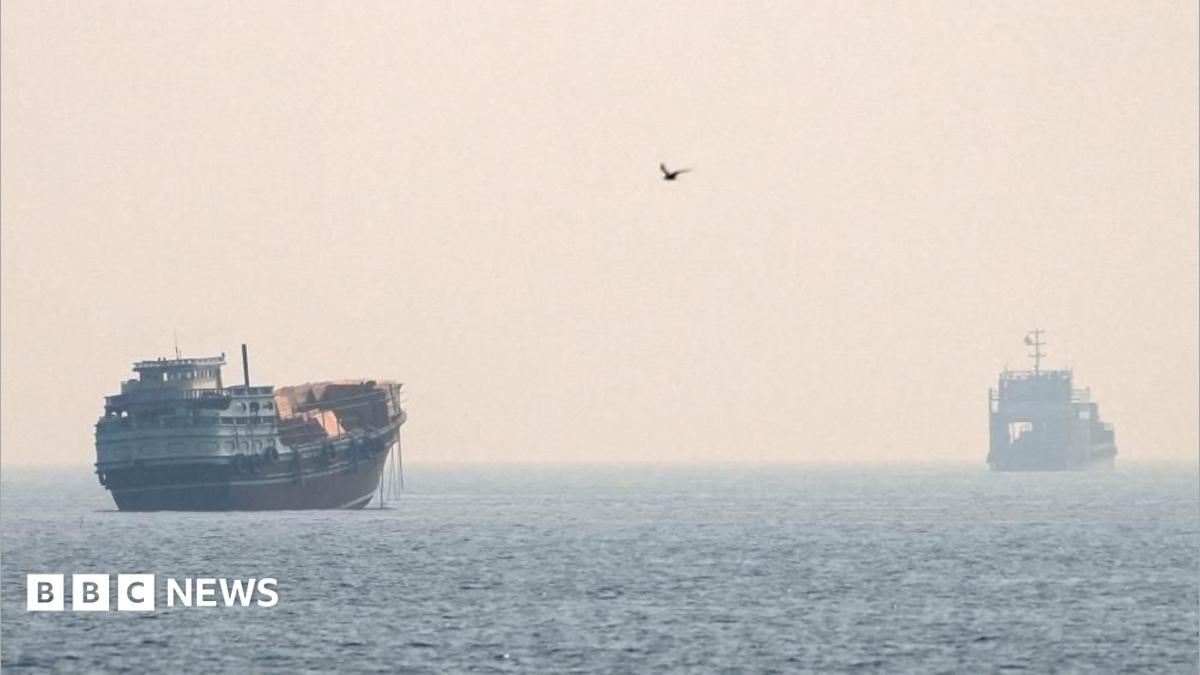
India and China have been hit harder by closures in the Strait of Hormuz than their Western counterparts. While the global supply of oil has been limited, most of the oil travelling directly through the Strait — which carries a fifth of the world’s oil supply — is bound for Asian markets.