1 hour ago
5
1 hour ago
5

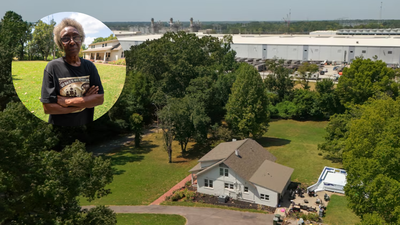
Loretta Thornton says noise and fumes have affected her quality of life, while her power bill has doubled. (ABC News: Bradley McLennan)
After serving in the US military during the Gulf War, veteran Loretta Thornton settled in a wooded home in Memphis, Tennessee. Living with post-traumatic stress disorder, she named her house 'Serenity' and spent 11 peaceful years there.
That peace ended when Elon Musk's technology company, xAI, built a huge computing facility in an abandoned warehouse next door. The site, known as Colossus II, is now the largest operating data centre in the United States. Thornton says the constant noise and fumes have badly affected her quality of life, while rising local power demand has doubled her electricity bill. "When they cranked this up, I thought I was back in Desert Storm," Thornton said.
"I thought I was stuck back in the middle of a war. That's what it sounds like to me." In reporting for Australia's ABC News, journalist Bradley McLennan documented how the industrial site operates around the clock. Thornton describes a constant sound similar to jet engines and fumes from gas turbines that burn her eyes and throat. "I feel stomach-fold-up-sucker-punched, because I never thought anything like this would move in in my life," she said.
Local backlash meets national political tension
The rapid expansion in Memphis reflects a wider US trend in which data centres are being built faster than local governments can update their rules. With the American midterm elections approaching, the issue has become a major political flashpoint. President Donald Trump remains a strong supporter of data centre investment, warning that towns that reject them risk becoming "backward and poor". Speaking to cryptocurrency leaders at the White House, Trump urged local authorities to welcome the projects.
"If I were the mayor of a town or the governor of a state and I had a chance to get a big plant in, an AI plant or a data centre, I would absolutely want it because the jobs are enormous … and the taxes paid are enormous," Trump said. However, several Republican candidates are breaking with the White House and siding with unhappy residents. In Texas, Governor Greg Abbott issued a moratorium on new data centres. In Wisconsin, candidate Tom Tiffany called his opponent "Data Centre David Crowley".
A Republican Senate campaign memo from Ohio, reported by Axios, described the facilities as an anchor around candidate Jon Husted's neck, warning that political losses over the issue could have nationwide effects. An August poll by YouGov found that only 24 per cent of Americans believe building new data centres is good for the country. More than 200 US jurisdictions have imposed moratoriums to slow new projects, while Memphis city councillors are considering a similar freeze.
Fumes, noise and disputed water supplies
Along the Tennessee-Mississippi border, xAI operates or is building at least four large data centres. Residents say weak regulations allowed the facilities to begin operating without public notice or votes by the city council. Amber Sherman, who lives near xAI's Colossus I site, blames the facility for a respiratory illness. "Elon Musk has been here exploiting Memphis on purpose because there are no guardrails in place," Sherman said.
"I think that he sees Memphis as a sacrifice zone like a lot of people do. They see us as the path of least resistance and don't think that Memphians are going to fight back."KeShaun Pearson, who represents Memphis Community Against Pollution, told ABC News that technology companies are taking advantage of outdated zoning rules. "xAI and Elon Musk aren't the first perpetrators, they are just the newest ones, and they are moving at a velocity we have never seen," Pearson said.
Water use has also caused anger. In 2024, Musk promised to build an 80 million US dollar water recycling facility that would provide 10 million gallons of grey water each day for cooling, reducing pressure on the regional aquifer.
Two years later, construction remains largely stalled, with xAI moving the expected restart date to January 2027. Sarah Houston of the advocacy group Protect Our Aquifer said freedom of information requests showed that one xAI data centre uses at least 800,000 gallons of clean drinking water every day.
"Until then it is a lot of words and a lot of empty promises," Houston said about the delayed recycling plant.
Legal battles and reluctant acceptance
Environmental groups and local residents are taking legal action. The Southern Environmental Law Center filed a lawsuit claiming xAI installed dozens of gas turbines without permits. The turbines allegedly release smog-forming pollution, soot and formaldehyde. The City of Memphis carried out independent air tests near xAI facilities and found no dangerous levels of pollutants.
However, separate class-action lawsuits over noise pollution are continuing.
Mississippi resident Taylor Logsdon joined a class-action lawsuit over the noise, despite facing criticism from neighbours. "A lot of these people here, they've told us all, 'Why don't you just move?'" Logsdon said. "I can't move. I'm a stay-at-home mum and my husband doesn't make that much money. We bought the house at like $70,000 you can't find that no more, there's no way." Business groups such as the Greater Memphis Chamber argue that city leaders should negotiate for stronger economic benefits instead of banning the projects. They say tens of millions of dollars in property taxes are important for a city where a quarter of the population lives in poverty. For Thornton, taking on one of the world's richest people feels almost impossible. "If you start fighting with him, don't you know you'll be dead before it's settled?" Thornton said. "Maybe I can help somebody else by speaking out but I know it's not going anywhere. They're not going to shut that down."