1 month ago
34
1 month ago
34

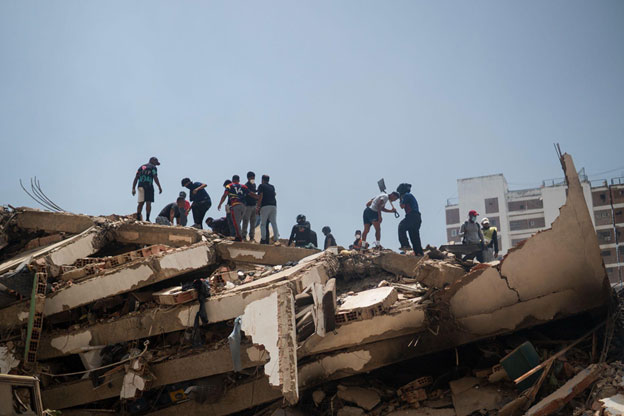 On 26 June 2026, groups search through rubble in the state of La Guaira, Venezuela, after two major earthquakes on 24 June caused homes and buildings to collapse. Thousands remain unaccounted for, and many may still be searching for loved ones trapped beneath the debris. Credit: UNICEF/Rosali Hernandez
UNITED NATIONS, July 7 (IPS) - In recent weeks, Venezuela’s humanitarian situation has deteriorated sharply following the twin earthquakes on June 24. Marking the strongest seismic event since 1990, the earthquakes and subsequent aftershocks have resulted in a significant loss of life, widespread damage to critical infrastructure, and considerable disruption to livelihoods and humanitarian response efforts.
Before these earthquakes, Venezuela was already in the midst of a severe humanitarian crisis defined by economic collapse, political instability, and the disintegration of basic services. As of June 2026, the International Rescue Committee (IRC) estimated that nearly 8 million civilians were in dire need of humanitarian assistance, while the Office of the United Nations High Commissioner for Refugees (UNHCR) reported over 7.6 million forced displacements due to persistent insecurity.
The earthquakes have severely compounded these preexisting vulnerabilities, with power outages, access constraints, and communications blackouts obstructing emergency, life-saving operations and preventing millions from accessing basic needs. According to figures from the United Nations Children’s Fund (UNICEF), the total number of civilians in urgent need of humanitarian assistance has skyrocketed to nearly 1.8 million since the earthquakes, including roughly 680,000 children.
According to figures from the Venezuelan government, as of July 5, the death toll stood at over 3000, while over 16740 people have been injured and 17000 have lost their homes. On June 29, Gianluca Rampolla, the UN Humanitarian Coordinator in Venezuela, told reporters during a press briefing that the death toll “will unavoidably and sadly keep on growing as the search-and-rescue operation continues, and as we are able to detail further assessment of the impacts and quakes.”
Local authorities have recorded 942 aftershocks in the days following the initial earthquakes, with the latest recorded on July 4. La Guaira has been among the hardest-hit regions, with humanitarian experts describing entire neighborhoods reduced to rubble and displaced civilians living in makeshift camps for survival.
“Families across the affected states are in urgent need of safe water, as well as access to health care,” said UNICEF Regional Director for Latin America and the Caribbean, Roberto Benes. “Many are sleeping outside, afraid of more aftershocks. These supplies will help us reach children and families with what they need most right now…But the needs on the ground are far greater than what’s arrived.”
Doctors and humanitarian experts have raised alarm about the thousands of displaced civilians now residing in overcrowded, unsanitary camps. With civilians facing limited access to clean water and a healthcare system on the brink of collapse, experts warn that the emerging medical crisis will claim more lives if urgent intervention is not secured soon.
“It’s very hot, and there’s a lot of concern about potential vector-borne diseases,” said Veronique Durroux, the Head of Information and Advocacy, Regional Office for Latin America and the Caribbean at OCHA. “Waste management is an issue. Debris management, when you see the scale of devastation, it’s very concerning.”
“The issue we foresee just around the corner is the infections that patients who have been exposed to the disaster for the longest time might bring,” added Eugenio Cova, the head of the trauma unit at Hospital del Oeste Dr. José Gregorio Hernández in Caracas. “We’ve already gone through a period of complex trauma — which will continue to occur — but now it’s complicated by infections.”
Local authorities report that the earthquakes damaged 38 hospitals across the nation, further depleting an already severe shortage of medical personnel, emergency responders, ambulances, and medical equipment. Dr. Huníades Urbina, a board member of the Venezuelan Pediatrics Association, told reporters that the country has only half the number of physicians recommended by the World Health Organization (WHO) to meet its needs. He noted that these earthquakes have only further emphasized “the Venezuelan government’s inability to provide an adequate healthcare system that meets the needs of the Venezuelan people.”
A preliminary assessment by the United Nations Office for Disaster Risk Reduction (UNDRR) shows that the earthquakes caused approximately USD 37 billion in direct physical damage to buildings and critical infrastructure. This includes USD 24 billion in direct losses from damage to residential, commercial, industrial, educational, healthcare, and government buildings. Another USD 13 billion in losses was attributed to damage to critical infrastructure, including water and sanitation, telecommunications, roads, railways, energy, ports, airports, oil, and gas.
These losses do not account for indirect production losses, emergency response costs, or costs associated with reconstruction or recovery. Experts project that it will take significant time and a sustained flow of aid to allow for recovery and reconstruction. UNICEF estimates that approximately $52 million is urgently required to adequately respond to the crisis, as part of its 2026 Humanitarian Action for Children Appeal for Venezuela, which has been funded by only 35 percent.
The UN and its partners have been on the frontlines of this crisis since the onset of the earthquakes, helping vulnerable communities access essential services. In La Guaira, OCHA is providing beds, tents, water and sanitation services, primary healthcare, and psychosocial support.
Additionally, OCHA is planning a Rapid Needs Assessment to determine which areas and groups require prioritized assistance. Furthermore, the data collected by this initiative will be used to inform the next phase of the humanitarian response. The Humanitarian Response Plan for Venezuela has received USD 274 million, while over USD 32 million was contributed by the private sector for humanitarian support.
IPS UN Bureau Report
© Inter Press Service (20260707052122) — All Rights Reserved. Original source: Inter Press Service