3 hours ago
4
3 hours ago
4

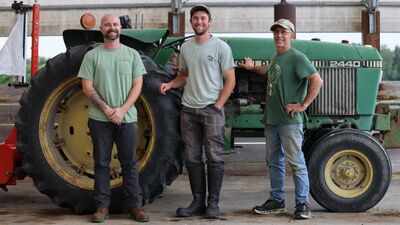
NRCS Soil Conservationist Jimmy Young with Vermont Dairy Farmers Matt and Guy Choiniere in Highgate Center, Vermont (pictured from left to right). Image Credit: US Department of Agriculture
The Choiniere family farm in northern Vermont has grown from a small dairy started with 14 cows on 100 acres into a much larger operation while placing greater attention on the land around it.
Today, the farm is part of a 550-acre dairy operation where conservation work focuses on soil, water and wildlife. The changes have taken place over several generations, with the family working with the US Department of Agriculture’s Natural Resources Conservation Service(NRCS) to address erosion, manage manure and improve the health of the farm’s fields and waterways.
The journey of 100-acre Vermont dairy farm began with 14 cows
The Choiniere family has farmed in northern Vermont for generations.
According to NRCS, Guy Choiniere is a fourth-generation Vermont farmer, while the Sand County Foundation reports that the family has been farming the property since 1945.The farm’s early story was much smaller. Guy recalled that the family began with 14 cows on 100 acres. His father, Henry, worked with his siblings, sharing equipment, labour and nutrients to make the farm productive. Over time, that small dairy developed into one of Vermont’s leading dairy farms.
The family’s relationship with conservation began more directly around two decades ago, when NRCS technical service providers approached Guy and Henry about problems involving soil and water. Farm cows could reach the Rock River, which damaged the stream banks and allowed soil and manure nutrients to wash into the water.
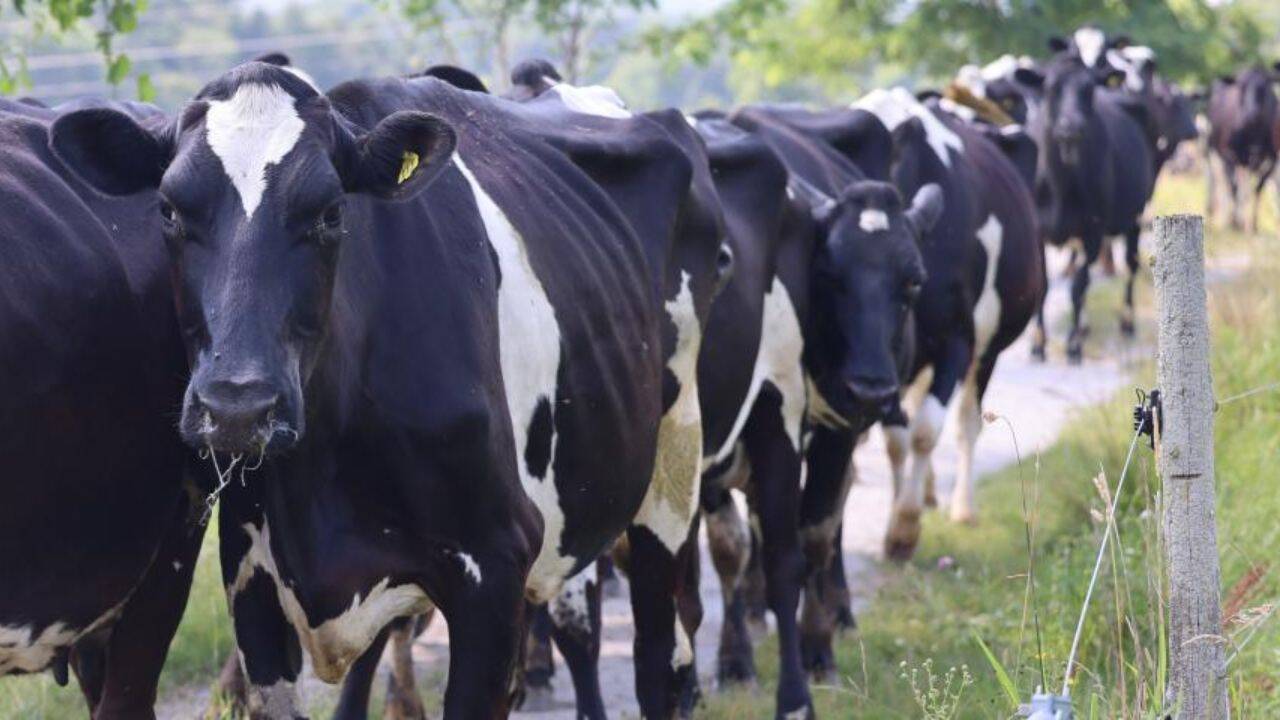
Image Credit: US Department of Agriculture
How the family changed its approach towards conservation
The Choinieres gradually introduced practices intended to keep nutrients on the farm and reduce the movement of soil and manure into waterways.The Sand County Foundation reports that the family planted 5,000 trees along the banks of the Rock River to help control erosion and improve water quality. A 51-acre river corridor easement was also established, allowing the river to move naturally without being dredged. Along 12,000 feet of riverbank, a permanent 50-foot strip of naturally vegetated land provides another layer of protection.The wider farm includes 242 acres of farmland and 70 acres of woodland, with the Rock River and its tributaries running through the property.
The Sand County Foundation reports that these soil-health and erosion-control measures have helped keep the farm productive despite more severe storms, heavier rainfall and periods of drought in north-western Vermont.
Transforming the management of manure through composting
One of the most important changes involved the way the farm handled manure. With help from NRCS, the Choinieres replaced conventional liquid manure storage with a compost bedded pack system. According to NRCS, the system contains a covered area where cows are kept on a solid bed made from materials including hay and sawdust.
Manure is collected in the bedding instead of being exposed to rainfall and running off towards nearby water.During winter, the cows are fed hay inside large hoop barns. Excess hay becomes bedding and absorbs manure. According to the Sand County Foundation, pigs are later allowed into the barns when the cows return to rotational grazing in May, helping speed up the composting process before the finished material is spread on fields.The resulting compost provides nutrients for the soil. NRCS reports that the material can produce usable forms of nitrogen, phosphorus and potassium, along with other nutrients, after being left to compost for roughly six months to a year.
Why did the farm move towards organic and grass-fed production
Conservation also became connected with the family’s approach to dairy production. The Sand County Foundation reports that Guy began studying organic farming after facing an unstable conventional milk market in the 1990s.
He eventually converted the farm to organic production and later changed 25 acres of corn to permanent hay and pasture as the family moved towards a fully grass-fed herd.The decision fitted closely with the conservation work already taking place. According to NRCS, the family found that many organic farming requirements aligned with the conservation practices it was already following. Guy also told NRCS that composting had allowed him to stop using fertiliser for 25 years, while supporting the growth of grass used to feed the cattle.The farm’s organic milk also receives a premium price, according to NRCS, giving the environmental changes a direct connection with the farm’s economic model.
Family legacy in conservation passed onto the next generation
As per NRCS, the family plans to continue adding measures such as windbreaks, forest management and wildlife structures, including a bat house.The farm’s conservation story now includes education as well as farming. Guy is an instructor for the Champlain Basin Watershed Initiative, a partnership involving Vermont, New York and Quebec.
Through the programme, elementary school teachers learn about watershed issues and how agricultural conservation can affect water quality. For the Choinieres, the conservation plan remains an ongoing process instead of a completed project.The Sand County Foundation reports that Guy’s family has expanded what it produces and sells, including beef, milk, pork, chicken, eggs, honey and baked goods through a farm store.The Choiniere Family Farm received Vermont’s Conservation Farmers of the Year recognition in 2009 and became the first New England recipient from Vermont of the Leopold Conservation Award. Its story shows how growth of a family dairy can happen alongside efforts to protect the resources that make farming possible.