3 months ago
37
3 months ago
37

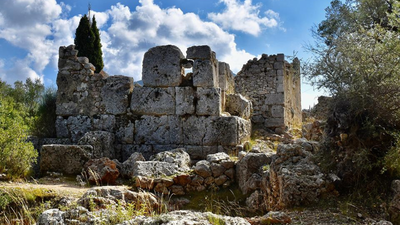
Ruins of the sanctuary site at Ithaca, where archaeologists uncovered evidence of long-standing worship linked to Odysseus.
A remarkable archaeological discovery on the Greek island of Ithaca is reigniting one of history’s oldest debates: was the story of Odysseus rooted in reality? Excavations at a site known as the “School of Homer” have uncovered what researchers believe to be a sanctuary dedicated to the legendary king of Ithaca and hero of the Trojan War.
The find includes an inscribed artefact bearing a version of his name, alongside ritual offerings and ceramics, suggesting organised worship. Officials have described it as one of the most significant archaeological breakthroughs in recent years, linking myth, memory, and material evidence in an unprecedented way, at a time when interest in the ancient epic is surging again, with Christopher Nolan set to bring The Odyssey to the big screen in 2026.
Greek sanctuary discovery reveals centuries of Odysseus worship
Archaeologists uncovered a range of artefacts pointing to sustained religious activity at the site. Among the most notable finds was a tile fragment inscribed with a variation of Odysseus’s name, reinforcing its symbolic link to the Homeric hero.Researchers also identified votive offerings, pottery, and metal objects associated with ritual practices, indicating the location functioned as a place of organised worship over generations.
One of the most striking aspects is the broad time span of the artefacts. Materials date back to the Mycenaean period (c. 1600–1100 BC) and extend through to the Hellenistic era, which ended in 31 BC. This suggests reverence for Odysseus may have endured for over a millennium. The presence of early Mycenaean material is particularly significant, as it hints that the roots of the legend could predate The Odyssey itself.
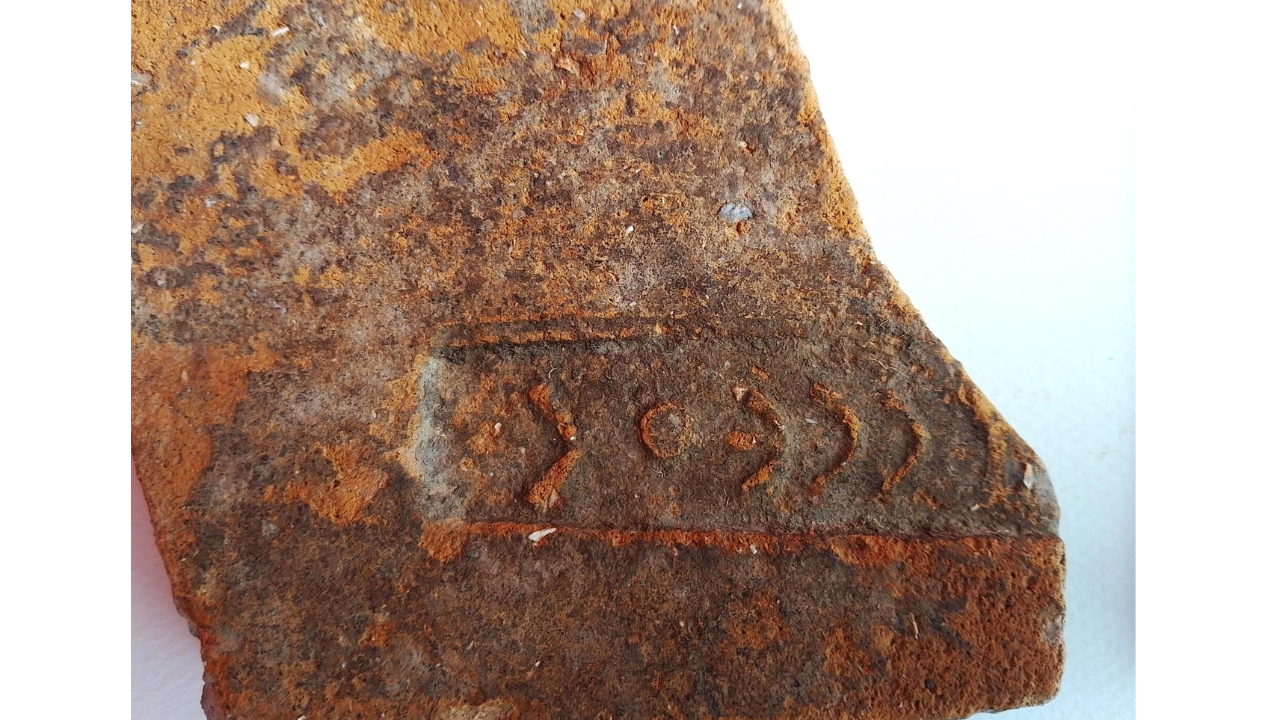
Fragment of a stamped roof tile bearing part of the name of Odysseus, Hellenistic period / Photo: Greek Ministry of Culture
The story of the Odyssey and Odysseus
The tale of Odysseus comes from The Odyssey, attributed to the ancient Greek poet Homer. Set after the Trojan War, the epic follows Odysseus, the king of Ithaca, as he struggles to return home after the conflict.What should have been a short journey turns into a decade-long ordeal. Along the way, Odysseus faces a series of trials that test both his strength and intellect. He famously outwits the Cyclops Polyphemus, resists the deadly allure of the Sirens, and navigates the dangers posed by the witch Circe and the wrath of the sea god Poseidon.
Each episode underscores his defining trait: cunning intelligence rather than brute force.Back in Ithaca, his wife Penelope remains steadfast despite mounting pressure from suitors who believe Odysseus is dead, while his son Telemachus sets out in search of news about his father. When Odysseus finally returns, he must reclaim his home and identity, ultimately defeating the suitors and restoring order to his kingdom.More than just an adventure story, The Odyssey explores themes of perseverance, identity, loyalty, and the longing for home. This blend of myth, human emotion, and real geography has kept the story alive for nearly three millennia, and discoveries like the Ithaca sanctuary continue to give it renewed relevance.
Watch
The Odyssey | Official Trailer
While the discovery does not prove that Odysseus was a real historical figure, it strengthens the argument that he was more than a purely literary creation. In ancient Greece, legendary figures were often venerated through hero cults, existing in a space between myth and religion. The Ithaca sanctuary fits this pattern, offering tangible evidence of Odysseus’s lasting cultural importance. Its elevated position overlooking the sea further reinforces its symbolic connection to a figure famed for long and perilous voyages.The find has renewed interest in one of the most enduring stories in Western literature, suggesting the tale may have been shaped by real places and long-standing traditions rather than pure imagination.