2 hours ago
2
2 hours ago
2

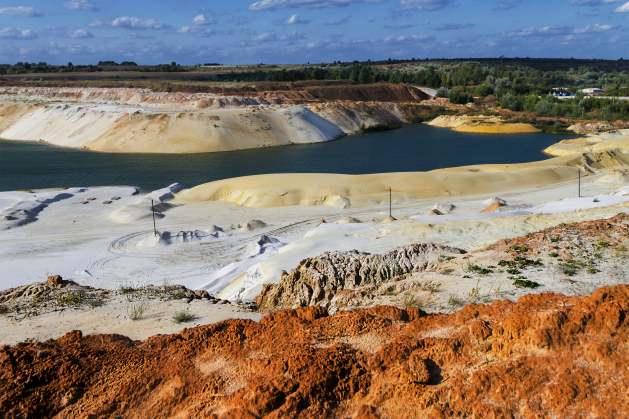 When host governments negotiate with investors, they typically suffer from the fact that investors know more about the value of the minerals than governments do. Credit: Shutterstock
“Critical minerals” are critical in the eyes of firms and governments in industrialized countries because they are indispensable for products such as modern automobiles, AI, computers, drones, and many other consumer and defense products.
Mining, and especially processing, of many critical minerals are today concentrated in China; withholding access to them provides China with a powerful bargaining tool when tensions arise with the West. Consequently, governments and firms of industrialized countries are scrambling to develop new mines and processing facilities outside China to secure their supplies.
Many deposits are in developing countries, but most of the countries must turn to foreign firms for the capital and know how needed to extract rare earths and other critical minerals. Exploration and development contracts determine the rights and responsibilities of both investors and host governments for, often, decades. Because most investors are protected by investment treaties, host countries need to get the contracts “right” at the outset.
The bargaining power of developing countries is often greater for critical minerals than for other minerals. This is due to the eagerness of private firms from industrialized countries as well as their home governments for access to critical minerals and their desire to keep them out of the hands of competitors.
When investors are eager, host countries can insist on gaining beneficial financial terms (taxes, royalties), avoiding broad stabilization provisions, including programs to develop local suppliers, ensuring proper mine-closure arrangements, etc. Sometimes, host countries can insist on investors processing ores locally.
Another opportunity is the chance to exploit the strong interest of investors’ home governments to ensure that their investors control critical minerals. Host countries can insist that these governments provide benefits such as finance for projects or increased aid for infrastructure projects even beyond those needed for the mine.
Obtaining real benefits from home governments is more likely if host governments have in-depth knowledge about the investors and their home countries’ policies, as well as information about mining agreements concluded elsewhere. Special to critical minerals are multilateral and bilateral arrangements that are being built to develop and stabilize critical mineral supplies. They include FORGE and stockpiling attempts such as Project Vault.
Exploiting these emerging opportunities to obtain benefits from investors’ home governments may require that host governments involve their foreign affairs ministries as well as the usual ministries concerned with mining. This adds to the common problem of coordination within governments.
Host countries also face certain risks. Particularly important is the risk that investors conclude agreements, but never actually invest. Or they stop short of producing expected levels of output. Or companies may sign agreements only to keep deposits out of the hands of other firms or as backup, “just in case.
Also, technologies are changing rapidly: what is in demand today for, say, batteries, might be different in a few years. Hence, “use-it-or-lose-it” clauses in contracts are essential: if investors fail to develop mines by an agreed date or meet output requirements, contracts must provide that the investors’ rights end so that government are then free to seek other investors.
When host governments negotiate with investors, they typically suffer from the fact that investors know more about the value of the minerals than governments do. And governments often lack the legal, financial and technical expertise required to negotiate successfully with well-resourced international investors.
Even when they have negotiated mining contracts in the past, the expertise acquired can be lodged in the heads of officials who have moved on to other positions, in government or in the private sector. The imbalance may be even greater when it comes to the complexities and special opportunities posed for negotiating agreements covering critical minerals.
Thus, exploiting the opportunities developing countries have is not an easy task. Outside expertise can help governments to optimize mining agreements. But the poorest developing countries typically lack the financial resources to hire international expertise such as lawyers, geologists, engineers, financial analysts, market specialists, and environmental experts.
Multilateral institutions such as the World Bank and the International Finance Corporation can help in developing policies and laws for foreign investment and mining, but they drop out when it comes to actual negotiations with individual firms.
However, there are sources of pro bono advisors that provide help in the negotiation stage. The International Senior Lawyers Project and the African Legal Support Facility offer legal support. The CONNEX Support Unit provides not only legal support, but also other expertise required for specific projects.
Governments should consider calling on such external support when they are negotiating contracts for critical minerals. But they should work closely with the providing organization to select advisors who meet their specific needs and with whom they are comfortable.
The chosen advisors should have the necessary technical knowledge, but also the consulting skills that are required to bring together the ministries and agencies that have an interest in proposed mines—often a challenging task. In the end, advisors, or teams of advisors with different skills, can only advise. The governments of countries with minerals make the decisions.
One word of caution, though. Governments need to be careful not to overplay their hand. They need to aim for contracts that reflect, in a balanced manner, the long-term interests of all parties involved. Only then will they stand the test of time.
Karl P. Sauvant is Senior Fellow, CCSI, Columbia University, and former Director of UNCTAD’s Investment Division; Louis Wells is the Herbert F. Johnson Professor of International Management, Emeritus, Harvard Business School.The authors are members of the CONNEX Advisory Committee.
© Inter Press Service (20260915134025) — All Rights Reserved. Original source: Inter Press Service