1 hour ago
2
1 hour ago
2

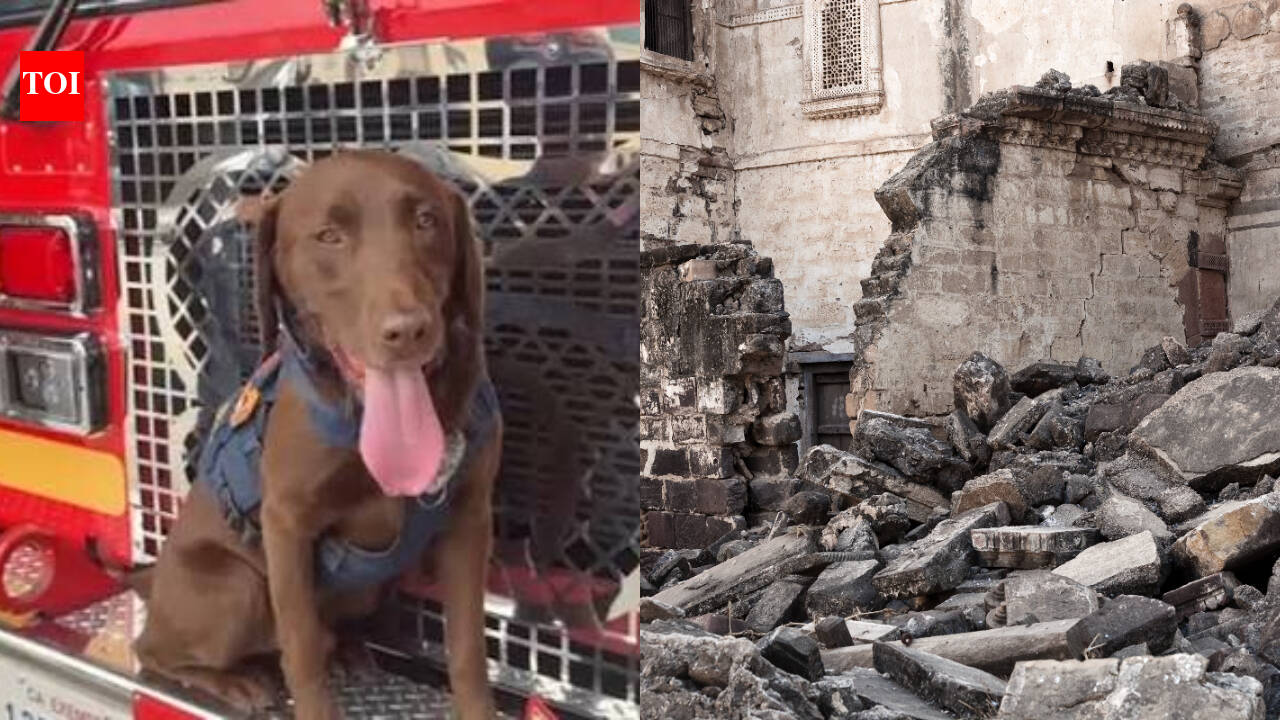
It has been three weeks since the collapse of a glacier and rock mass from the Langtang Lirung mountain triggered devastating floods in Nepal’s Bhotekoshi and Trishuli valleys. Officials have confirmed the loss of more than 1,380 precious lives, while around 5,100 remain missing. The disaster shattered thousands of homes and wiped out vital infrastructure.
Nepal government’s rapid assessment estimates that full recovery and long-term reconstruction will need $4.7bn. That is roughly 10 percent of Nepal’s annual gross domestic product (GDP), and more than a third of its federal budget.
And yet, despite considerable media and public attention, the international political response has remained strikingly muted.
We have heard some condolence messages from foreign governments, along with emergency supplies and pledges of help. These matter. But the response mainly targeted immediate humanitarian aid. For instance, the United States pledged $3.6m, the United Kingdom $6m, and the European Union $2.3m. But these meagre funds cannot meet the needs of affected communities and provide them with the shelter, food and infrastructure to survive the winter.
Why has the response been so inadequate? Why have so few political leaders spoken up about this disaster with the urgency its scale demands?
Part of the answer may lie in an uncomfortable question Nepal has now put directly on the table: who should pay for climate loss and damage?
Nepal is increasingly framing the floods not simply as another weather-induced catastrophe, but as a consequence of a climate crisis to which the country contributed almost nothing.
This points to a deeper inequality of climate crisis.
For over a century, wealthy countries have consumed a vastly disproportionate share of the atmosphere’s capacity to absorb carbon dioxide. They grew their economies through industrialisation driven by fossil fuel consumption. Meanwhile, countries like Nepal got little chance to use anything approaching an equivalent share of that atmospheric space.
The result shows a stark divide between those who benefitted disproportionately from burning fossil fuels and those who face growing consequences.
Nepal has argued that international support to deal with climate catastrophe is not a charity. It must be climate justice. It has asked the United Nations’ Fund for Responding to Loss and Damage for urgent support, and the fund’s board is now considering how to respond.
That changes the political conversation. And it takes us back to the bargain struck in Paris a decade ago.
Developing countries fought hard for the international climate regime under the United Nations Framework Convention on Climate Change to recognise “loss and damage” or the destruction that cannot simply be prevented through mitigation or adapted to. They secured its recognition in Article 8 of the Paris Agreement.
But wealthy countries drew a line around what that recognition could mean. The decision text adopted alongside the Paris Agreement states that Article 8 “does not involve or provide a basis for any liability or compensation”.
It was a strange political bargain: the world could acknowledge climate-related loss and damage, but that acknowledgement could not lead to demands for compensation.
Nepal is now testing the limits of that bargain.
The legal picture is more complicated than simply saying that the Paris Agreement prohibits climate compensation. In 2025, the International Court of Justice ruled that countries have a legal obligation to protect the climate system; if they fail their obligations, they are liable for reparations or compensation for the damage they have caused. The decision sparked renewed attention to the questions around state responsibility under international law.
In the case of Nepal and other developing countries disproportionately affected by the climate crisis, the state does not need to prove that one particular country caused a specific flood before the international community can recognise a responsibility to address the consequences of climate change.
But there is another issue: the traditional international system for supporting developing countries is itself shrinking. At precisely the time climate losses are mounting, official development assistance is falling. It plummeted by 23.1 percent in 2025, the largest annual contraction on record. Humanitarian assistance also fell sharply.
And the problem is not simply that there is too little aid.
For decades, the global economy has transferred enormous amounts of wealth and resources through unequal economic ties between the Global North and the Global South. Climate finance won’t fix that imbalance if it simply returns a fraction of that wealth as loans or private investment options.
A country should not have to borrow its way out of a climate disaster it did little to create.
Nor can compensation substitute for mitigation. Wealthy countries cannot keep consuming a disproportionate share of the world’s energy and material resources while ignoring the consequences elsewhere. They must rapidly reduce their own emissions and ecological overconsumption.
The muted response to the floods in Nepal therefore raises a larger question about international cooperation.
Perhaps the world is comfortable acknowledging the growing cost of the climate crisis. It is much less comfortable when countries affected ask whether the costs should be borne by those who contributed most to creating the crisis.
The avenues for changing this already exist: the Fund for Responding to Loss and Damage, the UN climate negotiations, and the evolving body of international law on climate responsibility.
What is missing is the political recognition that the costs of climate destruction cannot indefinitely be treated as somebody else’s problem.
If climate justice means anything, it must eventually include reparations for the damage caused by an unequal appropriation of the atmospheric commons.
That conversation can no longer be postponed.
The views expressed in this article are the author’s own and do not necessarily reflect Al Jazeera’s editorial stance.