1 hour ago
3
1 hour ago
3

Attacks on Palestinian communities by Israeli settlers in the occupied West Bank, which are often supported by Israeli forces, have gathered pace over the past month since settlers from the Havat Gilad settlement attacked Palestinian homes on the eastern edge of Tal, southwest of Nablus.
On Sunday and Monday, the Israeli military raided multiple towns, villages and refugee camps across the occupied territory, and reports of arrests, home searches and settler attacks have continued to mount.
A 15-day siege on three families comprising 15 people, including two children, in the village of Qusra, which is ongoing, drew a rare public condemnation this month from the United States ambassador to Israel, Mike Huckabee, a staunch supporter of Israel and its West Bank settlements.
Israel is also pushing ahead with plans for the so-called E1 settlement close to Jerusalem, which human rights organisations warn would effectively sever the West Bank in two, further hampering the movement and freedom of Palestinians on either side of it and endangering the possibility of a Palestinian state.
These attacks increasingly fit the definition of a pogrom, experts say, with UN Special Rapporteur on the occupied Palestinian territories Francesca Albanese describing Israeli attacks against Palestinians in the occupied West Bank as “pogroms against defenceless civilians”.
So, why are experts calling settler attacks pogroms and do they fit the formal definition of one?
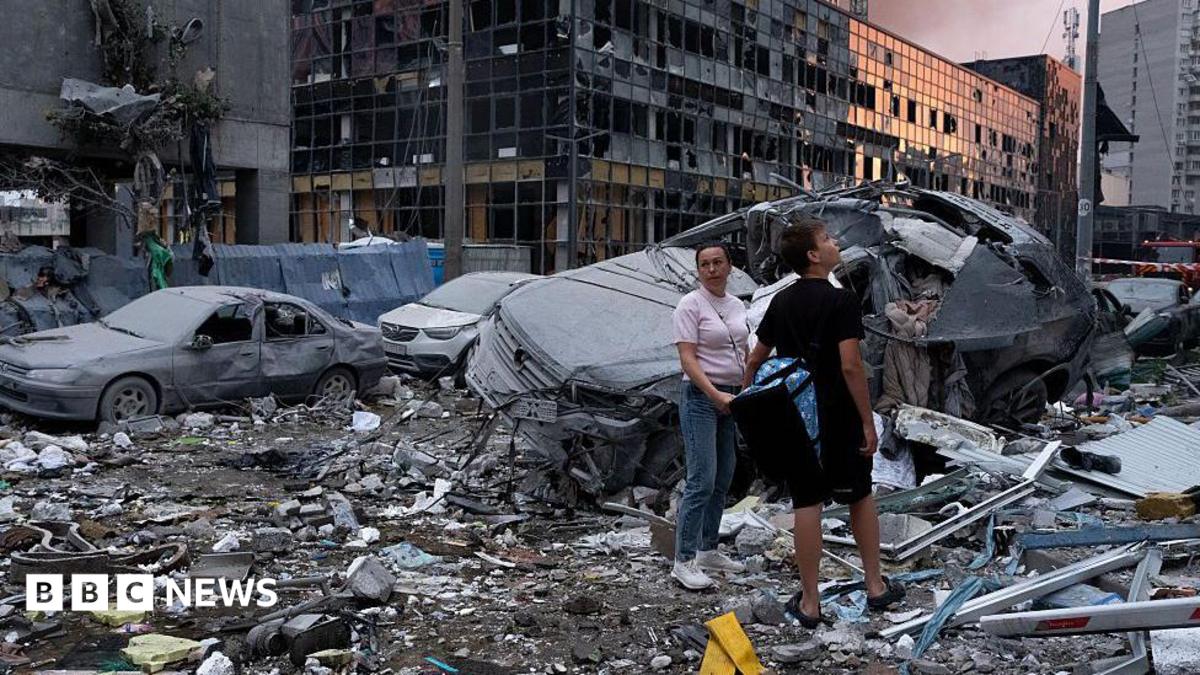
 A Palestinian man inspects the damage at a mosque, which Palestinians say was damaged by Israeli settlers, in Qusra near Nablus, in the Israeli-occupied West Bank, July 26, 2026 [Mohamad Torokman/Reuters]
What’s happening in the West Bank?
Settlers, frequently supported by the Israeli military, have been attacking Palestinian homes, businesses, and agricultural fields across the occupied West Bank. Such attacks have been commonplace for decades as settlements have expanded across the territory, but they gathered pace after October 7, 2023 when Israel launched it genocidal war on Gaza, and have become particularly violent and frequent over the past month.
Israeli settlements across the West Bank are illegal under international law.
According to the Palestinian Colonization and Wall Resistance Commission, however, Israeli settlers now number roughly 780,000 across the occupied West Bank and East Jerusalem, living among 192 settlements and 400 outposts, rising to 71 percent of Area C, which is under full Israeli civil and military control, and 91 percent of the Jordan Valley.
Settlers often set up outposts without formal approval around Palestinian villages from which they launch a campaign of harassment, including killing livestock, cutting supply lines and damaging property, in order to drive local residents out. Once they establish a more formal settlement, they often receive retrospective approval from the Israeli government for the settlement.
In some places more recently, illegal settlers have laid siege to individual family homes – such as in the Ras al-Ein area of Qusra – cutting off water and other supplies and damaging orchards or harming livestock.
This has set a new pattern: settlers establish a tent adjacent to individual homes; Palestinians’ homes are besieged, with essentials cut off; and Israeli soldiers arrive not to remove the settlers, but rather to remove the family – through arrest or ostensibly for their “protection”.
In Qusra, the three besieged families were forced together into one of the family houses. Meanwhile, Israeli forces have occupied one of the other homes for use as a military post and thrown furniture and belongings from its windows, according to the Palestinian news agency Wafa.
The UN humanitarian affairs office recorded more than 1,330 settler-related attacks on Palestinians in the occupied West Bank between January and late July this year, averaging six a day and marking the fastest pace since the agency began systematic tracking two decades ago.
Separately, a UN-appointed commission of inquiry has found that the Israeli authorities have repeatedly failed to prevent foreseeable settler attacks and, in some cases, have directly enabled them through army protection and the provision of weapons and funding.
The UN Office for the Coordination of Humanitarian Affairs (OCHA) has found that settler attacks, demolitions and evictions forcibly displaced more Palestinians in the first four months of this year than in the whole of 2025.
OCHA reported that 107 communities, comprising 5,900 Palestinians, had been completely or partially displaced as a result of settler violence since January 2023. It also found that the Israeli military have expelled another 32,000 Palestinians from their homes in the occupied West Bank since January 2025, essentially emptying the Jenin, Tulkarem and Nur Shams camps.
 (Al Jazeera)
What is the definition of a pogrom?
Major US and UK dictionaries vary to some degree on the definition of a “pogrom”.
The British Collins Dictionary identifies a pogrom as “organised, official violence against a group of people for racial or religious reasons”, with a notable inclusion of official, or state-backed violence.
Oxford Advanced Learner’s Dictionary calls it “the organised killing of large numbers of people, because of their race or religion”, without mention of state-sanctioned violence.
Merriam-Webster says it is “an organised massacre of helpless people” – “specifically: such as a massacre of Jews”.
Cambridge Dictionary says it is “an act of organised cruel behaviour or killing that is done to a large group of people because of their race or religion”.
The word is understood to have been introduced via Yiddish and was at first used to describe the wave of violent, organised mob attacks on Jewish communities in the Russian Empire following the assassination of Tsar Alexander II in 1881.
It is important to note that unlike legal terms including “crimes against humanity” or “genocide,” “pogrom” has no established legal definition under international law.
Can attacks in the West Bank be referred to as pogroms?
Besides Francesca Albanese, the UN Special Rapporteur on the occupied Palestinian territories, who has described Israeli attacks against Palestinians in the occupied West Bank as “pogroms against defenceless civilians”, Israeli officials themselves have described such attacks as “pogroms”.
On February 26, 2023, hundreds of Israeli settlers attacked Huwara and surrounding Palestinian communities after two Israeli settlers were killed. A Palestinian was killed, hundreds were injured, and homes, businesses and cars were burned.
The Israeli military’s then-commander in the occupied West Bank, Yehuda Fuchs, called the settlers’ attack a “pogrom”, and it was also recorded as such by the US State Department.
Israeli-Palestinian human rights group B’Tselem has also previously described Israeli actions in the occupied West Bank as “pogroms”, especially after the February 2023 attacks. Later, it followed up with a report titled, “The pogroms are working – the transfer is already happening”, which argued that settler attacks were contributing to the displacement of Palestinian communities.
“Settler violence is not a new phenomenon. But over the past three years, it has become more violent, more systematic and, most importantly, part of a state mechanism intended to ethnically cleanse large parts of the West Bank,” said Yair Dvir, the spokesperson for B’Tselem.
“The government funds and arms the settlers, while the Israeli military stands by and, in many cases, actively participates in the attacks,” he told Al Jazeera. “So far, these militias have expelled 64 Palestinian communities and taken control of around one million dunams of land.”
Dvir also told Al Jazeera that the Israeli settlers are “now carrying out organised attacks on established Palestinian villages and towns in order to drive out their residents”.
“These are armed militias operating as an unofficial arm of the state, with a shared goal: to ethnically cleanse as much of the West Bank as possible,” he added.
The Lemkin Institute for Genocide Prevention, which is named after Polish-Jewish lawyer Raphael Lemkin, who is credited with coining the term genocide after the Holocaust, referred to settler attacks on Al-Mughayyir, a Palestinian village in Ramallah, as “pogroms”, reporting that hundreds of armed settlers attacked residents and burned buildings and cars while soldiers stood by earlier this year. In 2025, the Israeli military uprooted thousands of Palestinian olive trees at Al-Mughayyir.
Raheel Dhattiwala, an Indian scholar who focuses on collective violence, told Al Jazeera: “West Bank attacks fit the characteristics of a pogrom – systematic targeting of one civilian group by another with state approval. A few senior Israeli army officers have called it ‘pogroms’ in the past too, for example after attacks in Huwara.
“One might want to debate the use of the term, ‘pogrom’, but it is accurate to call settler violence systematic attacks of occupiers, with government approval, on groups of occupied people.”