46 minutes ago
2
46 minutes ago
2

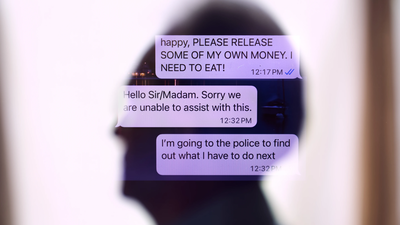
When Simon’s wife of 43 years died, the loss left him struggling with a loneliness he had never known. Like many widows and widowers, he eventually turned online, hoping to find some companionship.
Instead, he found Emily. The woman seemed real. The conversations continued and a relationship began to take shape. But Emily did not exist as Simon believed she did. She was part of an online scam, and over the next few months, Simon lost $800,000 from his retirement savings. The money was devastating enough. What followed made matters worse. According to an investigation by The Associated Press and FRONTLINE, Simon was left with $185,000 in borrowed money to repay and tens of thousands of dollars in additional taxes on funds he had withdrawn and subsequently lost.
He reported the crime to local police and the FBI, but said he received little meaningful help. Then came another scammer. This time, someone contacted Simon claiming they could connect him with the Secret Service and help recover his stolen money, for an additional fee.
His online love was traced to a scam compound
Simon had used the internet looking for something deeply human: connection after bereavement. Instead, he became one of thousands of people caught in increasingly sophisticated online fraud networks.
AP and FRONTLINE were able to trace the money stolen from Simon through cryptocurrency wallet addresses and leaked documents to a notorious scam compound in Myanmar. The operation was part of a wider criminal network that targeted victims through different types of online scams. Even after authorities destroyed much of the compound, the scam operations did not disappear. Other sites emerged, leaving Simon no closer to recovering his savings.He has asked that his full name not be published because he remains too ashamed to tell most of his family what happened. That sense of shame is common among victims and it can make an already devastating experience even harder to escape.
Americans lost billions to scams in 2025
Simon’s experience comes as scams in the United States reach unprecedented levels. Americans reported losing $15.9 billion to fraud in 2025, a 25% increase from the previous year, according to Federal Trade Commission data cited by AP.
The agency has also warned that reported figures represent only part of the problem because many victims never report their losses.The FTC separately found that people reported losing $2.1 billion to scams that began on social media in 2025, roughly eight times the amount reported in 2020. Romance scams remain a particularly damaging category, with nearly 60% of people who reported losing money to a romance scam saying it began on a social media platform.
The loss doesn’t always end with the money
For many victims, recovering stolen funds can be nearly as difficult as the scam itself. In the US, banks generally aren’t required to reimburse customers when they themselves authorised a transaction after being deceived. That leaves victims in a difficult position, particularly when money has been transferred through cryptocurrency or across international borders.Simon’s case illustrates another painful consequence: the financial loss can continue long after the scammer disappears.
His retirement savings were gone. He was left with debt and tax liabilities. And when he sought help, another fraudster saw an opportunity to exploit his desperation.The investigation found that this pattern, victims being targeted again by people promising to recover their money, is not unusual. For Simon, the search for companionship began with grief and ended with the loss of a lifetime of savings. What makes his story especially troubling is that the person who deceived him was thousands of miles away, yet the consequences followed him home. And even after the scam was exposed, the money was still gone.