1 month ago
25
1 month ago
25

Just now
Rob Mayor, James Pearson and Eleanor LawsonBBC Politics Midlands

 BBC
BBC
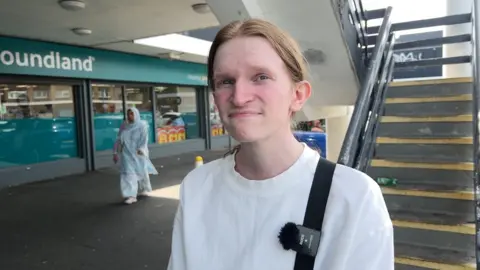
Liam Peers is working at Acorns charity shop for some much-needed experience
Parts of east Birmingham are a stark example of a national dilemma: why are so many working-age people currently out of work?
According to the most recent data from the Office for National Statistics, around one in three people aged 16 to 64 are "economically inactive" - unemployed and not currently seeking work - in several communities.
Historically, suburbs such as Hodge Hill, Shard End and Castle Bromwich were built around a strong manufacturing base, but the long-term decline of factories and foundries has reshaped the local economy.
While major employers like Jaguar Land Rover remain nearby, deprivation persists and unemployment benefit claims are more than double the national average.
For a special edition of Politics Midlands, the BBC travelled to the constituency of Hodge Hill and Solihull North to explore the reasons behind the figures and the organisations that are helping people on their journeys.
 PA Media
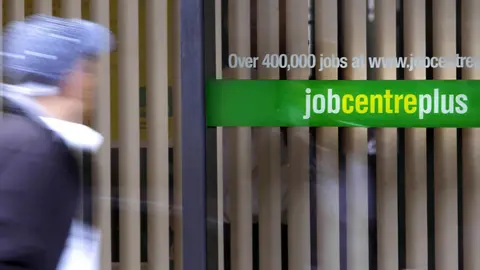
One in three people in the parliamentary constituency of Hodge Hill and Solihull North in Birmingham are out of work
Liam Peers, 20, has been out of work since leaving college a year ago.
Of 100 jobs he has applied for, he got one interview.
"You're either getting ghosted or it's just like 'oh, sorry we've got a better candidate'," he said.
He has taken proactive steps to gain work experience at Acorns Hospice charity shop in Shard End.
"I just think it's just rough in the job market but there's not that many jobs available," he said.
He is among more than one million people aged 16-24 who are not in employment, education or training (Neets) in the UK, with a report last week stating this is the highest number in 12 years.
Prime Minister Keir Starmer described the figure as "sobering". But why is this part of Birmingham so acutely affected throughout all ages?
"I've been in the industry for over 22 years and it's been the same question and same barriers that our communities have been facing," said Aesha Ali from training and education provider Saheli Hub.
"The deindustrialization of factories and foundries has led the communities of Hodge Hill and North Solihull struggling with the level of jobs that they can do.
"It has affected their health and the cost of living, low-skilled jobs not being available to them, then no opportunities for them to actually upskill themselves."
One of the biggest problems, she says, is jobs being available but miles away from where people live.
"How do our local communities get to places like Redditch or Burton where the jobs are for low-skilled sort of labour market communities? They can't travel for these opportunities."
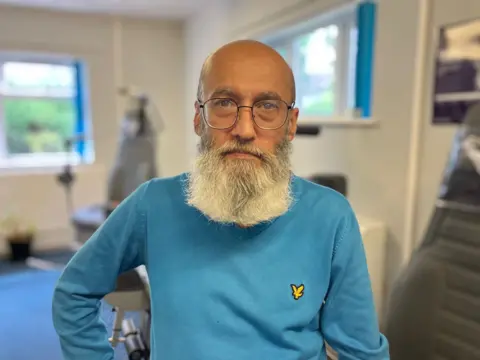
Hanif Hall worked in warehouses for 20 years but is suffering from health issues
Ali and Saheli Hub are helping to deliver WorkWell, a pilot scheme launched by the Department for Work and Pensions and the Department of Health and Social Care to help people with health-related barriers to work.
Hanif Hall, a former warehouse worker who has been unemployed for around two years, is among those on the scheme.
"I've had long term Crohn's disease for about 40 years and the associated conditions that come with it: spinal problems, joint problems," he said.
The wear and tear of working in warehouses for 20 years has also aggravated his health issues.
"With WorkWell, you have a coach here who can spend more time with you discussing barriers you have into work," Hall said.
"They can provide me with support, training, CV building, digital skills."
He is now hoping to move from working in warehouses into hospitality.
"But for me, who's never had a college education, who's never written an essay before, having to write personal statements, fill out CVs, it's been very daunting."

Jo said he had improved in confidence thanks to the work of the King's Trust
The King's Trust - formerly known as the Prince's Trust - is supporting a number of people aged 11 to 30 in Birmingham to build confidence, get a job or launch a business.
Difficulty in communicating is often a key barrier to people securing interviews and jobs.
Jo, a 19-year-old from Erdington, wants to find a job in hospitality or music.
"I found myself improving in confidence, in talking to people, even serving people, talking to an interviewer who's asking you questions," he said.
Oluchi, 22, was out of work for almost a year after graduating with a Biomedical Science degree from the University of Wolverhampton.
"I've come to find out it's quite hard to get into the medical field," she said.
"For what I wanted to do in terms of placement in biomedical science, it was really hard because 100 to 300 people were fighting for like 20 to 50 positions."

Oluchi has a biomedical science degree but found that placements were highly competitive
Lockdowns during the pandemic took a toll on her studies and mental health, while stopping her from securing any work experience.
In September, she started working at TK Maxx in Birmingham after completing The King's Trust Get into Retail programme in July, and has recently been put on the retailer's Rising Star management programme.
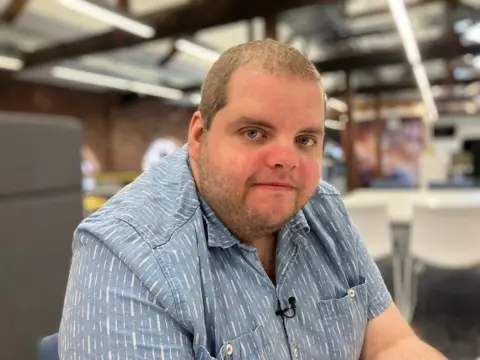
Joseph hopes to increase their confidence and employment skills
Joseph, 24, of Chelmsley Wood, has been looking for work for just over three years.
The 24-year-old and joined the King's Trust Get into Customer Services in Rail programme in 2025.
Before that, Joseph, who is also autistic, was homeless due to family breakdown and was supported by charity St Basil's to find accommodation.
"One of the biggest barriers for me in finding a job is that it can be difficult when you send off 20 applications in a week and you end up getting nothing back, especially if you're neurodivergent.
"Talking about myself feels horrible. It's really against my nature."
Pat McFadden, the Secretary of State for Work and Pensions, said the government had introduced new policies under The Youth Guarantee package.
"It involves 300,000 more work experience places, subsidised hiring bonuses for employers - £3,000 if they take on a young unemployed person who's been out of work for six months or more," he told the BBC.
"And from the autumn, changes to the apprenticeship system, so a small or medium sized business will get a hiring bonus of £2,000 if they take on a young apprentice."
Snowflake narrative not helpful
Steve Gill, from CW Vehicle Service Ltd in Stechford, told the BBC that rises in the minimum wage and National Insurance made it harder for businesses to afford to employ people.
McFadden told the BBC: "If any employer hires a young worker under the age of 21, there is no employer's National Insurance liability at all. There's a tax break in the system for that."
He added that far too often he was seeing a narrative where young people were being described as "snowflakes or shirkers".
"That's not a message that's going to encourage anybody," he said.
"We should be saying to young people: 'We believe in you.'"