2 hours ago
4
2 hours ago
4


His father helped put a computer in millions of homes. Now, Zach Dell wants to put a battery in them. The son of Dell Technologies CEO Michael Dell, has co-founded a startup hoped to become America's next big power company.
Base Power is racing to build and install tens of thousands of batteries in residential backyards and become one of the country's largest developers of battery storage. The three-year-old company just locked down a $1 billion funding round that brings its valuation to $13 billion and has raised more than $2.5 billion in all.The funding round was led by Ribbit Capital, Addition, Valor Equity Partners and JPMorganChase’s Strategic Investment Group, which is part of the firm’s Security and Resiliency Initiative.
Interestingly, Dell's own father is not a backer.Base has installed more than 23,000 batteries across Texas and the Chicago area, a market it entered earlier this year. “We have so much to do and so much room to grow, and we’re very early in the scope of the opportunity,” Dell said, adding that the company plans to enter more states and, eventually, international markets. It does roughly 100 installations a day and expects to double the count by the year-end.
So far, it has about 550 megawatt-hours installed, equal to a large, utility-sized storage project.
Diverse business models
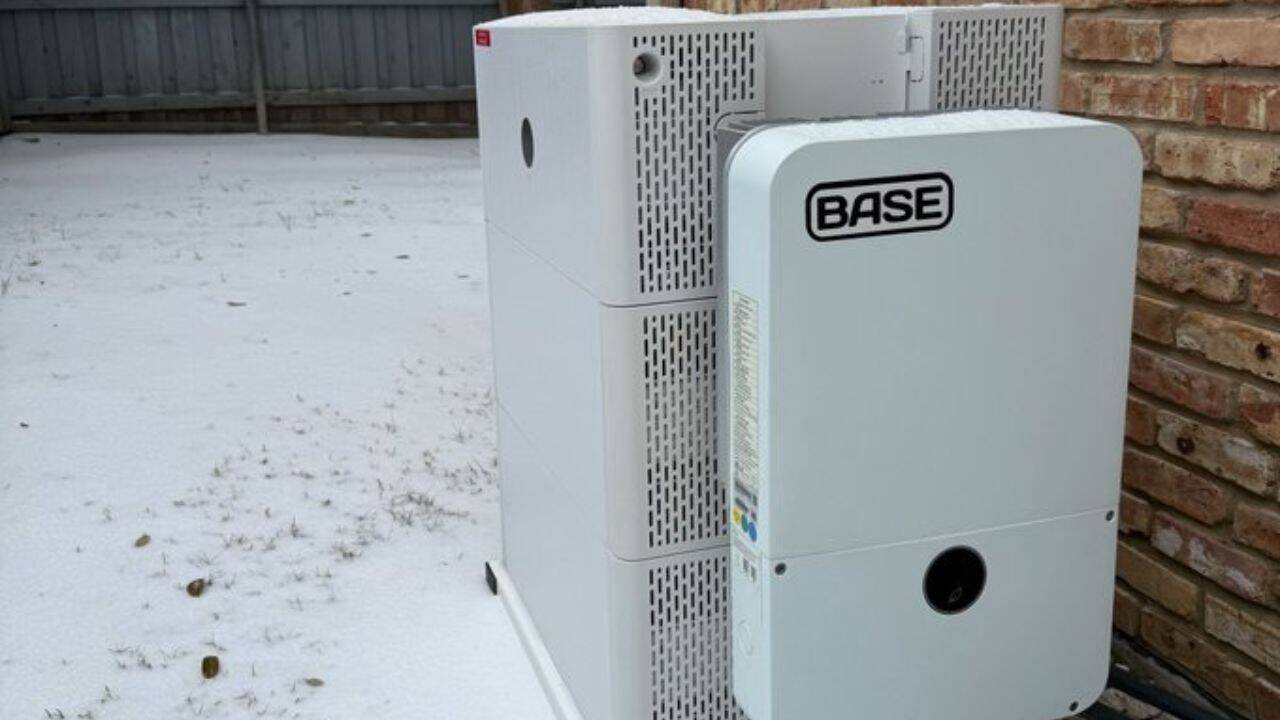
The three-year-old company just locked down a $1 billion funding round that brings its valuation to $13 billion
Base functions on two business models. In deregulated markets, the company owns and operates the batteries, acting as a retail power provider while offering lower-than-average electricity rates. When the grid operates normally, it aggregates the batteries to feed electricity back to the system during periods of peak demand.
If an outage strikes, it provides backup power. Texas customers also can sign up for the retail electricity plan without a battery.
It also partners with regulated or municipal utilities and electric cooperatives, which use the batteries to relieve the local grid bottlenecks, while customers get backup power.Customers receive either one or two battery packs. The original units provided about 25 kilowatt-hours of storage, while the new modules, being rolled out now, offer 39.2 kilowatt-hours.
That translates to 36 hours of backup power for most homes. The systems sit near the electric meter and are about the size of an air-conditioning compressor unit.According to a WSJ report, the first installation conducted by the company about three years ago had the team scouring for an electrician on Craigslist, who ultimately charged a whopping $500 in cash. “It was a very ridiculous situation,” said Jared Greene, head of software and a founding engineer at the company, who is considered Base’s first employee.
“I was there until midnight.” Now, the installation of its newest battery takes under an hour because it uses a pre-wired, modular design.
Base has about 500 employees.It leases space in the former Austin American-Statesman building downtown but is building a factory where it plans to scale up production.
Battery storage boom
The expansion is a part of the battery storage boom. In the first quarter, the U.S. installed 3.3 gigawatts of battery storage (the amount that could be delivered at once during peak demand), or 8.4 gigawatt-hours (the energy the battery can store and deliver over time), according to a report from the American Clean Power Association and Wood Mackenzie.
Of that, the home battery segment installed 1.3 gigawatt-hours in the first quarter, an industry record.Batteries can soak up cheap power during times of low demand and discharge power when supplies are tight; they also help to keep the grid stable. While large projects dominate the industry, more companies are pursuing home batteries that can be added at a fast rate.In West Texas, El Paso Electric asked homeowners served by its most crowded feeders to volunteer to have Base batteries installed.
It is testing about 9 megawatts of batteries to see how they can help with peak demand, system reliability and affordability. El Paso Electric owns the battery, which is installed on the utility side of the meter, but homeowners get the backup power and are paid a $250 incentive per battery.Chief Executive Kelly Tomblin said El Paso Electric thinks the batteries could help offset some more costly investments that would otherwise be needed to replace power lines or infrastructure at substations to handle the spikes in power demand on the hottest 10 to 15 summer days.
The utility’s demand leaps from 1,000 megawatts in winter to more than 2,500 megawatts during heat waves. While the company has modelled the economics, this summer's tests will reveal if it expands the program to other crowded feeder lines.Antonio Gracias, the founder of Valor Equity Partners, said he likes the technology and team Dell is assembling. Base co-founder Justin Lopas is the former head of manufacturing at Anduril Industries, another Valor investment.“I think the problem they’re solving is really important and they have an interesting solution,” said Gracias, who was an early backer of Tesla and SpaceX. He added the U.S. needs more power if it is going to come back as a manufacturing powerhouse. “The limit of GDP growth ultimately will be the amount of energy available to produce things in America,” Gracias said.