46 minutes ago
3
46 minutes ago
3

‘Britain’s Yellowstone’: restoration project aims to take the greed out of land acquisition
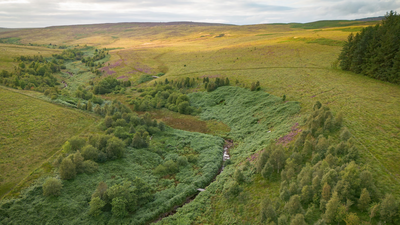
A nature restoration company has bought 7,500 acres of Northumbrian moorland for £8.5 million, starting a large rewilding project that aims to eventually hand the land to a charity or local community once investors have been repaid.
The purchase of Emblehope Moor by nature restoration company Restore is the centrepiece of an ambitious plan to turn a large group of estates in northern England into a wild refuge described as "Britain's Yellowstone". According to The Guardian, the organisation wants to show that private investment can help pay for large-scale nature recovery without keeping permanent private ownership of rural land.
Funding model aims to remove land speculation
To buy the Site of Special Scientific Interest (SSSI), Restore secured a £4.5 million loan from Triodos Bank along with private investment.
The company is now looking for another £4 million to fully fund its 20-year plan. Under the funding model, investors will receive twice the amount they put in, while the bank loan will also be repaid. Once those financial commitments are cleared, Restore plans to transfer the entire 7,500-acre estate to a community trust or charity.
"We want to prove that the bank is paid back, investors get their two-times return but we don't need to become the next for ever laird," said Benedict Macdonald, an environmental writer and the founder and director of Restore, in comments reported by The Guardian.
"We're keen to leave a well-funded community project for the future. It's not an aggressive land-holding model; it's both a capitalist and community model and I want it to become the national model for the uplands – we've got to take the greed out of it for it to work."
Restoring water systems and native species
Emblehope Moor was previously used for sheep farming, traditional grouse shooting and dog training by the Royal Kennel Club. It is already home to merlins, visiting golden eagles, red squirrels, pine martens and native trout.
However, old agricultural drainage systems have left large areas of peatland dry. Restore's first priority is to block these underground drains and restore water levels in the dried-out peatlands.
Hydrological modelling suggests that re-wetting Emblehope's peat could store an extra 100,000 cubic metres of water, roughly the same as 40 Olympic-sized swimming pools. Alongside peatland restoration, crews will remove non-native Sitka spruce plantations, which currently support high levels of artificial predation and reduce space for native wildlife.
The land management plan also includes bringing back native Exmoor ponies. The ponies will eat thick, dry grass that can increase wildfire risk and make it harder for ground-nesting birds such as curlews to find food. Over time, the organisers hope species including black grouse, curlews and beavers will return and help restore natural water flows.
Using local knowledge in wider rewilding
Although the use of the land is changing, Restore has kept existing estate workers who have extensive knowledge of the landscape and its history.
"What surprises me is how surprised people are that we've retained staff who know so much about the land," Macdonald said in The Guardian report. "The farmer is a real student of the history of grazing here and he's very open-minded. The gamekeeper has been looking after some of Britain's highest densities of birds of prey.
These guys work 18-hour days, they live and breathe the area." Emblehope Moor is part of England's largest wild corridor. It is close to the 148,000-acre Kielder Forest, the 12,000-acre College Valley and the 4,000-acre Hepple Wilds. It also borders the Rothbury estate, where The Wildlife Trusts recently launched a £30 million fundraising campaign to secure 9,500 acres for public nature conservation. "We're not the size of Yellowstone but we're in England's largest wild landscape by a long factor," Macdonald added. Future work at Emblehope will be funded through sales of timber from harvested Sitka spruce, sustainable livestock grazing, government environmental land management grants, and limited eco-tourism and educational activities.