1 hour ago
4
1 hour ago
4

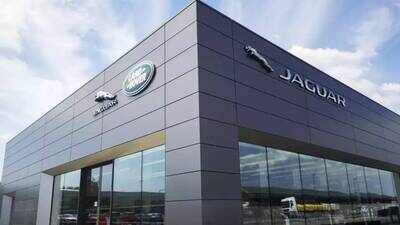
Jaguar Land Rover may cut up to 4,000 jobs as it targets £1.7bn in savings amid mounting financial pressures.
Tata Motors-owned Jaguar Land Rover (JLR) is opening a voluntary redundancy programme that could see around 4,000 jobs cut over the next two years, according to a UK media report.
The development comes nearly a year after a cyber attack brought production at the British carmaker to a standstill for several weeks and as the company grapples with falling sales, rising costs and the impact of US tariffs.According to The Times, the luxury carmaker is expected to formally announce the redundancy programme on Monday. JLR, however, has already informed staff and trade union partners about the voluntary scheme, which will offer salaried and management team members the opportunity to leave the business.The company has said it needs to save approximately £1.7 billion over the next two years as it seeks to adapt to “evolving global market conditions”. It is also targeting a reduction in its break-even point to 300,000 vehicles.
JLR targets £1.7bn in savings
A JLR spokesperson said the company had strengthened its “house of brands” and transformed its product portfolio over the past three years, but now needs to make further changes to improve efficiency.
“Over the past three years, we have strengthened our house of brands and transformed our product portfolio for the next generation,” JLR said in a statement.“As we deliver the next phase of our strategy we must adapt to evolving global market conditions while targeting approximately £1.7 billion of savings over the next two years and reduce break-evens to 300,000 vehicles,” it said.“To achieve this, we must further simplify our organisation, improve efficiency and build greater resilience,” the company added.JLR said it had informed its employees and trade union partners about the voluntary redundancy programme and would provide further information to its colleagues first.Reports have suggested that around 4,000 employees could eventually lose their jobs, although JLR has not independently confirmed the figure.The company employs around 34,000 people across its three manufacturing sites in England and supports a further 120,000 British jobs through its supply chain.
Announcement comes a year after major cyber attack
The proposed redundancies come almost exactly a year after JLR was hit by a major cyber attack that forced it to suspend manufacturing operations for several weeks.The disruption meant that the company was unable to produce vehicles during the shutdown and contributed to a 27% drop in production. The overall cost of the cyberattack was later estimated at around £1.9 billion.The incident has added to the pressures facing JLR as it attempts to recover from a difficult period for the global automotive industry.US President Donald Trump’s decision to impose a 10% tariff on UK car imports to one of JLR’s key markets has also affected the company’s global operations and sales.North America accounts for around 29% of JLR’s global sales, making the region particularly important to the luxury carmaker. The company is also facing growing competition from a new wave of more affordable Chinese car brands, which have put pressure on traditional manufacturers across global markets.
PB Balaji under pressure as revenues fall
JLR chief executive PB Balaji, previously Tata Motors’ finance chief, took charge at the carmaker last year amid mounting financial challenges.The company recorded a nearly 10% fall in revenue in its most recent quarter, to June 2026, adding to the pressure on Balaji to deliver savings across JLR’s luxury brands while navigating a difficult global market.The proposed workforce reduction is part of a wider effort to simplify the organisation, improve efficiency and reduce the number of vehicles the company needs to sell to break even.
Unite warns workers should not pay the price
The announcement has prompted a strong response from Unite, one of the UK’s major trade unions.Sharon Graham, general secretary of the Unite workers’ union, said there had been intensive discussions with the government over how to mitigate the potential job losses.“There have been intensive government discussions over the weekend to look at how to mitigate these job losses at JLR,” Graham said.“Once again, we will leave no stone unturned to support these workers.
It cannot be acceptable that workers again are made to pay the price,” she added.Graham had earlier warned that a “perfect storm” of financial pressures had been hanging over the automotive industry for years.“Death by a thousand cuts has been going on under the nose of successive governments,” she said.“Years of under-investment, unsustainable zero-emission vehicle mandates and high industrial energy costs are crippling the industry.
There must be further action.”The union is also expected to hold talks with Business Secretary Jonathan Reynolds and JLR boss PB Balaji over the proposed workforce reductions.
UK government responds to potential job losses
The UK government has acknowledged the uncertainty facing JLR workers, their families and communities affected by the potential redundancies.A government spokesperson said, “We understand that this will be an uncertain and concerning time for affected workers, their families and wider communities.”The government also pointed to measures it has taken to support the UK automotive industry, including efforts to reduce electricity costs for manufacturers, £4 billion in capital and R&D funding for zero-emission vehicle manufacturing and a £2 billion electric car grant aimed at encouraging consumers to buy EVs.
Andy Burnham’s ‘reindustrialise’ pledge faces fresh pressure
The developments are likely to add to the pressure on Andy Burnham, who recently pledged to “reindustrialise” Britain after becoming Prime Minister.JLR remains a major employer and supports tens of thousands of additional jobs through its supply chain, making any large-scale workforce reduction significant for the UK’s manufacturing sector.The proposed redundancies also highlight the challenges facing the government as it attempts to strengthen domestic manufacturing while British carmakers contend with high operating costs, weaker demand, international tariffs, the transition to electric vehicles and intensifying competition from Chinese manufacturers.